
 The Standard Group Plc is a multi-media organization with investments in media
platforms spanning newspaper print
operations, television, radio broadcasting, digital and online services. The
Standard Group is recognized as a
leading multi-media house in Kenya with a key influence in matters of national
and international interest.
The Standard Group Plc is a multi-media organization with investments in media
platforms spanning newspaper print
operations, television, radio broadcasting, digital and online services. The
Standard Group is recognized as a
leading multi-media house in Kenya with a key influence in matters of national
and international interest.

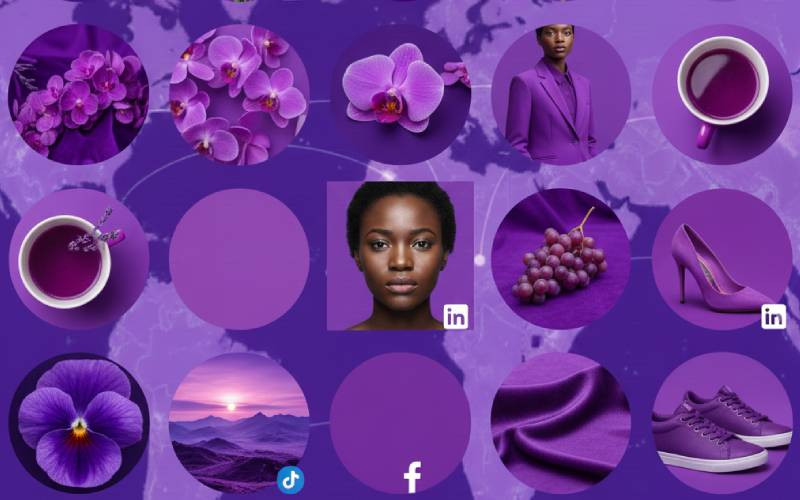
Over the past week, timelines across Africa have shifted into a striking wash of purple. Instagram grids, WhatsApp icons, X profiles, even LinkedIn headshots, everywhere you look, the same square of colour appears.
It is simple, almost minimalist: just a purple block in place of a face. But the meaning behind it carries surprising emotional weight, especially among women.
The trend began in South Africa, where organisers announced a national women's shutdown scheduled for 21 November 2025. The shutdown is a response to the country's growing crisis of gender-based violence (GBV) and femicide.
Recent police and activist data have been cited by campaigners, who say that in South Africa, a woman is murdered roughly every 2.5 hours. Such statistics aren't just numbers; they shape how women move, how they commute, how they plan their days and how they think about safety.
The purple profile picture was introduced as a digital symbol to promote the shutdown and raise awareness of these statistics. What organisers perhaps did not anticipate was how quickly the symbol would travel.
Within days, users across Africa and in the diaspora began adopting the same purple square. Many switched their profile photos quietly; no slogans, no instructions, just colour.
Part of the trend's power lies in that simplicity. It's visually loud but verbally silent. It signals something without saying it outright. In many ways, it mirrors how African women often communicate about safety: through subtle hints, quiet codes and the unspoken recognition that certain dangers feel universal.
What many women across the continent responded to isn't only South Africa's statistics, troubling as they are. It's the familiarity of the emotions behind them. If you ask a woman in Nairobi about navigating safety, you might hear routines that resemble those of a woman in Johannesburg or Lagos.
- Ways parents can help children set New Year resolutions
- How to parent purposefully this year
- Why structure is your child's greatest security
- Art of parenting highly sensitive children
Keep Reading
Sharing live locations during evening commutes, pretending to be on a call in tense situations, memorising number plates, texting "home safe" in group chats, or planning outfits around the possibility of harassment.
These habits are rarely taught formally; they are absorbed through experience, through older sisters' or friends' warnings, through stories. The purple square tapped directly into that shared understanding.
Femicide has become a cumbersome term across African news cycles. South Africa's rates are among the highest in the world; the crisis has become the basis for urgent calls for systemic change.
But other countries, including Kenya and Nigeria, have also seen rises in GBV cases and widespread discussion of women's safety. The purple profile picture does not attempt to solve these issues; it simply marks that the problem is present and widely recognised.
There is also something significant about the trend's cross-border nature. A movement that began in one country became, almost instantly, part of an international conversation. In a digital era where social media collapses geographic boundaries, African women are watching each other's realities in real time.
A tragedy or protest in one country often resonates deeply in another, not out of voyeurism but out of recognition. The purple wave is one of the clearest examples of that dynamic: a colour spreading across countries not because of coordinated activism, but because the underlying issue feels shared.
Critics often argue that online gestures like a profile picture change accomplish little. And while it's true that a purple square cannot alter laws, improve policing or guarantee safety on the streets, digital trends do play a role in shaping collective consciousness.
They influence what the public pays attention to, which conversations gain traction, and which issues become harder for leaders and institutions to ignore. Visibility isn't a solution, but it can be a starting point. Movements often begin with symbols, and symbols often begin with colour.
What the purple profile pic ultimately represents is a moment of continental reflection. It is a quiet, visual acknowledgement of the emotional burden many women carry. It is a reminder that even without long captions, women recognise each other's realities.




 join
join