
 The Standard Group Plc is a multi-media organization with investments in media
platforms spanning newspaper print
operations, television, radio broadcasting, digital and online services. The
Standard Group is recognized as a
leading multi-media house in Kenya with a key influence in matters of national
and international interest.
The Standard Group Plc is a multi-media organization with investments in media
platforms spanning newspaper print
operations, television, radio broadcasting, digital and online services. The
Standard Group is recognized as a
leading multi-media house in Kenya with a key influence in matters of national
and international interest.

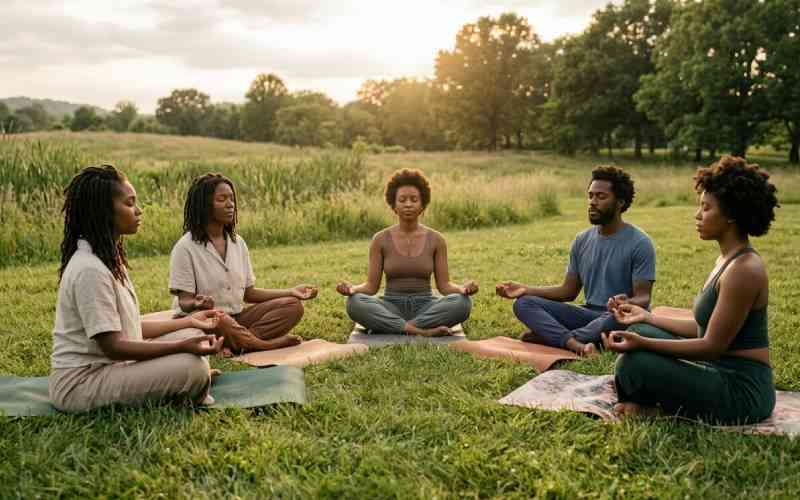
More people are turning to communal healing as they seek connection, belonging, and emotional support, says Nyambura Njau, a somatic therapist and co-founder of ThriveHaus, a wellness community that creates healing experiences for women.
She explains that teaming up with the practitioners from different disciplines of astrology, nervous system work, somatic experiencing, yoga, and human design strengthens the healing experience.
“Each of us has our own medicine. My way of healing is different from someone else’s. Together, we form a tapestry where every practitioner contributes something valuable. It is also a place of learning since I continue to grow from the wisdom and practices of others," she says.
The themes explored during the events are formed through conversations among the practitioners and members of the community. Before every event, they meet and listen to what the collective nervous system seems to be asking for and get feedback from the community on issues such as grief, finances, and mental health.
“The more acupuncture points we can find in the body, the more healing we inject into the collective. Communal healing attracts people who want to heal and who are willing to feel the pain and weight of the world,” she says.
In collective healing, creating a sense of safety is important. She builds trust within her community by helping them regulate their nervous systems so they can get into a state of social engagement.
She notes that many people arrive at the events in a state of functional freeze since they are in survival mode. However, after their nervous system is regulated, their faces soften, they make eye contact, they are more open, they have slow breathing, their chest expands, and their muscles are less tense.
When one person shares vulnerably and is met with compassion, others feel safe enough to do the same. The group therefore begins to realise that healing is possible. She believes that a community doesn’t have to be big; even two people are enough.
- How worried should I be about my child lying?
- When the back-to-school glow fades and real life begins
- Small habits that quietly shape a child's character
- Why raising independent children is not enough
Keep Reading
“Even sitting quietly with a regulated member of a group can calm your own nervous system. When there is an acupuncture point that is regulated, it transmits that to the entire community,” she says.
She recommends that practitioners first develop their own capacity to regulate themselves before supporting others, and that people be discerning when choosing retreats, healing circles and wellness groups.
“Many spaces are emerging because the need is real, but not all are guided by trained professionals. Healing work needs ethics, confidentiality and a proper framework. Without those, people can be traumatised again," she says.
She also encourages people to trust their own intuition.
"If you enter a space and your nervous system doesn’t feel safe, honour that feeling. Learning to listen to your body is part of the healing process," she advises.
She explains that somatic experiencing, developed by clinical psychologist Dr Peter Levine, is based on observations of how animals regulate their nervous system after stress.
“Our bodies naturally know how to heal. We guide people back through their senses by noticing what they see, hear, taste, and feel. When the body recognises that it is safe, breathing slows, muscles relax and the nervous system starts to regulate,” she says.
These practices, she adds, help shift people out of survival mode, where stress hormones such as cortisol and adrenaline dominate and allow them to reconnect with themselves and others.
From a somatic perspective, she says healing in community can accelerate personal growth. She has been doing individual healing for more than 20 years, but since joining community work, the pace of healing has become much faster. She says she feels as though the burden is shared, with one overwhelmed nervous system supported by many others.
She compares human communities to forests, where underground nuclear networks connect all trees and allow them to share nutrients and support weaker trees. When a tree is cut, she explains that the reason the stump grows is that other trees sacrifice their nutrients to the tree that is unwell so that the forest doesn’t die.
"In the same way, our nervous systems connect through resonance. We respond to another person’s emotions. When people are isolated, they feel alone, and that can affect wellbeing, such as the development of autoimmune diseases," she says.
Nyambura says that many people find it easier to open up in communal spaces than with people they already know because those spaces are intentionally designed around safety.
She believes one healing circle can create a powerful memory of healing that you can return to whenever life becomes difficult. But the ongoing community strengthens that regulation continuously. The growing interest in communal healing, she says, suggests a social shift.
“Many people have done individual work and are now discovering that there are others on similar journeys. Individual healing is important, but the work also has to be done collectively," she says.
People are also searching for the sense of belonging that traditional communities previously provided.
“We are social beings. While self-regulation is possible, we are also designed for co-regulation. Our nervous systems connect," she says.
Communal healing, she says, meets emotional, mental, physical and practical needs. She observes that people cry because they finally feel safe enough to be vulnerable. Community also helps with practical things such as childcare, finances or staying committed to healthy routines like yoga.
When your experiences are understood, she says that it can heal the nervous system. With loneliness becoming common, especially among people working remotely or spending much of their lives online, Nyambura maintains that community is more important than ever.
She views technology, which is blamed for isolation, as something that can help people reconnect through online circles and webinars.
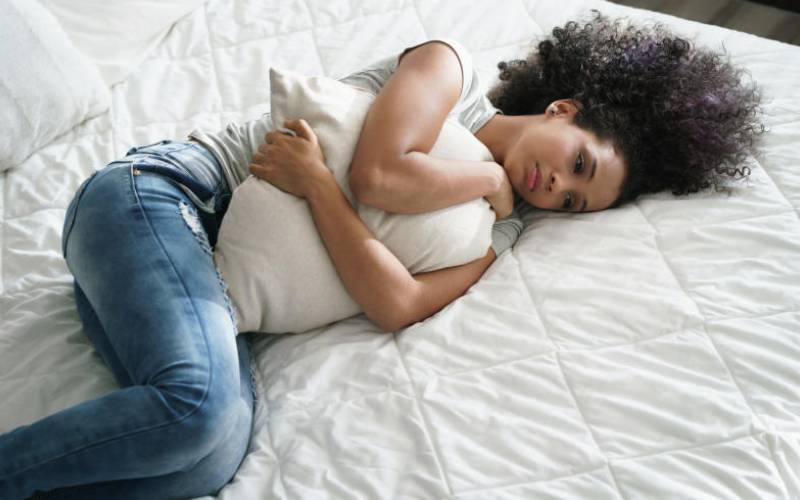
"There is a pandemic of loneliness. The issue you are facing is the same issue someone else is facing. Seeing another face and hearing another voice and people listening to you can be deeply healing. Community becomes the antidote,” she says.
In a world saturated with distressing information and constant stimulation, she believes communal healing is more relevant now. People are absorbing more than they are designed to, and they need spaces where their nervous systems can finally experience regulation, safety and connection.
Compassion and empathy are also essential elements of long-term wellbeing. In somatic experiencing, she says, people learn how to hold compassionate space without judgement or carrying someone else’s burden.
While community healing benefits most people, she notes that some forms of trauma need individual therapeutic support before they can safely be processed within a group.
"There are different levels of trauma. Some experiences require specialised individual care, even though community is an important part of healing," she recommends.
To anyone curious but hesitant about joining a healing circle, she advises stepping into curiosity. At the same time, you always have a choice to leave if you don’t feel safe.
The rise of women’s circles, men’s groups, wellness clubs and retreats- Nyambura sees that the external systems are crumbling and people are looking for a sense of belonging.
“There is a collective shift taking place. Different traditions describe it in different ways, but they are pointing to the same thing. Old systems are changing, and people are searching for new ways of belonging and supporting one another,” she says.





 join
join