
 The Standard Group Plc is a multi-media organization with investments in media
platforms spanning newspaper print
operations, television, radio broadcasting, digital and online services. The
Standard Group is recognized as a
leading multi-media house in Kenya with a key influence in matters of national
and international interest.
The Standard Group Plc is a multi-media organization with investments in media
platforms spanning newspaper print
operations, television, radio broadcasting, digital and online services. The
Standard Group is recognized as a
leading multi-media house in Kenya with a key influence in matters of national
and international interest.


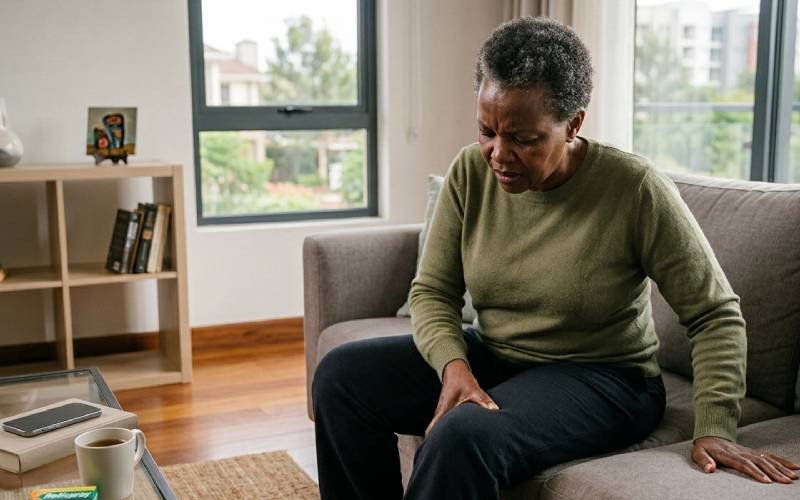
Feeling emotionally numb can be a confusing experience. Life is usual, but any kind of emotion seems out of reach. Evans Kabagi, a counselling psychologist at CAfRIC Centre, says that emotional numbness is the experience of feeling emotionally switched off as you function in daily life.
"You continue going to work, spending time with friends and family, or attending places of worship, but inside, there is a sense of emptiness. You are physically present but emotionally disconnected," he says.
He adds, “Many people describe it as watching their life from behind a glass window. It’s not laziness or a lack of motivation. It’s the mind’s way of turning down the emotional volume after carrying too much for too long.”
While depression and trauma are usually linked to emotional numbness, he points out that unprocessed grief, trauma, burnout, prolonged stress, and certain medications like antidepressants are some of the main causes.
Financial strain, job insecurity, an uncertain future, changing friendships and relationships, and the ongoing pressure of supporting oneself or family with limited resources can also cause emotional numbness.
“When the nervous system remains under stress for a prolonged period, emotional numbness can become a protective way of coping,” he says.
He notes that when stress hormones are elevated for long periods, the body goes into survival mode, where feeling less is a form of protection.
When life becomes a constant struggle to stay afloat, he says, the mind prioritises survival over emotions; therefore, there’s less capacity to experience joy, excitement, or sadness since the energy is spent trying to make it through the day.
- How worried should I be about my child lying?
- When the back-to-school glow fades and real life begins
- Small habits that quietly shape a child's character
- Why raising independent children is not enough
Keep Reading
Burnout, the exhaustion of the body, mind and emotions, can bring about emotional numbness in the sense that the emotional reserves become depleted. Activities that were once joyful no longer elicit much feeling.
Evans reveals that emotional numbness is not laziness or a lack of motivation. The brain and body are designed to protect us. When emotions have become overwhelming or unsafe to express, the nervous system learns to reduce emotional intensity. It is the mind’s way of dealing with overwhelming stress for a long time.
“It’s more like a circuit breaker that temporarily shuts down to prevent overload until it feels safe to reconnect. The challenge is that it can’t selectively block painful emotions while preserving positive ones. As a result, all emotions are muted,” he says.
Emotional numbness can affect relationships, with their partners feeling as though they are distant or withdrawn. Parents may struggle to enjoy time with their children, friendships may feel less meaningful, and work may feel less fulfilling.
If you think you may be emotionally numb, he advises paying attention to the duration. One of the ways to differentiate emotional numbness from ordinary tiredness is by observing if rest restores emotional wellbeing.
“After adequate sleep or time off, most people who are tired start to feel like themselves again. With emotional numbness, the emptiness is there even after rest,” he says.
To start recovering from mild or recent emotional numbness, Evans recommends rest, supportive relationships, and simple daily practices that increase a sense of safety. Reconnect with emotions by naming them, such as “I feel low"; journaling; spending time in nature; and being around people who feel emotionally safe.
Mindful breathing, grounding, stretching and walking can regulate the nervous system and eliminate accumulated stress in the body. Healthy lifestyle habits such as good sleep, regular exercise, and balanced nutrition can promote the brain’s ability to regulate emotions and recover from stress.
Loved ones can also support by being patient and present instead of advising or asking or saying statements like "Just be happy” or "You have nothing to worry about.”
If medication is the cause, he suggests talking to a psychiatrist to review a treatment plan and discuss possible alternatives.
However, he discourages forcing emotional breakthroughs but encourages creating consistent experiences of safety for emotions to be felt again. Some of the signs that someone is reconnecting with their emotions are tears flowing freely, irritation after feeling nothing for a while, or being moved by simple joys.
“If emotional numbness has lasted more than a few weeks, is interfering with work, relationships, or daily functioning, or is accompanied by hopelessness or thoughts of self-harm, it is important to seek professional support,” he encourages.
He adds that treatment includes trauma-informed approaches such as Trauma-Focused Cognitive Behavioural Therapy (TF-CBT), somatic therapies and Eye Movement Desensitisation and Reprocessing (EMDR), particularly when trauma is involved. He notes that a therapeutic relationship is important too, as feeling safe and understood provides the foundation for healing.
He notes that people tend to fear reconnecting with their emotions since doing so can also bring buried grief, anger or fear to the fore. He encourages approaching this with patience, adding that recovery timelines vary depending on the underlying cause and available support.
While some people recover within weeks, others, especially those dealing with trauma or prolonged stress, can take months.
“Healing is rarely linear. There will be periods of progress alongside days that feel more difficult. These setbacks don’t erase the gains already made. They are a normal part of how the nervous system gradually learns that it’s safe to feel again,” he says.
He offers reassurance for those who feel they may never experience emotions again, expressing that emotional numbness is temporary and that it’s the mind’s way of protecting them during an overwhelming period.
“The same mind that learned to disconnect can also learn to reconnect. You don’t have to rush the process, and you don’t have to face it alone. With time, support, and safety to feel fully alive again,” he encourages.













 join
join