
 The Standard Group Plc is a multi-media organization with investments in media
platforms spanning newspaper print
operations, television, radio broadcasting, digital and online services. The
Standard Group is recognized as a
leading multi-media house in Kenya with a key influence in matters of national
and international interest.
The Standard Group Plc is a multi-media organization with investments in media
platforms spanning newspaper print
operations, television, radio broadcasting, digital and online services. The
Standard Group is recognized as a
leading multi-media house in Kenya with a key influence in matters of national
and international interest.


Kenya’s health professionals have been praised for their skills and training in handling health emergencies as the Ministry of Health steps up preparedness for Ebola.
Researchers, doctors, clinical officers and nurses have been at the forefront of the response since the first imported case was confirmed in the country.
Nine days after the case was confirmed, no additional infections had been reported among healthcare workers or the wider population.
The Kenya National Union of Nurses and Midwives says that with adequate support, healthcare workers can contain the imported virus.
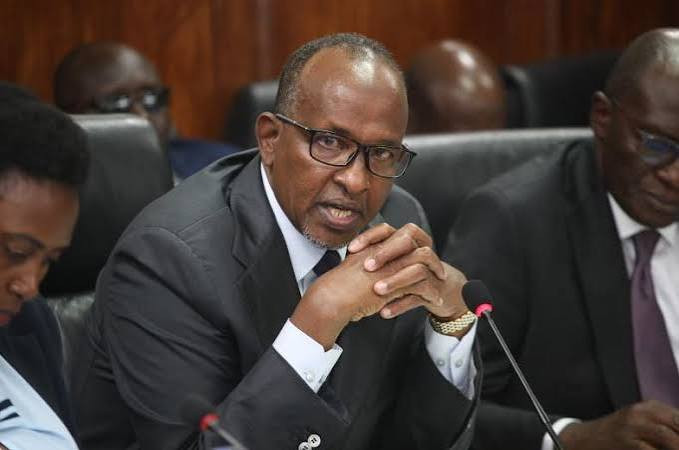
“I have no doubt that health workers in Kenya are properly trained to handle any serious or emerging infectious diseases,” said the union Secretary-General, Seth Panyako.
Panyako said the fact that no healthcare worker had been reported to have contracted the virus, including those who handled the fatal case, was encouraging.
“No single healthcare worker has acquired the virus, even despite interacting with a fatal case. I am proud of our health professionals. This is encouraging because it means that by protecting ourselves, we can keep the public safe,” he said.
In 2014, Kenya deployed 170 health professionals, including clinical officers, nurses, doctors and public health officers, to support the fight against Ebola during an outbreak in West Africa.
- PS hails nurses as the backbone of healthcare system
- Hospital workers threaten to strike over discrimination
- Race Against Ebola: Gavi, CEPI Launch Fast-Track Vaccine Plan for Bundibugyo Strain
- Funding delays threaten Ebola clinical trials
Keep Reading
The healthcare workers returned safely and were honoured by then President Uhuru Kenyatta.
However, hundreds of healthcare workers from other countries died while responding to Ebola outbreaks in West Africa.
“Kenya’s healthcare system is top in Africa and leads as an example. Kenyans successfully fought Ebola in Liberia and Sierra Leone because of their skills and training. I am proud of Kenya’s healthcare system,” said Panyako.
But according to Dr Moses Masika, the lack of a case is a welcome sign, but the incubation period for the virus is longer.
The incubation period ranges from two to 21 days.
“It is a welcome sign, but we need to keep in mind that the incubation period can be as long as three weeks. We need double that time (42 days) to be sure we are in the all clear,” said Masika, a virologist.
Kenya confirmed its first imported case of Ebola Bundibugyo virus disease on October 6.
The Ministry of Health has listed 122 contacts, of whom 108 have been placed in quarantine.
Masika applauded the government’s efforts in contact tracing, maintaining it is key in preventing a spill from the fatal case.
“I think the government has done well to trace and quarantine contacts. That is the main thing,” he said.
The fatal case was imported from the Democratic Republic of Congo (DRC), which is experiencing an outbreak of the virus.
The 40-year-old patient entered Kenya through Uganda and arrived in the country on October 3. He died on October 5.
Panyako said authorities at Entebbe and Jomo Kenyatta International Airport (JKIA) had failed to prevent the case from entering the country, raising concerns about surveillance at regional entry points.
“The case got into Kenya because there was a problem in Uganda. The Ugandan authorities should have put him in quarantine because the ports of entry were Entebbe and JKIA in Nairobi. The two airports messed up East Africa. The Ugandan authorities failed, and the Kenyan airport failed,” he said.
Despite the measures in place, Panyako warned against relaxing surveillance and other preventive measures, saying this could allow more cases to enter the country and expose additional contacts.
“We should never forget how this virus ravaged people in West Africa. This is why we should not relax any measures. Proper checks should be done, and individuals presenting with the disease quarantined,” he said.
He added that despite the skills and knowledge of Kenyan healthcare professionals, the government must provide adequate support to contain the imported case and prevent further transmission.
This includes supplying quality personal protective equipment (PPE) and ensuring that isolation and quarantine facilities meet required standards.
“In terms of preparedness, I think the country is well prepared because of the last experience of 2019. Prevention and management of Ebola is in top gear,” added the unionist.
“Protective equipment and the handling of Covid-19 are almost the same. The Ministry should ensure there are strict checks at the points of entry. So long as outbreaks are in neighbouring countries, measures should not be relaxed.”
On his part, University of Nairobi virologist Prof Omu Anzala said hospitals and isolation centres must be of standard, and be equipped with appropriate PPE to protect healthcare workers from infection.
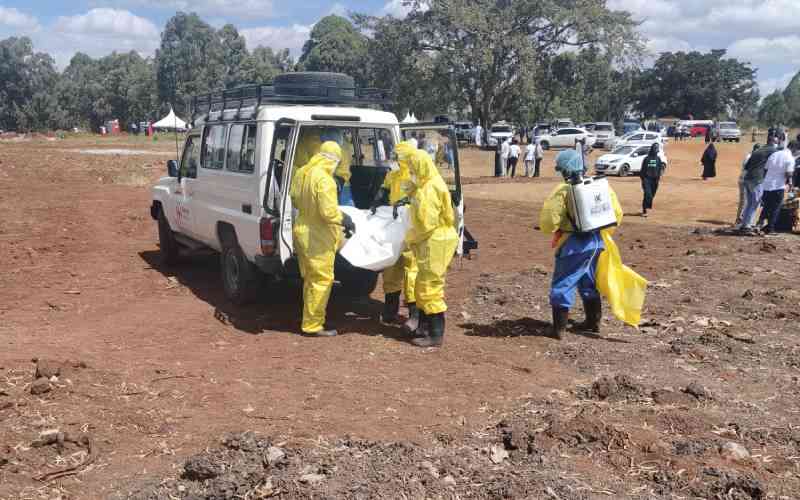
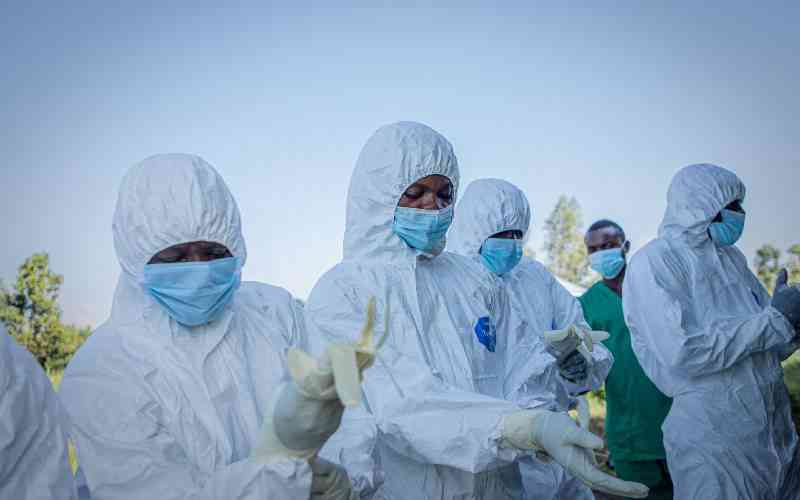
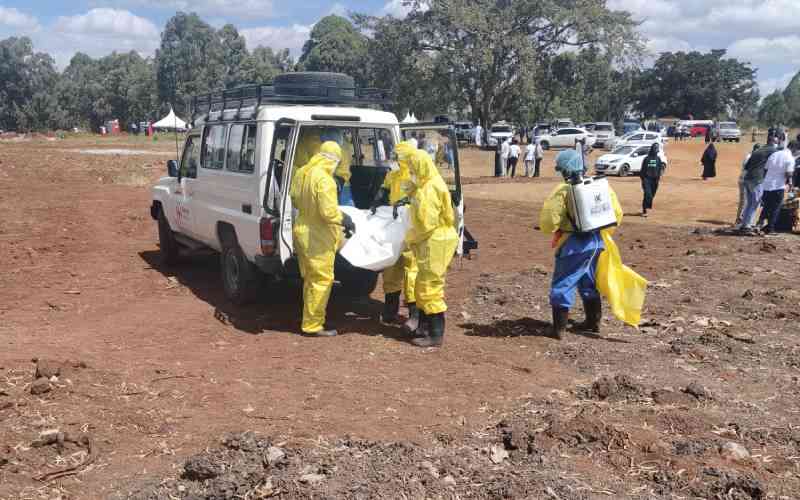
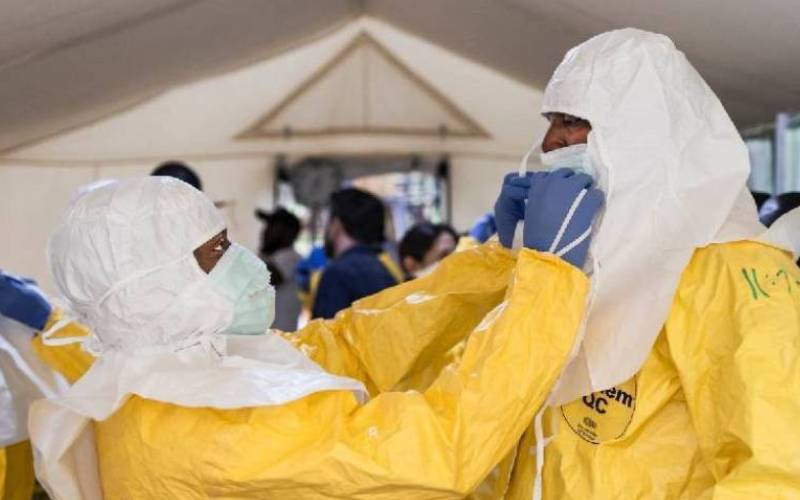
These include fluid-resistant coveralls or impermeable full-body gowns, double-layered gloves, N95 respirators, full-face shields to protect the eyes and other mucous membranes, and head and neck coverings.
Healthcare workers should also have waterproof footwear and boot covers.
Aprons should be worn over coveralls when treating patients experiencing vomiting or diarrhoea.
“Kenya must demonstrate readiness in critical areas, including isolation infrastructure, laboratory diagnostics and providing quality PPE,” said Anzala.
The researcher explained that quarantine facilities are crucial in separating suspected cases from the general population while they await test results.
Confirmed patients should then be transferred to specialised treatment or isolation centres.
“The real test is preventing the virus from spreading to other people,” he said.
Rapid quarantine, contact tracing and surveillance remain central to Ebola containment, he added.
“Quarantine and contact tracing are the entire essence of controlling an outbreak. This is where our emphasis should be,” said Anzala.
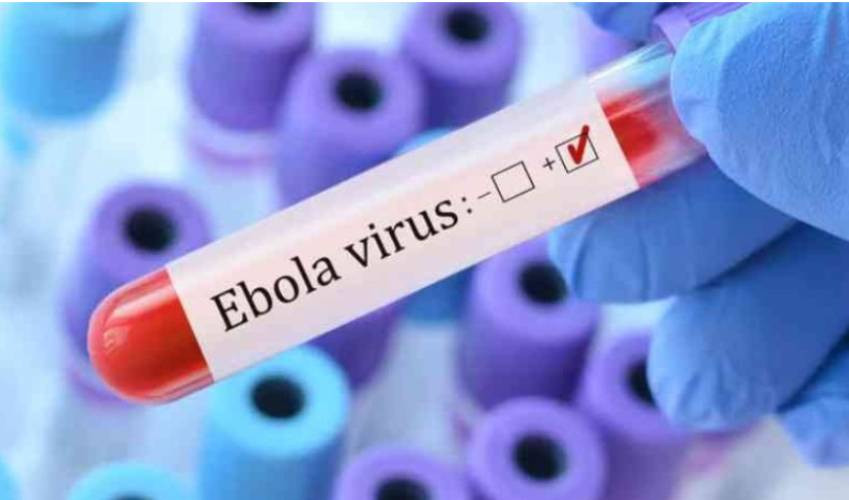
Ebola diagnosis relies on polymerase chain reaction (PCR) testing, the same technology used during the Covid-19 pandemic.
“The technology exists. The question is whether we have adequate reagents and supplies to sustain testing in case the disease gets out of hand,” he added.
Nevertheless, he stressed that frontline healthcare workers must receive regular training on handling suspected Ebola patients, collecting samples safely and protecting themselves from infection.
Healthcare workers are at the forefront of the response and face a heightened risk of exposure when caring for infected patients.
In DRC, healthcare workers have been among those infected during Ebola outbreaks.
Anzala said healthcare workers need continuous training on operating isolation units, collecting blood samples safely and managing patients without exposing themselves to the virus.
“Training is critical because health workers are involved in procedures such as drawing blood. They must know how to do this safely, wear the correct protective gear and avoid contact with patient secretions,” he said.
Ebola spreads through direct contact with the blood or other bodily fluids of an infected person, or with contaminated materials. This places healthcare workers at particular risk when infection prevention measures are not properly followed.
Beyond ensuring the availability of PPE, Anzala said healthcare workers must know how to remove contaminated equipment safely and decontaminate themselves before leaving isolation areas.
“Healthcare workers must dress in a manner that protects them from exposure. A patient may vomit or release infectious fluids, which can easily come into contact with the eyes, face or skin if proper precautions are not observed,” he said.
Anzala also called on the government to engage the public and other stakeholders, address their concerns and fears, and build consensus on the measures needed to contain the outbreak.





 join
join