
 The Standard Group Plc is a multi-media organization with investments in media
platforms spanning newspaper print
operations, television, radio broadcasting, digital and online services. The
Standard Group is recognized as a
leading multi-media house in Kenya with a key influence in matters of national
and international interest.
The Standard Group Plc is a multi-media organization with investments in media
platforms spanning newspaper print
operations, television, radio broadcasting, digital and online services. The
Standard Group is recognized as a
leading multi-media house in Kenya with a key influence in matters of national
and international interest.


Scientists are testing a growing list of vaccines and treatments as the Democratic Republic of Congo battles its worst outbreak of Bundibugyo Ebola.
More than 250 people have already enrolled in a clinical trial testing whether an experimental antiviral can prevent Ebola from developing after exposure to the virus.
The study is testing obeldesivir, an oral antiviral developed by Gilead Sciences, among people who have recently come into contact with confirmed Ebola patients but have not developed symptoms.
The trial, led by the medical organisation ALIMA, aims to recruit nearly 1,000 participants. Volunteers are monitored for 21 days, the period when symptoms can emerge after exposure.
The drug is being tested as post-exposure prophylaxis — meaning it is given after a person has been exposed but before Ebola disease develops.
Scientists are also testing treatments in patients who are already infected.
The WHO-sponsored PARTNERS trial in Congo is evaluating the monoclonal antibody MBP134 and the antiviral remdesivir. Researchers are also studying whether combining the two medicines can improve survival. The trial is being coordinated by Congo's National Institute of Biomedical Research, the Institute of Tropical Medicine in Belgium and the University of Oxford.
- Duale: No Ebola in Kenya as DRC outbreak kills 88, reaches Uganda
- WHO warns of rising Ebola threat as Kenya tightens response efforts
- Kenya among high-risk countries for Ebola spread, warns CDC Africa
- Kenyans defy Ebola controls as border loopholes raise fear of spillover
Keep Reading
WHO experts have also identified another monoclonal antibody, Maftivimab, as a candidate requiring clinical evaluation against Bundibugyo virus.
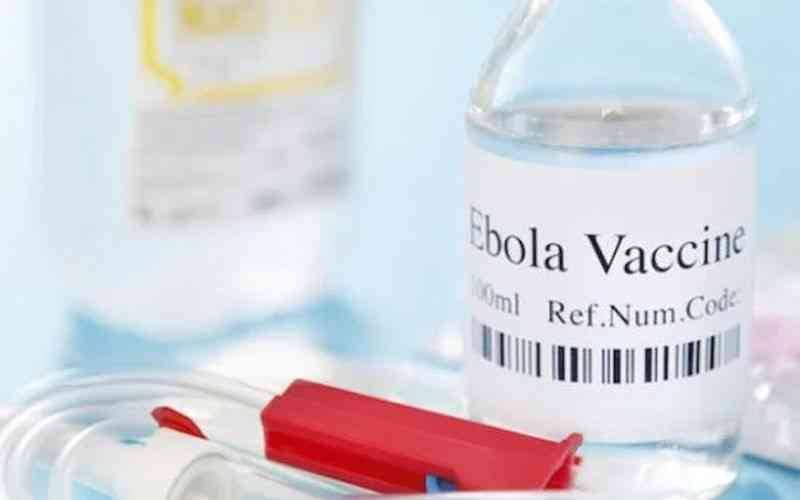
The vaccine race is moving on several fronts.
In the United Kingdom, scientists at the University of Oxford have launched the world's first human trial of a vaccine specifically designed against Bundibugyo ebolavirus.
The vaccine, ChAdOx1 BDBV, uses the same platform technology behind the Oxford-AstraZeneca COVID-19 vaccine. The first volunteer was vaccinated in July, with researchers now assessing the vaccine's safety and the immune response it generates.
The UK Phase 1 trial is testing the vaccine in healthy adults. It is an early-stage safety and immunogenicity study, meaning it is designed to establish whether the vaccine is safe and whether it triggers an immune response before larger trials are considered.
WHO experts have identified a second candidate, the single-dose rVSV Bundibugyo vaccine being developed by the International AIDS Vaccine Initiative, as a promising option. However, WHO said its development could take several months before it is ready for clinical evaluation.
Another candidate, ChAdOx1 Bundibugyo, developed by Oxford University and the Serum Institute of India, has also been prioritised for further development.
There is also the Ervebo vaccine, already licensed against Zaire ebolavirus.
Ervebo is being studied because Bundibugyo is a different Ebola species. Whether the vaccine can protect against the virus driving the current Congo outbreak remains uncertain.
WHO has stressed that Ervebo is not licensed specifically against the Bundibugyo virus and that evidence of cross-protection remains limited and inconclusive. Its use in Congo is therefore being evaluated within research settings.
The current outbreak has exposed a gap in Ebola preparedness: vaccines and treatments exist for some Ebola viruses, but Bundibugyo virus entered the crisis without a licensed vaccine or approved specific treatment.






 join
join