
 The Standard Group Plc is a multi-media organization with investments in media
platforms spanning newspaper print
operations, television, radio broadcasting, digital and online services. The
Standard Group is recognized as a
leading multi-media house in Kenya with a key influence in matters of national
and international interest.
The Standard Group Plc is a multi-media organization with investments in media
platforms spanning newspaper print
operations, television, radio broadcasting, digital and online services. The
Standard Group is recognized as a
leading multi-media house in Kenya with a key influence in matters of national
and international interest.

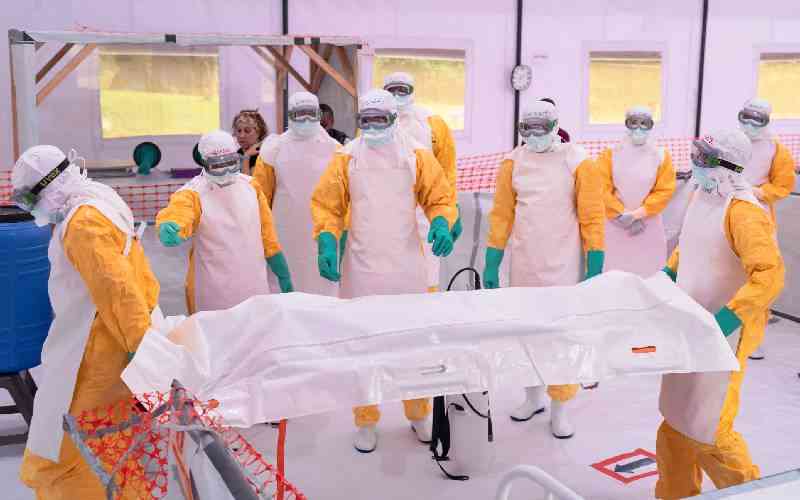
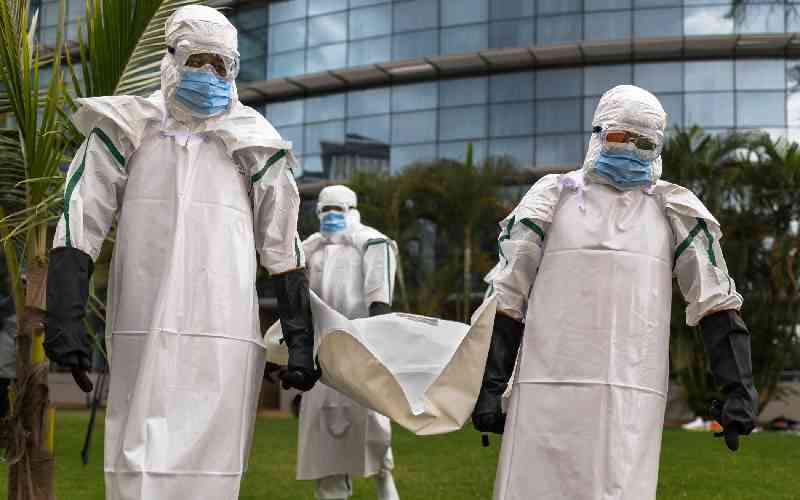
Health workers simulate evacuation protocols using a manikin for deceased victims of Ebola during a training by Médecins Sans Frontières (MSF) in Ongata Rongai, Kajiado County, on July 10, 2026. [AFP]
As the Democratic Republic of Congo (DRC) battles its 17th Ebola outbreak, now, one of the fastest-growing in the country's history neighbouring South Sudan is scrambling to keep the deadly virus from crossing its borders, warning that conflict, mass displacement and porous frontiers have left the country dangerously exposed.
Projections show the outbreak is advancing northwards towards South Sudan after spreading across five provinces in the DRC.
The warning also carries significance for Kenya. As East Africa's transport, trade and humanitarian hub, Kenya's close links with Uganda and South Sudan mean any escalation of the outbreak could quickly test regional disease surveillance and emergency preparedness.
"We do not have any confirmed case of Ebola in South Sudan. However, the risk of importation of Ebola to South Sudan remains high, primarily because of cross-border movements and trade with our neighbouring countries, particularly DRC and Uganda," said the country's Acting WHO Representative, Dr Moses Ongom.
The warning comes as the Bundibugyo strain outbreak continues to accelerate in eastern DRC.
According to WHO-supported surveillance data, the outbreak has now reached 1,947 confirmed cases, including 704 deaths and 336 recoveries. The DRC accounts for 1,926 infections, 702 deaths and 318 recoveries, with transmission now extending beyond its epicentre in Ituri Province into four additional provinces.
- Free maternity care still unclear despite new SHA package
- Busia county government sets up Ebola isolation centre
- Eye diseases surge as Kenya battles cataract backlog and dangerous misuse of steroid eye drops
- New non-drug therapy transforms cancer care
Keep Reading
"This epidemic is still out of control in DRC. It has not yet reached its peak, and that poses a great risk for us," Dr Ongom said.
The speed of transmission has alarmed public health experts.
Although this is DRC's 17th recorded Ebola outbreak, it is spreading substantially faster than previous epidemics. The current outbreak surpassed 1,000 confirmed infections within just 40 days of response activation, compared with approximately 235 days during the country's major 2018 North Kivu Ebola epidemic.
Reported deaths have also climbed sharply, with more than 100 fatalities recorded during the first week of July alone. Officials estimate that one in every two people tested for\Ebola in affected areas is returning a positive result, underscoring the intensity of transmission.
Beyond its shared borders with the DRC and Uganda, years of conflict and humanitarian displacement have complicated disease surveillance in South Sudan.
"We also have porous borders with DRC and Uganda. We also have displacement and humanitarian movements between the countries. These pose a high risk," Dr Ongom said.
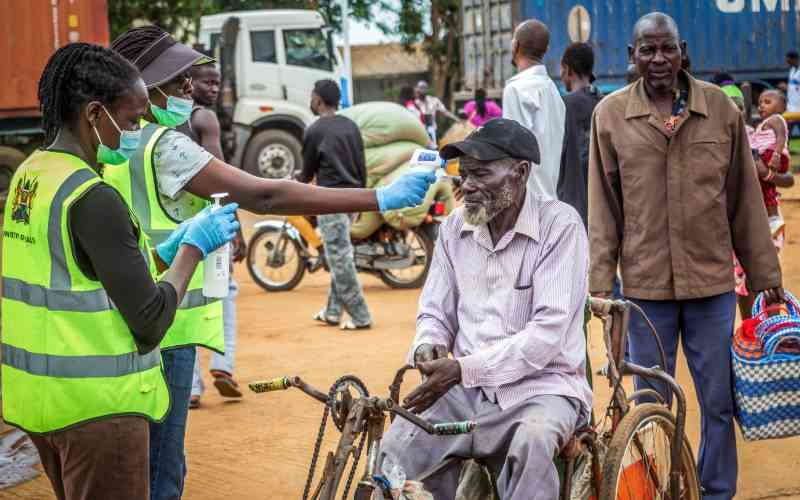
To stay ahead of the virus, South Sudan has expanded laboratory capacity, trained frontline health workers, strengthened infectious disease units, pre-positioned medical supplies and intensified public awareness campaigns. Screening has also been enhanced at five major points of entry—Nimule, Kaya, Olipui, River Yei and Juba
International Airport.
Since activating its Ebola readiness plan, the Ministry of Health has investigated 23 Ebola alerts.
Eight met the Ebola case definition and all tested negative.
"The risk of an outbreak in South Sudan remains relatively high because of transit populations and borders with DRC and Uganda. All Ebola preparedness and response mechanisms continue to be activated to strengthen our health system readiness," said the Ministry of Health Undersecretary, Dr Oromo Francis.
Authorities have since expanded laboratory capacity, trained frontline health workers, strengthened infectious disease units, pre-positioned medical supplies and intensified screening at five major points of entry.
"So far, cumulatively, since screening started, about 390,000 travellers have been screened through these points of entry, the majority through Nimule," Dr Ongom said.
Surveillance teams have also mapped 15 high-risk counties bordering Uganda and the DRC, where community health workers conduct daily monitoring for suspected cases.
Officials say many of the alerts investigated have ultimately been diagnosed as malaria or other infectious diseases after laboratory testing ruled out Ebola.
"According to the International Health Regulations, we do not close the borders. If you close them, people will simply use unofficial routes and they will bring you the disease without you even seeing it," Dr Oromo said.
He added; "The recommendation is not to restrict movement between neighbouring countries. The focus is heightened surveillance, increased screening at points of entry, early detection, isolation and prompt treatment," he said.
South Sudan says it can rapidly confirm suspected Ebola infections using PCR testing.
"Our laboratory is fully equipped. There is no result that has stayed until the next day. Once samples arrive, our teams immediately begin testing," the Undersecretary said. Dr Oromo urged the public to seek medical attention early. "The early symptoms include high fever, headache, body pain, joint pain and weakness.
Later, patients may develop vomiting, diarrhoea and unexplained bleeding,"
Dr Oromo explained.
To strengthen preparedness further, South Sudan has established dedicated Infectious Disease Units in Juba, Nimule, Yei and Yambio to isolate and manage any confirmed cases should the virus enter the country.
Uganda is now taking the regional fight directly to the outbreak's epicentre, deploying medical teams and establishing laboratory capacity inside the DRC to strengthen surveillance and speed up diagnosis.
The strategy reflects a lesson East Africa has learned over decades of Ebola outbreaks: stop the virus where it starts before it reaches another border.
Kenya knows that lesson well. During the 2014 West African Ebola epidemic, it kept the virus out through aggressive border screening, emergency preparedness and health worker training, while also deploying epidemiologists, laboratory experts and emergency response teams under the African Union's African Support to Ebola Outbreak in
West Africa (ASEOWA) mission. More than a decade later, Uganda's intervention underscores the same principle—Ebola is defeated not by one country acting alone, but by a region moving together.
"The government, working with partners through the Ministry of Health, is continuing to strengthen capacities for readiness and preparedness so that when the first case is detected, it can be rapidly investigated, isolated and prompt treatment started," Dr Ongom said.
The virus may have emerged in eastern Congo, but the response now stretches far beyond its borders. From Uganda's deployment of medical teams into the outbreak zone, to South Sudan's heightened readiness and Kenya's longstanding experience supporting regional Ebola responses, East Africa is once again demonstrating that Ebola is best contained through collective action rather than isolated national efforts.






 join
join