
 The Standard Group Plc is a multi-media organization with investments in media
platforms spanning newspaper print
operations, television, radio broadcasting, digital and online services. The
Standard Group is recognized as a
leading multi-media house in Kenya with a key influence in matters of national
and international interest.
The Standard Group Plc is a multi-media organization with investments in media
platforms spanning newspaper print
operations, television, radio broadcasting, digital and online services. The
Standard Group is recognized as a
leading multi-media house in Kenya with a key influence in matters of national
and international interest.

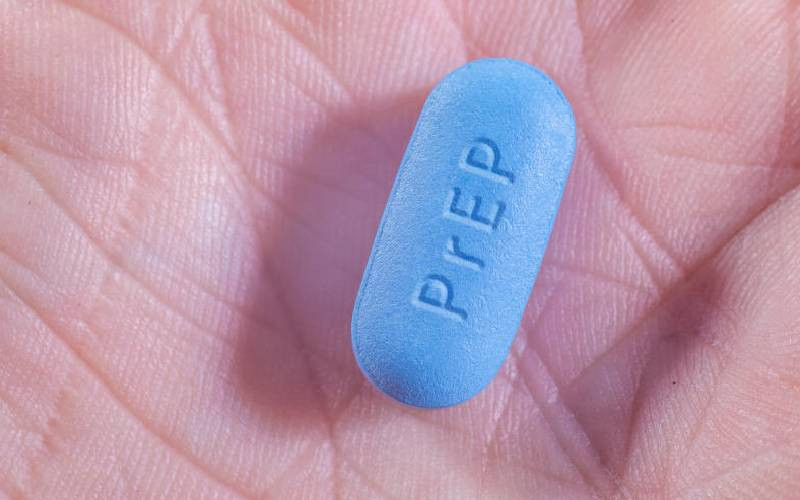
New data showing a rise in fresh cases of HIV infection has renewed focus on prevention gaps and the urgent need to expand access to HIV pre-exposure prophylaxis (PrEP) as Kenya works towards eliminating infections by 2030.
Health officials and stakeholders are now pushing for greater involvement of community pharmacies as access points for HIV prevention services, including PrEP, amid persistent barriers to facility-based care.
PrEP is an antiretroviral medication that prevents HIV infection when taken consistently by individuals at substantial risk.
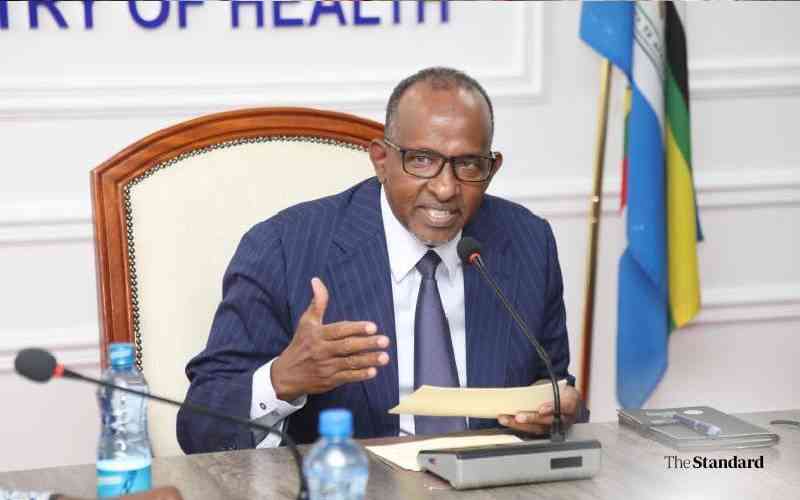
Speaking during a dissemination meeting on pharmacy-based delivery of PrEP convened by the National AIDS and STI Control Programme (NASCOP) and partners, NASCOP head Andrew Mulwa said PrEP remains a central pillar of Kenya's combination HIV prevention strategy.
"PrEP offers individuals at ongoing risk a highly effective, user-controlled prevention option. However, access and sustained use remain a challenge," Dr Mulwa said.
Data from the Ministry of Health shows that Kenya recorded 19,991 new HIV infections in 2024, representing a 19 per cent increase from 16,752 cases reported the previous year.
Children accounted for more than a fifth of the new infections, while adolescents and young people aged between 10 to 24 years made up nearly a third, underscoring persistent vulnerabilities among populations meant to be protected.
- Free maternity care still unclear despite new SHA package
- New rapid tests fight deadly infections in Africa
- Busia county government sets up Ebola isolation centre
- Ebola by force
Keep Reading
Mulwa noted that despite PrEP's effectiveness, particularly among key populations such as sex workers, uptake and continuation remain hindered by structural and social barriers.
Kenya has a total of 285,000 sex workers, 164,000 men having sex with men, 30,000 people who inject drugs and 7,500 transgender.
"Stigma, limited clinic hours, long distances to health facilities, and concerns around privacy continue to hinder uptake and continuation of PrEP," Mulwa said.
Community pharmacies, he added, offer a practical and client centred solution.
"They are accessible, trusted, and convenient, with extended operating hours and greater privacy. Pharmacy-based PrEP delivery expands choice, reduces structural barriers, and reaches populations who may not routinely access facility-based services," said the official.
Kenya's HIV response, guided by the Kenya AIDS Integration Strategic Framework, prioritises differentiated service delivery and stronger engagement of the private sector creating space for pharmacists to play a more active role beyond dispensing medicines.
Studies presented at the meeting showed that pharmacy-based PrEP delivery is feasible, acceptable, and effective, particularly in increasing uptake among key populations who often avoid public health facilities due to stigma or fear of exposure.
"These models demonstrate that pharmacy-based PrEP can be delivered safely within national systems, with appropriate referral mechanisms, data reporting, and accountability," Mulwa said.
NASCOP plans to use the findings to refine the national Community Pharmacy Model Toolkit, strengthen provider training, improve data capture, and enhance quality assurance as the country scales up the approach.
The shift toward community-based prevention comes as adolescents and young people continue to bear a disproportionate burden of new HIV infections.
In 2024, young people aged between 10 to 24 years accounted for nearly one-third of all new infections, with adolescent girls and young women making up the majority. Children accounted for 22 per cent of new infections, largely driven by gaps in prevention of mother-to-child transmission.
Arid and semi-arid counties remain particularly affected, with some recording mother-to-child transmission rates above 20 per cent, compared to the national average of 9.3 per cent.
"These realities underscore why prevention services must be brought closer to communities where people live and work," Mulwa emphasised.
Health experts say community pharmacists are uniquely positioned to support HIV prevention due to their reach and daily interaction with clients seeking discreet services.
By offering PrEP alongside counselling, referrals, and follow-up, pharmacies could help normalise HIV prevention, reduce stigma, and improve continuity of care, especially as donor funding declines and Kenya pushes for sustainability under Universal Health Coverage.
With reduced external support, integrating HIV prevention into routine, community-level health services is increasingly viewed as essential.
As Kenya works toward ending HIV/AIDS by 2030, NASCOP says evidence-driven innovations such as pharmacy-based PrEP delivery will be key to closing prevention gaps.
"Community pharmacy models represent a promising pathway to expanding equitable access to PrEP and accelerating progress toward reducing new HIV infections," Mulwa said.







 join
join