
 The Standard Group Plc is a multi-media organization with investments in media
platforms spanning newspaper print
operations, television, radio broadcasting, digital and online services. The
Standard Group is recognized as a
leading multi-media house in Kenya with a key influence in matters of national
and international interest.
The Standard Group Plc is a multi-media organization with investments in media
platforms spanning newspaper print
operations, television, radio broadcasting, digital and online services. The
Standard Group is recognized as a
leading multi-media house in Kenya with a key influence in matters of national
and international interest.


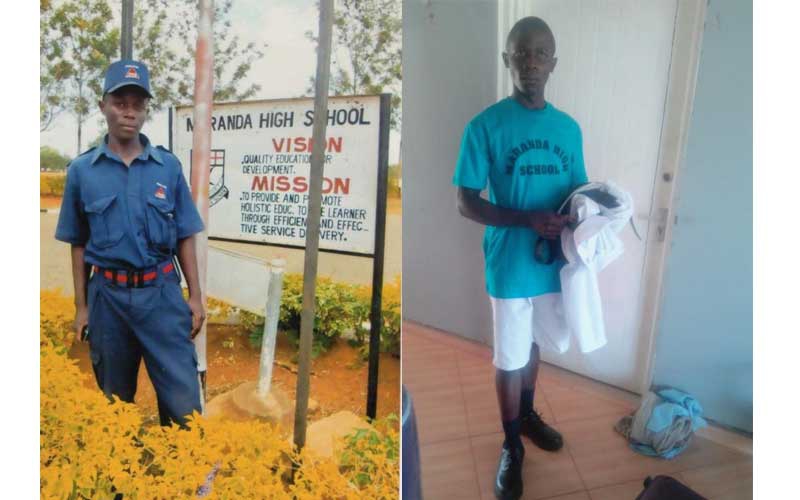
One day, when Emish Ondiek was in Form Two, he got a request from his school 'son', the younger student he was taking care of. The request would change his life.
Ondiek innocently handed over the key to his metallic box believing that his 'son' was going to help him with the laundry. What followed would lead to a stint of loneliness, pain, anguish and suicidal thoughts.
“I found out later that he had asked for my key because some boys had suspected that something was wrong with me since I would wake up in the middle of the night to drink water and they would hear some noise as I tried to get my pills,” narrates Ondiek.
Ondiek's journey with HIV started at birth. He is among the 240,000 young people aged between 15 and 24 years living with the virus. Ondiek was born in December 1999 and his mother died when he was still an infant.
From then, it was a journey of intermittent illnesses and he had to visit hospitals frequently. “Nobody really knew what was wrong with me except that I would fall ill often. I had rashes all over my body as well many other opportunistic infections,” he says.
This trend continued until 2008 when doctors told him he should get tested for HIV, and he turned out positive.
"I remember my dad coming to me and asking; ‘Will you, my son, be the one to bury me or will I have to bury you?”
Ondiek’s father was also living with the virus.
"My CD4 count was only 24 which is pretty low. I had to be put on treatment immediately," he says.
At the hospital, Ondiek told the nurses that he did not want anti-retrovirals (ARVs) and was subsequently put on an antibiotics.
“My health continued deteriorating and I finally had to have the anti-retroviral therapy. I had been hesitant to have it because of all the negative stories I had heard about them.”
Being in boarding school, Ondiek had to walk a tight rope, balancing academic routine, medication timelines and secrecy. To avoid detection, Ondiek would wake up at night to take his medication and this interfered with his adherence.
“I would oversleep at times, or just get too tired to wake up at midnight which means that in a week if I tried really hard, I would take the medication just four times and my condition started deteriorating,” he says.
Even going for check-up and to collect his medication became a problem as he would always feign sickness so that he could get permission to leave the school compound.
Yet after picking the medication, he would buy other over-the-counter drugs which he would show the security men at the gate. He would sneak in the ARVs through the fence to avoid detection.
With all these challenges, his viral load increased and his medication had to be changed. Now, he had to take his medication twice a day, something that posed a great challenge as he was hell-bent on keeping his status a secret.
“When my school 'son' was asked by suspicious school boys to spy on me and they found out that I was on ARVs, my whole world crumbled," he says.
"On the material day, the boy asked for the key to go do some laundry for me but returned the key after a short time looking petrified as he ran away from me. Nobody wanted to associate with me anymore as the news spread like bush-fire among the students."
He found his medication removed from the pill bottles and some were crushed.

"I stopped taking the medication altogether and I remember wishing that I were dead. I started getting sick again and this got the attention of one of the school heads," Ondiek says.
"He asked me what the problem was and I told him all was well because I feared he would punish me but he did not relent. He called me to his office the following day and I decided to open up to him.”
This was the turning point. The deputy principal was not only instrumental in reorganising Ondiek’s timetable so that he would take his medication at the appropriate time but also helped in reuniting him with his friends through informing and educating them more about HIV.
The teacher also connected Ondiek with Elizabeth Glaser Pediatric AIDS Foundation, an organisation that works on ways of managing HIV among children. Through the foundation Ondiek met and shared his experiences with other young people who were living with the virus.
With the trauma behind him, Ondiek scored a B+ in last year’s KCSE examinations.
As he starts his university education, Ondiek says that he is dating and hopes to tie the knot one day and have HIV-free children.
Would you like to get published on Standard Media websites? You can now email us breaking news, story ideas, human interest articles or interesting videos on: standardonline@standardmedia.co.ke











 join
join