
 The Standard Group Plc is a multi-media organization with investments in media
platforms spanning newspaper print
operations, television, radio broadcasting, digital and online services. The
Standard Group is recognized as a
leading multi-media house in Kenya with a key influence in matters of national
and international interest.

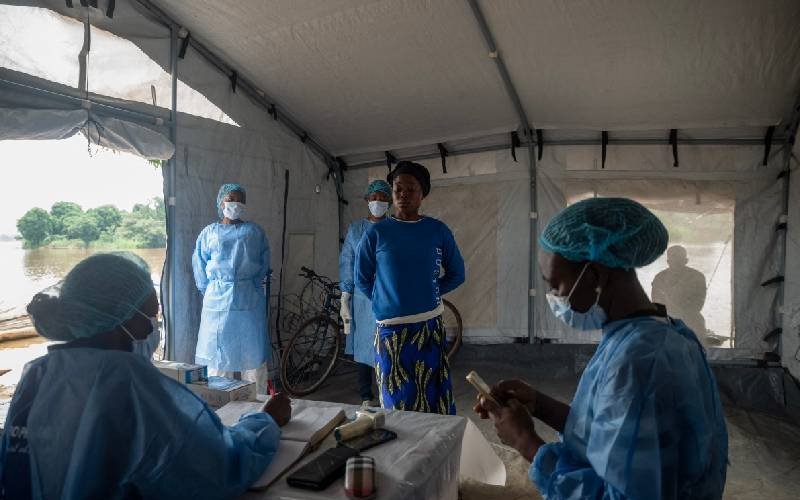
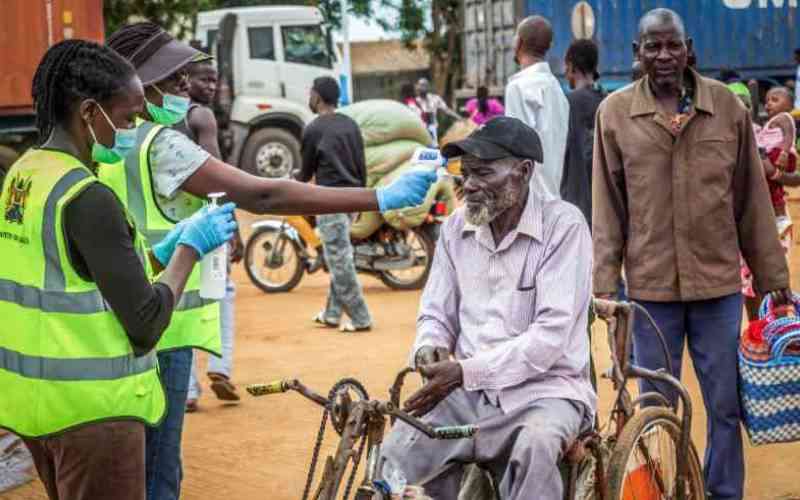
A traveller waits for her temperature to be taken by health workers at the M’Poko Bac landing stage, in Bimbo district, Bangui, on October 28, 2026. AFP]
The Africa Centres for Disease Control and Prevention (Africa CDC) has backed Kenya's Ebola response, as the country challenges travel restrictions imposed by Saudi Arabia and other governments over fears of cross-border transmission.
The continental health agency has criticised the use of broad travel restrictions as a primary public health measure, arguing that they can undermine outbreak control, damage economies and discourage countries from reporting infections transparently.
In a statement on travel restrictions imposed, Africa CDC Director General Jean Kaseya said measures taken during outbreaks should be guided by science, proportionality, transparency, international cooperation and the International Health Regulations.
“Our concern is not with the objective of protecting populations, but with the use of broad travel restrictions as a primary public health tool during outbreaks,” the agency said.
Dr Kaseya added: “The fastest path to protecting all countries in the world is to aggressively support outbreak control at the source.”
Africa CDC called on countries, both within and outside Africa, to avoid unnecessary travel and trade restrictions, warning that such measures could divert movement to informal and unmonitored routes, potentially increasing public health risks.
- Duale: No Ebola in Kenya as DRC outbreak kills 88, reaches Uganda
- Kenya among high-risk countries for Ebola spread, warns CDC Africa
- More than 220 people have died of suspected Ebola outbreak
- Africa CDC raises concern over gaps in contact tracing as Ebola crisis escalates
Keep Reading
The agency’s position comes as Kenya protests Saudi Arabia’s decision to suspend travel by its citizens to Kenya, halt the issuance of all visa categories to Kenyan travellers and bar entry to people who have been in Kenya or another Ebola-affected country within the previous 21 days.
“All new cases they were having were coming from the contact tracing. Yesterday, I was in Kenya celebrating the success of Kenya and the minister himself will make his voice. On 6th of October, 2026, within 24 hours of laboratory confirmation, Kenya notified the WHO of its first reported case of the Ebola virus disease,” said Kaseya.
A Kenyan national who had travelled from the Democratic Republic of Congo through Uganda, despite every effort made to save his life, he did not survive. Beni is North Kivu and from Beni he crossed to Uganda using informal road and from Uganda he flew to Kenya. The total distance from that place where he started to where he landed, it's almost 2,300 kilometres.
“What it means? In Europe, this person would cross 11 European countries from Austria to Greece. In West Africa, he would cross eight countries, eight Western African countries, six Gulf countries. Now, think about contacts that will be generated from this trip,” he said.
He added: “Kenya did an excellent job. The first day the person landed, he went straight to the hospital. After two hours, he was suspected and they collected samples and we got the result. But unfortunately, he passed away.”
Kenya’s Ministry of Health has described the restrictions as excessive and not supported by the country’s epidemiological situation.
The ministry says all confirmed infections in Kenya have been linked to one cluster associated with the imported index case, with no evidence of community transmission.
Africa CDC has separately commended Kenya’s handling of the outbreak. Following a meeting between Kaseya and Health Cabinet Secretary Aden Duale on October 27, the agency praised the country’s early detection, surveillance and containment measures.
It also announced approximately US$1.5 million in financial, technical and operational support, including the deployment of 10 public health experts and the provision of laboratory supplies and equipment.
The dispute with Saudi Arabia comes amid wider international restrictions and screening measures affecting countries linked to the outbreak, including the Democratic Republic of Congo, Uganda and South Sudan.
Africa CDC maintains that countries should prioritise stronger surveillance, cross-border information sharing, laboratory capacity and rapid response rather than blanket restrictions.
The agency has argued that containing Ebola where transmission is occurring is a more effective way of protecting populations across borders than isolating affected countries.








 join
