
 The Standard Group Plc is a multi-media organization with investments in media
platforms spanning newspaper print
operations, television, radio broadcasting, digital and online services. The
Standard Group is recognized as a
leading multi-media house in Kenya with a key influence in matters of national
and international interest.
The Standard Group Plc is a multi-media organization with investments in media
platforms spanning newspaper print
operations, television, radio broadcasting, digital and online services. The
Standard Group is recognized as a
leading multi-media house in Kenya with a key influence in matters of national
and international interest.


It is a Tuesday evening, a few minutes to 4 pm, when Noel Nabiswa, a journalist, says she will likely receive a phone call from her mother-in-law, who will pick her up from work. It is one of their routines. In the evenings, her mother-in-law calls to check if she is ready to leave the office, then drives her home before heading to her house nearby.
Their relationship is formed by parallel life experiences. Noel lost her biological mother at the age of five and grew up without that kind of maternal love. Her mother-in-law, on the other hand, has two sons and never had a daughter. When the two met, those parallel absences created a connection that neither had anticipated.
“She embraced me as her own daughter. Every time she would call me, she would say, ‘Daughter, are you okay?' she says.
Noel has come to see her not just as an in-law but as a mother figure, and it filled a space left open since childhood.
She says the relationship did not just come to be instantly. When she first met her mother-in-law on New Year’s Day three years ago, she remembers arriving in shorts, unsure of what the relationship would be. Days before the meeting, she was filled with anxiety when her fiancé told her that he wanted her to meet his mother.
“Thoughts about how she would perceive me or what would be appropriate to wear occupied my mind. I wanted to make a good impression,” she recalls.
Her fears faded into the background after the introduction and what began as a formal meeting advanced into a personal bond.
“We go out together, including visits to get our nails done and shopping trips, among other social activities. If she sees clothes that I like, she buys them for me and I do the same for her,” she says.
- How worried should I be about my child lying?
- When the back-to-school glow fades and real life begins
- Small habits that quietly shape a child's character
- Why raising independent children is not enough
Keep Reading
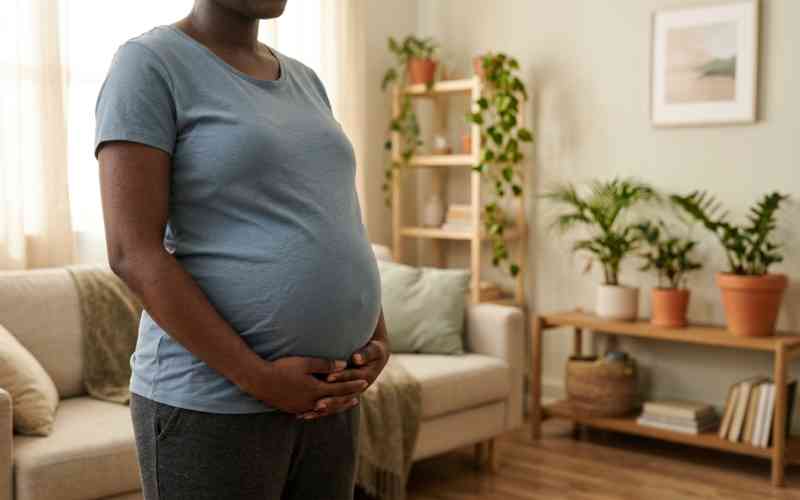
Their relationship strengthened profoundly during Noel’s pregnancy and childbirth a few months ago. As she underwent a physically and emotionally challenging phase of her life, her mother-in-law took an active role in supporting her through it.
“She took care of me when I was pregnant. She cleared my hospital bill and said that she knows we are young, even when we have put money aside,” she says.
Their relationship has been tested, but they know how to resolve their differences with respect. Whenever her actions upset her, her mother-in-law would correct her with love.
“She would tell me politely, 'Daughter, you did something that I did not like. I don’t get offended because she comes from a good place,” she says.
Noel describes her as a second mother that she never expected.
In some households, mothers-in-law are pillars of care, emotional support, guidance, and stability. Their relationships resemble motherhood and reflect a changing social dynamic wherein relationships with in-laws are no longer distant or formal.
Abdalla Yuwa, who has been married for four years, has a different kind of relationship with his mother-in-law that is held together by respect and cultural boundaries that prioritise stability and independence in the marriage.
He first met her in 2022 during an introduction ceremony while still dating her daughter. He recalls feeling confident and nervous as he entered her home for the first time.
“When we met, we were both silent, observing each other. She broke the tension when she humorously said If I fear her, will I be able to be with her daughter?” he says.
That moment set the tone for the relationship that followed. She asked detailed questions about his background, education, career, and intentions toward her daughter. Abdalla, an accountant and artist, says he was transparent in his responses.
“From that point, her attitude towards me changed. There was a level of respect I could see in her face,” he says.
Abdalla characterises the relationship as respectful, faith-based, and guided by mutual understanding and guidance. His mother-in-law prefers to advise them in matters like financial discipline, savings, long-term planning, and putting God first in everything.
His mother-in-law prefers to advise, and she doesn’t interfere in marital issues, making sure that they handle things on their own without her knowing about them.
“If there are conflicts, we do not take them to parents. That is how relationships stay stable. “If one of us is sick, she is always there to support us,” he says.
One of his most memorable experiences was being invited for an Iftar meal during Ramadan, where she prepared her signature meal, matobosha.
Grace Akoth says that mothers-in-law need to be celebrated because they gave birth to and nurtured the person you fell in love with.
“They are the ones who nurture respect in the family. Whenever spouses have marital issues, in most cases, it is the mother-in-law who helps in resolving them,” she says.
Psychologist Hellen Staula observes that not many celebrate their mothers-in-law, but it is something that should be embraced. She encourages people to do simple things to show appreciation, such as writing a handwritten letter or card, sending a text, or calling them with messages that are authentic and organic. You can also invite them over for a meal, buy them fabric, or ask them how you can help them to ease a burden in their life that will allow them to rest.
“Individuals who are well-raised see the need to appreciate their mothers-in-law for their partners. They do it when there is good communication and the couples live peacefully even when there are conflicts, which is part of life,” she says.
Sociologist Dr Kiemo Karatu explains that relationships between mothers-in-law and their children-in-law are socially constructed and depend on communication, mediation and mutual respect.
He notes that the way spouses present each other to their families influences early impressions. He says that successful relationships with mothers-in-law are earned through behaviour, respect, and contribution to family harmony.
“If the mother-in-law has been supportive and is interested in your welfare, and vice versa, that can create the connection. The relationship is what you have done to each other,” says Dr Karatu.
He adds that strong marriages tend to produce strong in-law relationships, while strained marriages often extend tension into wider family networks.
He believes that modern society has reduced the psychological distance between in-laws, making relationships more informal than in the past. For instance, a man can now embrace their mother-in-law with a hug. However, he says that boundaries are essential for maintaining marital stability.
“There is a need for psychological distance between one and their mother-in-law. Over-familiarity can sometimes create conflicts with external influence affecting a marriage,” he says.












 join
join