
 The Standard Group Plc is a multi-media organization with investments in media
platforms spanning newspaper print
operations, television, radio broadcasting, digital and online services. The
Standard Group is recognized as a
leading multi-media house in Kenya with a key influence in matters of national
and international interest.
The Standard Group Plc is a multi-media organization with investments in media
platforms spanning newspaper print
operations, television, radio broadcasting, digital and online services. The
Standard Group is recognized as a
leading multi-media house in Kenya with a key influence in matters of national
and international interest.

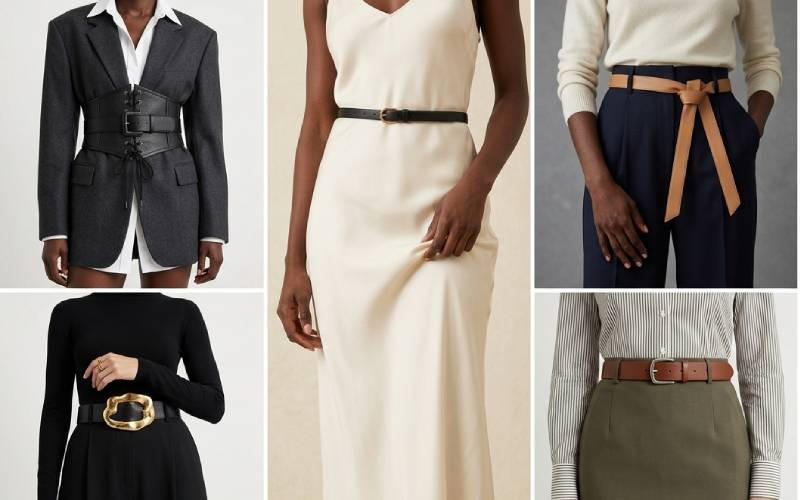
The belt is one of the most transformative tools in a woman’s wardrobe, yet it remains one of the most misunderstood.
Often relegated to the functional role of keeping trousers in place, the belt is in fact a structural instrument that can redefine a silhouette, elevate a basic outfit, and inject a sense of personality into a corporate or casual ensemble.
However, achieving that “effortless” look requires a keen understanding of proportion, placement and material.
The Dos
The primary goal of a belt is to create or emphasise an hourglass shape. To do this effectively, it is important to define your natural waist, match scale to your body type, and experiment with styling techniques.
For most women, placing a belt at the narrowest part of the torso, the natural waistline, is the most flattering choice, particularly when paired with high-waisted trousers or A-line dresses.
Ensuring the width of the belt complements your frame is equally important, as a thin, delicate belt often suits petite figures or lightweight fabrics such as silk, while a wider, more structured belt provides balance for heavier coats or voluminous dresses.
It is also worth experimenting beyond the traditional buckle, as longer, softer leather belts can be styled with a simple Parisian knot, creating a relaxed yet refined finish that feels less rigid than conventional fastening.
- Your ultimate hair accessories for surviving a messy hair day
- Outfit ideas for a night out with friends
- From braids to wigs: The many faces of African hairstyles
- How to style slogan sweatshirts for every occasion
Keep Reading
The Don’ts
Precision is essential when it comes to accessories, as a misplaced belt can inadvertently shorten the torso or create awkward bulk. A belt should sit comfortably on the fabric, as over-tightening can result in unflattering bunching and disrupt the overall silhouette.
It is also advisable to avoid competing textures, particularly when an outfit already features busy prints or heavy embroidery, in which case a simpler belt allows the garment to remain the focal point.
In addition, trousers with belt loops are generally best worn with a belt, as leaving the loops empty can make an outfit appear incomplete.
According to Lydia Kamau, a wardrobe consultant and personal stylist, the secret to belt success lies in the concept of “the third piece”.
She explains that a belt should not be viewed as an afterthought, but rather as the element that completes the story of an outfit.
“When wearing a blouse and a skirt, these form two pieces, while the belt acts as the anchor that brings them together.” She says.
She notes that a common mistake is choosing belts that contrast too sharply with an outfit, creating a visual break that can make the wearer appear shorter.
For those of a shorter stature, she recommends a monochromatic approach, matching the belt colour to the dress or trousers to create an unbroken vertical line that elongates the figure while still defining the waist.
She also emphasises the value of investing in a high-quality leather belt in a neutral shade such as tan or black, describing it as a long-term wardrobe staple that will outlast fleeting trends.
Whether cinching an oversized blazer or adding a touch of colour to a simple shift dress, the belt remains one of the most versatile elements of any wardrobe.
By respecting proportion and selecting quality materials, it is possible to transform a simple outfit into a considered and polished look with a single addition.






 join
join