
 The Standard Group Plc is a multi-media organization with investments in media
platforms spanning newspaper print
operations, television, radio broadcasting, digital and online services. The
Standard Group is recognized as a
leading multi-media house in Kenya with a key influence in matters of national
and international interest.

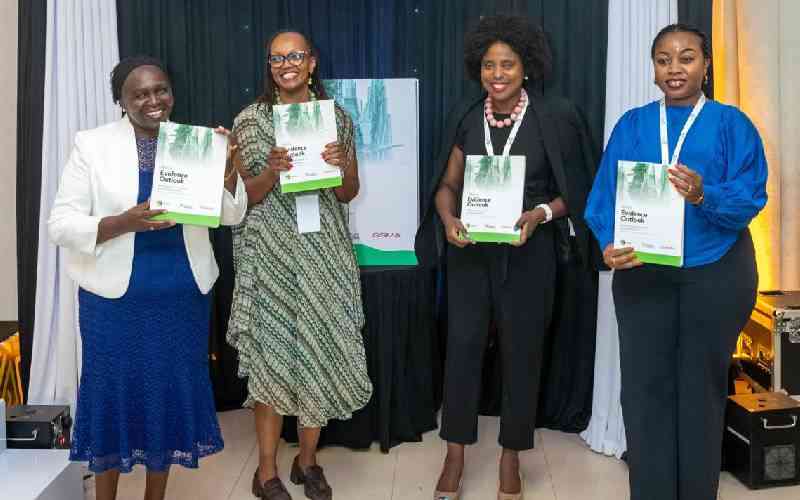
Africa is generating vast amounts of data, but much of the infrastructure, financing and decision-making power needed to turn it into knowledge remains outside the continent.
As artificial intelligence (AI) expands into healthcare, agriculture and education, a new report warns that Africa risks becoming a data supplier while others determine how it is used and who benefits.
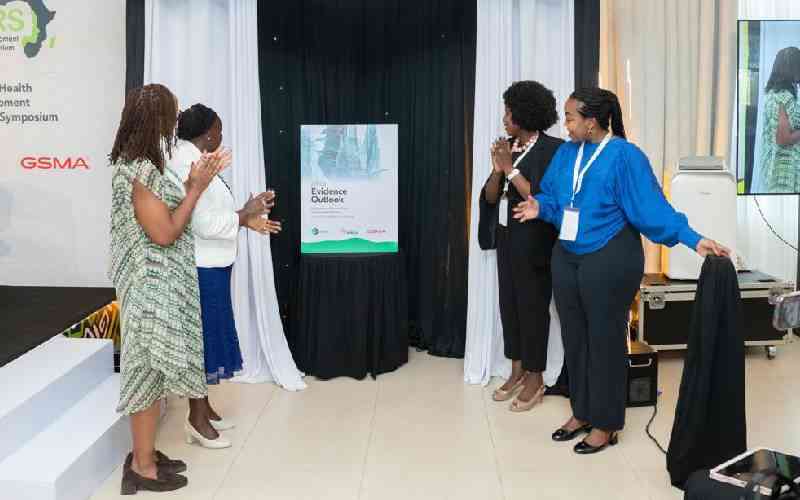
The report, Building African-Centred Data and Knowledge Systems: Pathways to New Models and New Power, was unveiled at the Africa Health and Development Annual Research Symposium in Nairobi. It maps more than 20 initiatives and seven case studies.
Africa contributes about 2.8 per cent of global scientific knowledge and has less than one per cent of global computing capacity. In Kenya, about 74 per cent of research financing remains external, exposing local research and data systems to shifts in donor priorities.
Anthony Vyarange of the African Population and Health Research Centre said the report was shaped by funding disruptions that affected ministries of health and externally supported projects used to inform decisions.
“We should not be naive to think that when you're participating, you have the authority. We don't,” he said, arguing that African institutions must move beyond participation to control how data is collected, accessed, shared and used.
The report notes that data sovereignty is not simply about where information is stored. It concerns who sets the rules, controls access, and determines reuse and benefits from products developed using that data. It calls for stronger African financing, shared digital infrastructure and systems that communicate across borders while remaining accountable to local institutions and communities.
The consequences of weak data systems are visible in healthcare. Evelyn Gitat, a speaker at the symposium, cited a study in Tanzania where researchers visited hospitals with electronic health records but found health workers unable to retrieve reports without help from ICT staff. Paper records were easier to access.
“If the person who has inputted the data into the electronic records cannot give you a report from the same records, then they're never going to be able to use the records,” she said.
She argued that digitisation must be accompanied by training so health workers can analyse information, rather than merely enter it. Patients, too, should be able to access and move their records between facilities.
“If you're not giving me control, I'm not giving you my data,” Gitau said, calling for transparency to build public trust.
The report warns that AI tools developed elsewhere may fail to reflect African realities if they are not adapted to local languages, cultures and indigenous knowledge.
Vyarange said systems must be designed around community experiences and connected infrastructure, not simply imported.
It recommends investment in skilled personnel, public-interest financing, ethical governance and partnerships that provide continuity beyond donor funding cycles.
The central question, the report argues, is whether new investments leave Africa with stronger institutions, greater control and the capacity to make its own decisions about the data shaping its future.











 join
