
 The Standard Group Plc is a multi-media organization with investments in media
platforms spanning newspaper print
operations, television, radio broadcasting, digital and online services. The
Standard Group is recognized as a
leading multi-media house in Kenya with a key influence in matters of national
and international interest.
The Standard Group Plc is a multi-media organization with investments in media
platforms spanning newspaper print
operations, television, radio broadcasting, digital and online services. The
Standard Group is recognized as a
leading multi-media house in Kenya with a key influence in matters of national
and international interest.

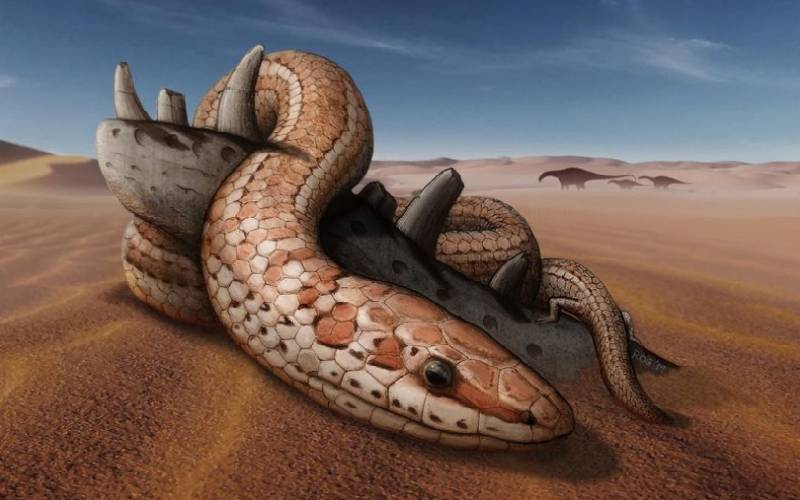
The remains of a mysterious snake with hind legs have been discovered in Patagonia, South America.
Researchers from the Fundación Azara at Universidad Maimónides, in Buenos Aires found the skull of the creature, which they believe dates back around 100 million years.
As well as hind legs, the snake also had a cheekbone called a jugal bone - a feature that has all but disappeared in today’s modern snakes.
Fernando Garberoglio, who led the study, said: “Our findings support the idea that the ancestors of modern snakes were big-bodied and big-mouthed - instead of small burrowing forms as previously thought.
“The study also reveals that early snakes retained their hindlimbs for an extended period of time before the origin of modern snakes which are for the most part, completely limbless.”
To study the skull, the researchers used micro-CT scanning, which allowed them to visualise the structure without damaging the fossil.
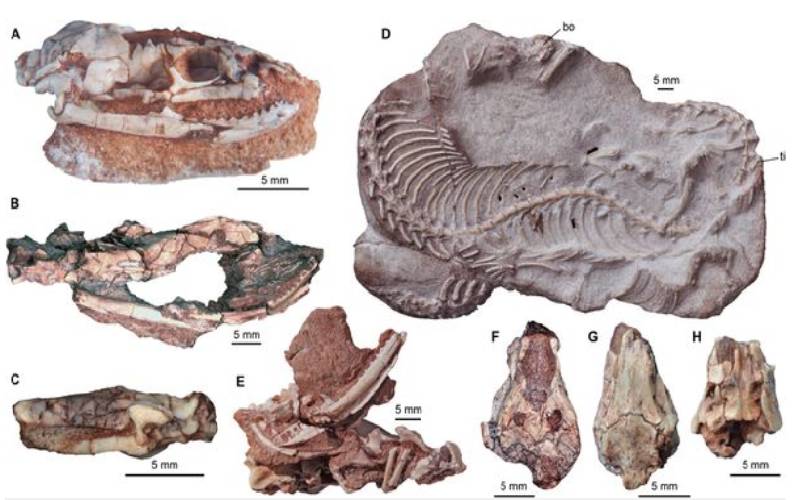
Named Najash rionegrina, the snake takes its name from the legged biblical snake Nahash.
The researchers hope their findings will help to reconstruct the early steps in the evolutionary history of snakes.
- Health insurance tops search trends that defined the nation
- Health practitioners call for inclusivity in policy formulation
- Meru residents fear upgrade of hospital will deny them care
- Faith based, private medical facilities hit by US health deal
Keep Reading
Professor Michael Caldwell, co-author of the study, said: “This research revolutionises our understanding of the jugal bone in snake and non-snake lizards.
“After 160 years of getting it wrong, this paper corrects this very important feature based not on guesswork, but on empirical evidence.”













 join
join