
 The Standard Group Plc is a multi-media organization with investments in media
platforms spanning newspaper print
operations, television, radio broadcasting, digital and online services. The
Standard Group is recognized as a
leading multi-media house in Kenya with a key influence in matters of national
and international interest.
The Standard Group Plc is a multi-media organization with investments in media
platforms spanning newspaper print
operations, television, radio broadcasting, digital and online services. The
Standard Group is recognized as a
leading multi-media house in Kenya with a key influence in matters of national
and international interest.

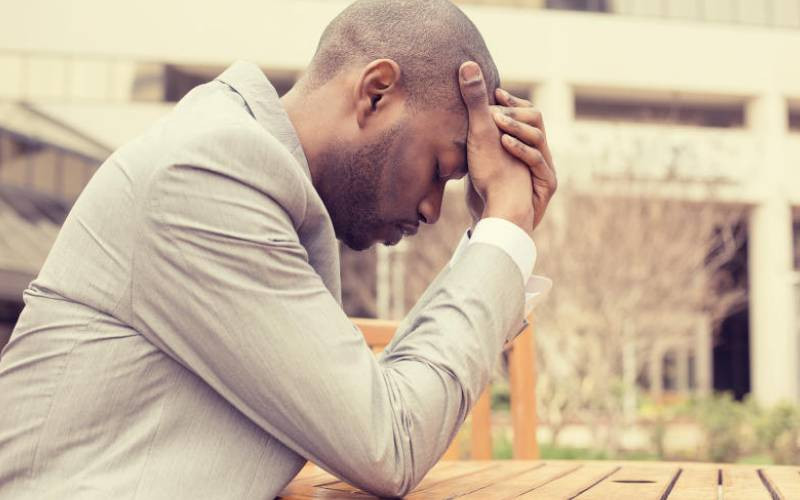
Men's silent struggle with mental health (Photo: iStock)
After enduring a toxic relationship for nine years, Kelly (not his real name) separated from his wife a month ago. The 38-year-old accountant left his matrimonial home, abandoning everything it represented, including his wife and daughter.
He then filed for divorce, describing his marriage as traumatic and abusive, both physically and emotionally.
Devastated, Kelly wants no part of their shared investments. Instead, he seeks peace of mind and aims to restore his sanity before rebuilding his social and economic life.
When asked when his troubles began, Kelly revealed that his marriage became strained two years after their wedding.
"I suffered in silence, fearing I would appear weak if I told family and friends that my wife assaulted me and was involved with other men, some known to me," he said.
The self-described introvert withdrew from his male friends when they began scrutinising his relationship, realising he was struggling with mental health issues. Alcohol and movies became his primary coping mechanisms.
He confided in no one in public and at home, he retreated into isolation, all while enduring the agony of sharing a bed with his estranged wife.
- Ways parents can help children set New Year resolutions
- How to parent purposefully this year
- Why structure is your child's greatest security
- Art of parenting highly sensitive children
Keep Reading
Kelly is not alone. Many men live in trauma and misery, trapped in irreconcilable marital conflicts, overwhelming financial burdens or personal struggles they cannot escape. Yet, they keep their pain hidden.
It could be stalled career advancement, long-delayed projects, failed relationships or past mistakes that continue to haunt them. Unlike women, men rarely speak out. Many suffer in silence.
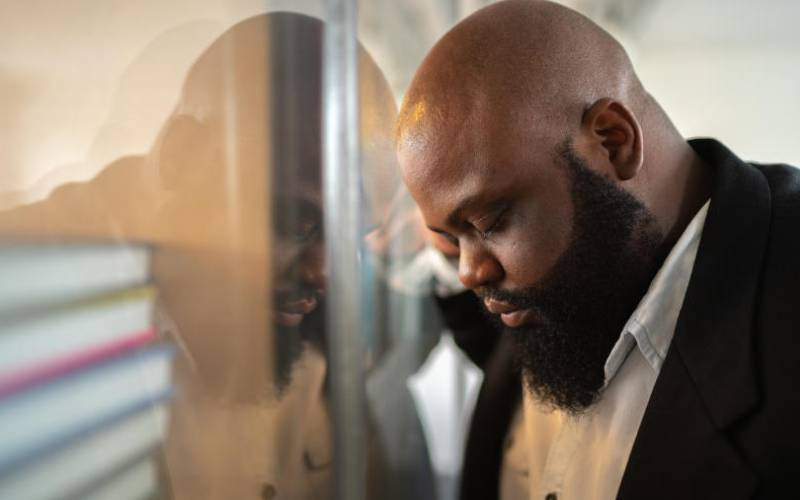
Raymond Muthee, upon entering the corporate world, struggled to balance work and personal life. He routinely worked beyond scheduled hours, leading to fatigue and decreased productivity. His social life became non-existent and sleepless nights were common as work consumed his thoughts.
A self-confessed workaholic, he resisted taking time off. Eventually, Raymond recognised the problem and began reading books on personal development and psychology to improve his well-being.
"I used to struggle with taking breaks. Now, I realise I can enjoy life without constantly working. After work, I avoid all work-related matters," he says.
Raymond represents men who prefer to handle challenges independently. He occasionally meets with two close friends to discuss careers, aspirations and relationships.
"I primarily look inward for solutions and occasionally talk to my friends. Some people will listen only to spread your problems maliciously," he says.
Common mental health struggles among men include anxiety, depression, irritability, stress, burnout, substance abuse disorders, post-traumatic stress disorder and bipolar disorder.
A Kenya Red Cross report indicates that 40 per cent of men have never discussed their mental health. While one in ten men experiences depression or anxiety, less than half receive treatment.
According to the Centers for Disease Control and Prevention (CDC), men are four times more likely to die by suicide than women. A World Health Organization (WHO) report states that Kenya's crude suicide rate is 6.1 per 100,000 people, translating to approximately four suicide deaths per day.

Psychologist Sharon Odenge notes that only five per cent of her walk-in clients are men. Often, these men are admitted to psychiatric wards by family members or close relatives.
Sharon observes that men generally avoid hospitals, both for physical and mental health issues. They have normalised their struggles to the point of believing they don't need therapy.
"Men often realise they are depressed when they reach a critical point. Some don't recognise their mental health issues. Once they start therapy, they find it beneficial," Sharon says.
Sharon attributes men's silence to stigma and shame, perpetuated by societal views that equate masculinity with emotional suppression. From a young age, boys are taught to associate emotional expression, such as crying, with femininity. They grow into men expected to be emotionally self-sufficient and strong.
Social norms discourage men from expressing vulnerability or seeking help, exacerbating their mental health challenges. Men are conditioned to view vulnerability as shameful and the fear of judgment deters them from seeking assistance, Sharon notes. She also observes that men rarely engage in open discussions about their struggles.
The societal expectation that men are providers reinforces the perception that seeking help is a sign of weakness or femininity. The idea that men should endure struggles while self-care is reserved for women further contributes to mental health issues.
"Society expects men to be strong and they strive to meet this expectation at the expense of their mental health. Their coping mechanisms often involve alcohol and excessive work hours. They avoid therapy because it's an ongoing process and they seek the instant gratification provided by alcohol," she says.
Emotional vulnerability is crucial for men's mental health. Sharon encourages men to reject the notion that speaking up is a burden and to be more accepting of those who dare to be vulnerable.
The stigma surrounding mental health also discourages men from seeking therapy, with many believing it's ineffective or that they can resolve their issues independently.
Sharon emphasises that society can support men by raising awareness about mental health and creating safe spaces for discussion. We should improve mental health services by establishing men's support groups.

Early intervention is vital for men's mental health, leading to faster recovery, normalising help-seeking behaviour, reducing physical health problems, promoting healthy coping mechanisms, enhancing emotional awareness and lowering suicide risk.
Signs of mental health struggles in men include substance abuse, burnout, weight loss, suicidal thoughts, risky behaviours like reckless driving and severe conditions like psychosis and bipolar disorder. The tragic outcome is often suicide.
"Some men turn their frustrations into abuse, damaging relationships and affecting their partners," she says.
"Men are expected to be providers, but this isn't always the case in today's society. Many face unemployment and financial instability, leading to mental health issues. Unsupportive partners, societal pressures and relationship problems can also cause depression," she says.
Sharon says men often lack the vocabulary and awareness to describe their emotions.
She advises men to address their mental health challenges, practice self-care, exercise, use grounding techniques, and seek therapy, even without apparent issues. For years, counselling has been seen as a last resort, but it can be a tool for maintaining mental strength.
"There are positive shifts in society regarding men and mental health, but much work remains. For too long, we've believed counselling is only for those with severe problems, which isn't true," she says.
Sharon emphasises the need for the government to employ more psychologists, psychiatrists and establish more psychiatric units.
Resources like Basic Needs Kenya, CBT-Kenya and Oasis Africa offer individual and group therapy and awareness programs. The Sexual Violence Research Institute (SVRI) provides counselling for men dealing with gender violence, substance abuse and stress, while Jitunze Wellness hosts men's mental health wellness initiatives. For free counselling and psychosocial support, contact Red Cross Kenya by calling 1199.





 join
join