
 The Standard Group Plc is a multi-media organization with investments in media
platforms spanning newspaper print
operations, television, radio broadcasting, digital and online services. The
Standard Group is recognized as a
leading multi-media house in Kenya with a key influence in matters of national
and international interest.

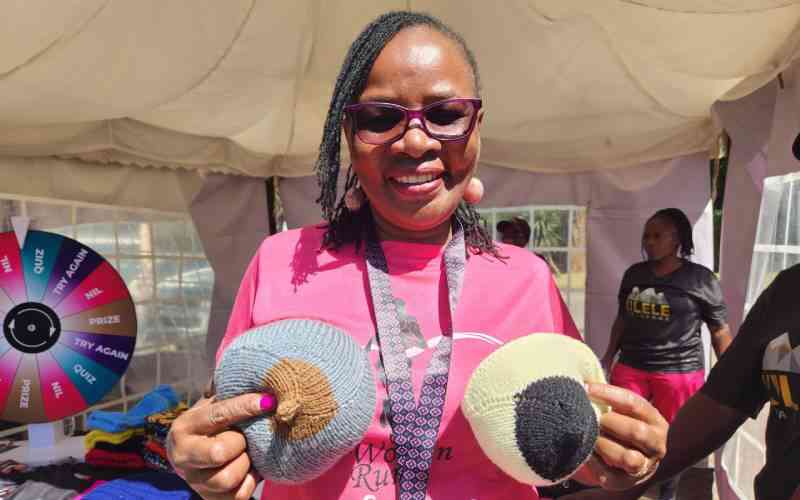
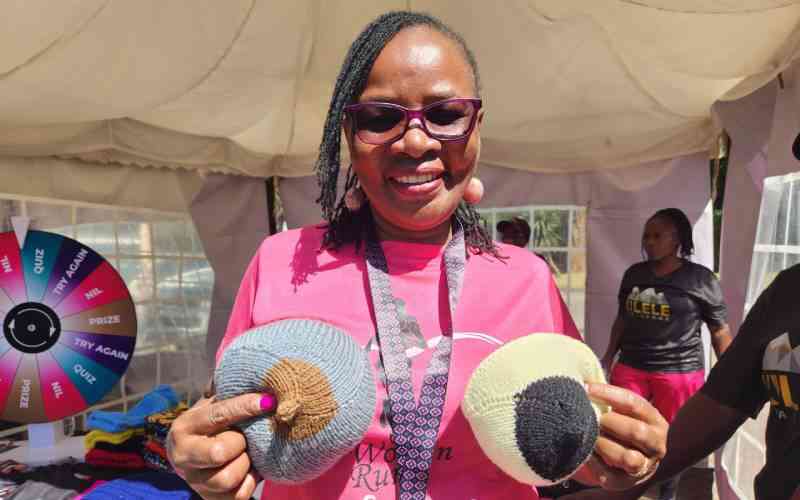
53-year-old Mwangi, a breast cancer survivor with her knitted breast prostheses at the Pinktober Women’s Run 2026 in Nairobi. [Maryann Muganda, Standard]
In a sea of pink shirts, skirts and matching shoes, women stream across the finish line, some after completing 5km, others after pushing through 10km. They collect medals, pose for photographs and celebrate more than just a race.
They are running for a purpose: to promote breast health, encourage early detection and stand in solidarity with women affected by breast cancer during Pinktober Women's Run 2026 in Nairobi.
Among them is 53-year-old Mary Mwangi, a breast cancer survivor whose presence on the course carries a deeply personal meaning.
Her cancer journey began in 2016 on what had started as an ordinary morning.
“I had just woken up like a normal day and, as I was preparing breakfast, I realised the sugar dish was empty. As I was bending to pick up sugar, I felt a sharp pain in my hip joint, the hip bone,” she recalls.
The pain was so severe that Mwangi could not walk and had to be taken to hospital for tests.
- PPB warns of falsified Cancer drug batch circulating in the market
- Breast cancer cases surge in Kisii as Regional Cancer Center plans bring hope
- Costly battle: Bills, stockouts and delays deepen breast cancer burden
- Doctors raise concern over low uptake of breast cancer screening
Keep Reading
Doctors diagnosed her with spinal tuberculosis and she spent 11 months on TB treatment. Instead of improving, her condition deteriorated.
“Then the doctor realised there was something wrong because he said, Within three months you are supposed to improve if it was TB,” she says.
Further tests revealed the real problem.
“I did many tests, and the results came back positive for spine cancer stage 3B. So that's where I started my journey, and I started cancer treatment,” she says.
Mwangi began radiotherapy and oral chemotherapy. Before she could complete treatment, she noticed another worrying change.
While bathing one day, she felt a lump in her left breast.
“I felt like a swelling, a bump, and I went to the mirror to check myself. Then I felt it,” she says.
Tests confirmed stage three breast cancer.
“When I got breast cancer, when I felt that lump and the results came, I was very devastated,” she says.
After months of treatment for what she had believed was spinal TB, the new diagnosis shook her confidence in treatment.
“I was disappointed in treatment. I was asking myself, if I have done this first line and it is not working, how sure am I that the second line will work?”
It took persuasion from friends and family before she agreed to continue treatment.
“I went for a mastectomy, total removal of the breast. Then I did chemotherapy and radiotherapy.”
But she was not prepared for what would happen after the operation.
“I knew I was going to remove my breast, but in my mind I was like, ‘I am coming back with my breast.’ Nobody prepared me for what to expect from theatre.”
When she woke up, her breasts were heavily bandaged.
“I started touching and I could not feel. It was like a hole. That one almost put me into depression.”
Accepting her new body took time. “Accepting the new you takes time.”
For almost two years, she barely spoke about what had happened.
“I was not talking about cancer. The reason was the stigma surrounding cancer.”
The loss also left her wondering how to restore her appearance and dignity.
“I did not even know what I would use as a rehabilitative material to restore my dignity. I met a group where I was introduced to prostheses.”
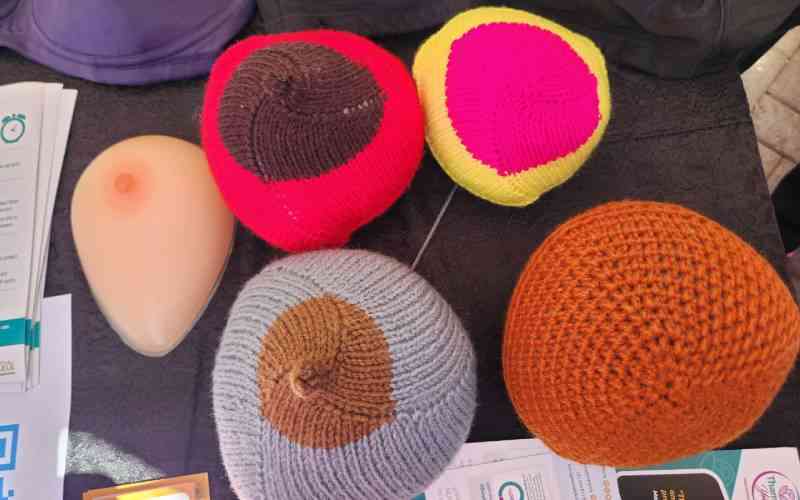
Two years after her mastectomy, she bought a silicone breast prosthesis for Sh22,000. But during treatment, she found another way to cope.
While on bed rest, she returned to knitting. “I started knitting. To me, it was therapy.”
She eventually knitted about 200 chemotherapy hats, which she donated to children at Kenyatta National Hospital.
Her knitting later became a way of helping other women who had undergone mastectomy.
Since 2018, she has been making knitted breast prostheses for women who cannot afford commercial alternatives. Each costs Sh1,000.
“Sometimes I meet able cancer survivors. They buy two or three for other cancer survivors. And because I also sell, I get more money to buy materials and knit more.”
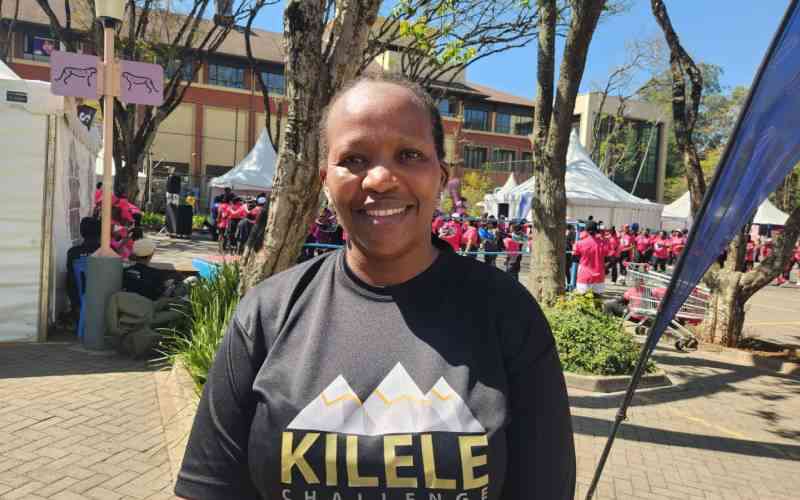
For Mwangi, what began as a way of coping with cancer has become a way of helping other women regain confidence.
“The breasts are considered a woman's pride,” she says.
Mwangi's experience is unfolding against a growing breast cancer burden across Africa.
Breast cancer remains the most commonly diagnosed cancer among women globally and the leading cause of cancer death among women. In sub-Saharan Africa, the burden is particularly severe as diagnosis often comes when disease is already advanced.
In 2022, sub-Saharan Africa recorded an estimated 146,130 new breast cancer cases and 71,662 deaths. The World Health Organisation projects that by 2040, breast cancer cases in Africa could rise by 85.7 per cent and deaths by 89 per cent if current trends continue.
WHO says only about one in two women with breast cancer in Africa survives five years, compared with more than 90 per cent in high-income countries. Between 60 and 70 per cent of women in the African region are diagnosed at a late stage.
Kenya is no exception. The latest WHO estimate puts annual breast cancer diagnoses in Kenya at about 7,243, with 3,398 deaths.
The Kenya Cancer Statistics Report 2024 found breast cancer accounted for 28.3 per cent of cancers diagnosed among women, ahead of cervical cancer at 21.7 per cent.
Dr Anthony Nderitu, a consultant clinical and radiation oncologist at Kilimani Cancer Centre, says breast cancer occurs when cells in breast tissue multiply abnormally.
“It most commonly begins in the milk ducts, known as ductal carcinoma, or in the lobules, where milk collects, known as lobular carcinoma.”
Some cancers are hereditary, while others involve gene mutations.
“So once the gene mutates, it means that cancer or other cells are getting an abnormal signal. And then they start multiplying uncontrollably,” he explains.
Hormonal exposure is also an important risk factor.
“These things that I've called hormonal factors are because you are exposed to the oestrogen hormones for a long time and it gives you that increased risk,” he says.
Other risk factors include early menstruation, late menopause, having a first child after 30, not breastfeeding, hormone replacement therapy, obesity, lack of physical activity, tobacco use and excess alcohol.
Dr Nderitu says women should seek medical attention when they notice changes rather than waiting for pain or severe symptoms.
Warning signs include a lump, breast tenderness, wounds or ulcers, skin dimpling, an irregular breast surface, nipple discharge and swollen lymph nodes around the armpit or collarbone.
Breast cancer can sometimes be mistaken for mastitis, particularly among breastfeeding women.
“They need proper examination to differentiate it from the infection that you can get from mastitis,” he says.
For 50-year-old Eunice Wambua, delay came in a different form.
She was 39 when she developed a breast lump that was initially treated as mastitis.
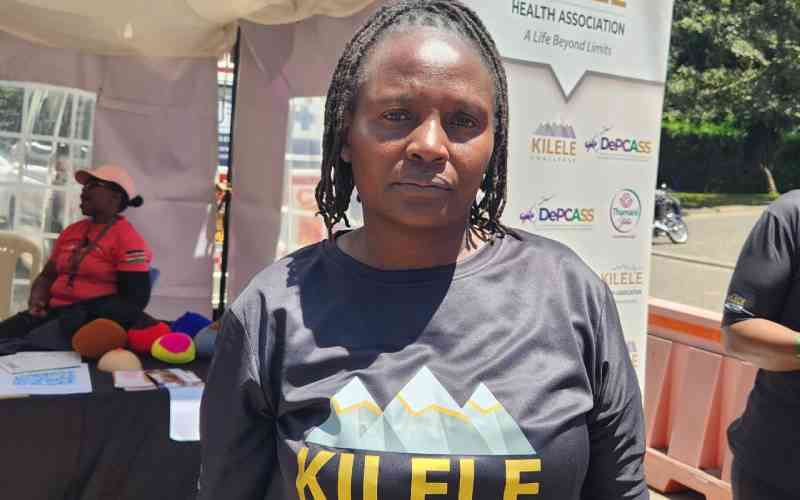
“I felt the lump in 2015, but the real diagnosis came in 2017. So I have walked the cancer journey since then. This is my 11th year,” she says.
The lump appeared shortly after she stopped breastfeeding her youngest child. Her breasts were still swollen from milk when she noticed something unusual.
An ultrasound led to a diagnosis of mastitis and she was given antibiotics for about two weeks.
Nearly two years later, her nipple began to retract. A second ultrasound raised a different possibility.
“The lump was suspicious for breast cancer,” she says.
A biopsy confirmed the diagnosis. “The results were positive for cancer.”
But denial delayed treatment. “I just picked up my results and went home. I stayed for another six months. In fact, I did not even tell anybody about the diagnosis.”
As the pain worsened, she eventually told her sister. The family sought several opinions from about five oncologists, all of whom confirmed the diagnosis.
She underwent a right mastectomy, eight cycles of chemotherapy and 25 sessions of radiotherapy, followed by hormonal therapy.
But the operation came with an emotional cost. “I thought they would only remove the lump. In fact, when they removed the bandage, that is when I realised they had removed the whole breast.”
The change affected even how she dressed. “When you have one breast and the other one is not there, even wearing clothes is a big problem. How do you wear the clothes?”
Her marriage also collapsed after her husband discouraged her from pursuing treatment.
“My then husband told me that for him, cancer does not get cured. There was no need for me to be treated. The best I could do was go home, stay there and wait for my death so that I did not waste money on treatment.”
Despite the setbacks, she chose treatment. She later developed persistent bleeding while on hormonal therapy. A scan showed that her uterus was swollen, with doctors attributing the bleeding to tamoxifen. She eventually underwent a hysterectomy in December 2020.
Looking back, she says survival matters more than the loss of body parts.
“It is better to be alive with maybe several organs removed.”
A study at Aga Khan University Hospital in Nairobi comparing women who underwent breast-conserving surgery with those who underwent modified radical mastectomy found that, one year after surgery, women who had breast-conserving treatment reported better overall quality of life than those who had mastectomy.
A prospective study involving 133 women undergoing mastectomy in Ghana and Ethiopia found that breast-related body-image satisfaction declined after surgery. The researchers, however, also found improvements in anxiety and depression over time, highlighting the importance of psychological support before and after surgery.
Dr Nderitu says women need to understand their surgical options.
“It is distressing for ladies, so you need to discuss with them the kind of mastectomy you're going to do.”
Where appropriate, women can use special bras and inserts, undergo reconstruction or use silicone prostheses.
“All those are in an attempt to give them their self-esteem and also to make them feel like their breast is still there,” he says.
Benda Kithaka, founder and executive director of Kilele Health Association, a cancer advocacy organisation working across Africa, says Kenya must put greater emphasis on prevention and early detection.
“Cancer in Kenya is rising. The challenge in Kenya is that we get diagnoses so late. Almost over 80 per cent of women are diagnosed late.”
She says responsibility cannot be placed on women alone.
“Sometimes we're the ones who have failed them because we didn't do prevention,” she says.
Kithaka says government has invested heavily in cancer treatment, but prevention needs greater attention.
“Government needs to invest more in prevention.”
Teaching women self-examination and training nurses to conduct clinical breast examinations, she says, require less investment than treating advanced disease.
“When cancer is found early, you may only need to remove a node, not the whole breast.”
Chemotherapy and radiotherapy, by contrast, can cost hundreds of thousands to millions of shillings.
“We're doing more of the curative, which overloads the healthcare system,” she says.
Kilele trains survivors to educate women in their communities about self-examination and early detection. It also runs medical camps with partners and links women with health facilities when screening identifies a concern.
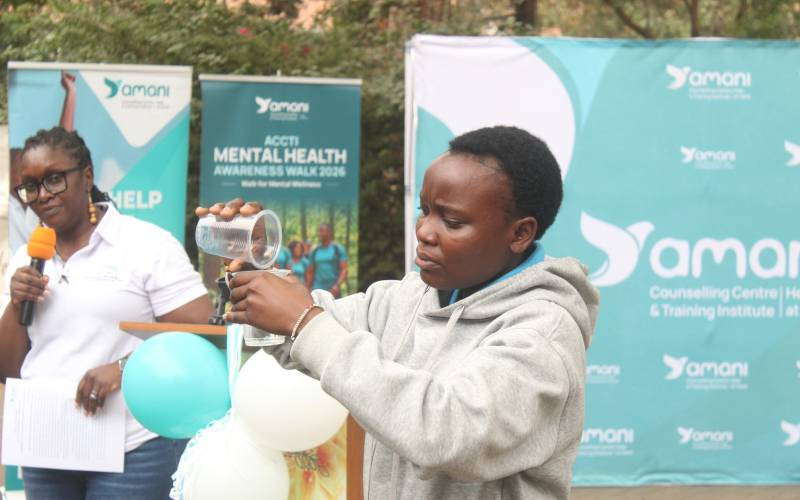
The organisation provides counselling and trains survivors as lay counsellors with Amani Counselling Centre.
“We don't see the emotional turmoil that comes with cancer,” Kithaka says, referring to the stigma, fear and anxiety that can accompany diagnosis and treatment.
The organisation has also helped survivors acquire life skills and make breast prostheses.
Oncology nurse Joan Suter at Kilimani Cancer Centre encourages women to become familiar with their breasts.
“Every time you're past your menses, 3 to 4 days, do it. Do it regularly,” she says.
Women who have reached menopause should examine themselves every month.
“It should be a routine,” she says. The armpit should also be checked, while women should watch for unusual lumps, nipple discharge and changes in the skin or appearance of the breast.
“We are aware that the breast of a woman is not smooth; there are nodules inside, but an abnormal lump you will notice,” she says.
Anyone who notices a change should seek medical attention rather than waiting for it to disappear.
Yet Suter says fear and shyness continue to keep some women away from health facilities.
“In Kenya, rarely do women come for check-ups.”
Her message is simple. “Breasts, as a medic or as a nurse, we are there to help you. Just be free, be free with us, be open to physical examination.”
Wambua, through Kilele Health Association, now advocates for women with cancer; she is also pursuing a diploma in counselling after losing her employment following her diagnosis.
“I did not get counselling in the process of my life. Now I am doing a diploma in counselling so that I can acquire the skills to support other women who are going through cancer.






 join
