
 The Standard Group Plc is a multi-media organization with investments in media
platforms spanning newspaper print
operations, television, radio broadcasting, digital and online services. The
Standard Group is recognized as a
leading multi-media house in Kenya with a key influence in matters of national
and international interest.
The Standard Group Plc is a multi-media organization with investments in media
platforms spanning newspaper print
operations, television, radio broadcasting, digital and online services. The
Standard Group is recognized as a
leading multi-media house in Kenya with a key influence in matters of national
and international interest.

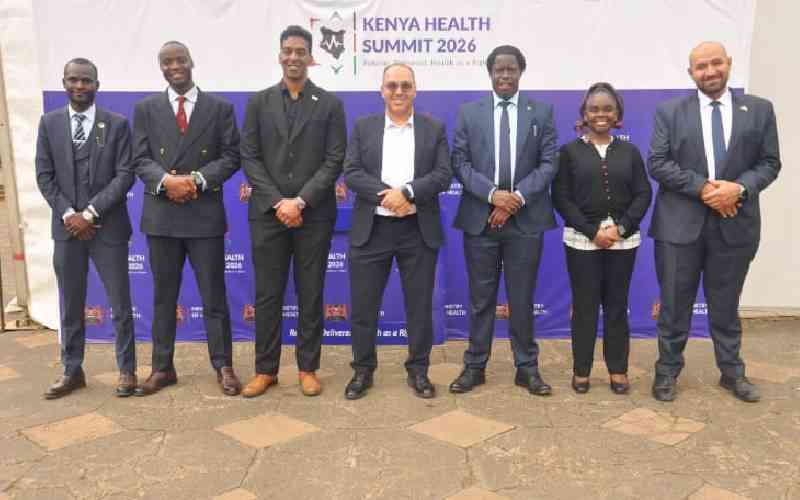
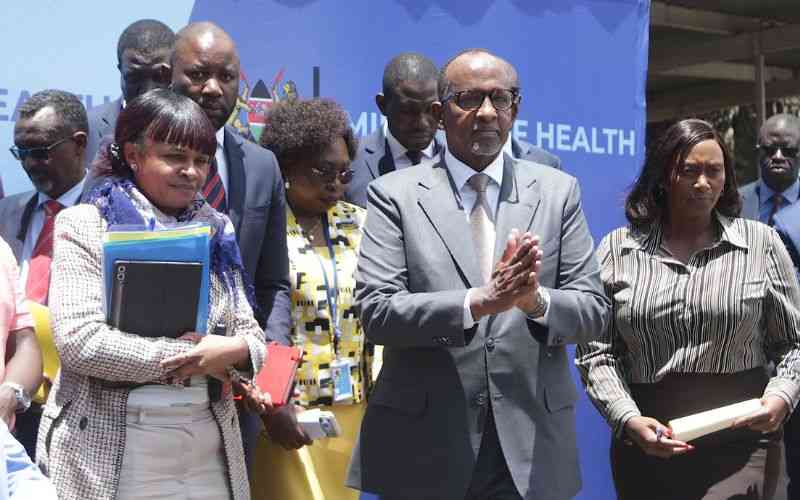
Rabak Sami Ahmed, representative of Egyptian molecular diagnostics manufacturer Remedy, and health stakeholders during the Kenya Health Summit 2026 in Nairobi on August 19, 2026. [Noel Nabiswa, Standard]
Kenya is exploring the use of portable and locally manufactured medical diagnostic technologies to reduce the cost of healthcare and bring specialised services closer to patients, particularly those living in underserved and remote areas.
The technologies, showcased during the Kenya Health Summit 2026 at the Kenyatta International Convention Centre (KICC) in Nairobi, include mobile molecular laboratories capable of conducting advanced diagnostic tests outside conventional hospital laboratories.
For patients in remote areas, accessing specialized diagnostic services often means travelling long distances to referral hospitals, increasing both the financial and logistical burden of seeking care. Mobile diagnostic platforms could help bridge this gap by taking testing services closer to communities.
In Baringo County, a mobile molecular laboratory has been deployed to communities with limited access to healthcare and unreliable electricity. Residents were screened for Hepatitis B, with those who tested positive undergoing molecular testing to determine their viral load.
The approach demonstrates how mobile technology can support early detection while reducing the need for patients to travel to major urban centers for specialized tests.
Rabak Sami Ahmed, a technical representative of Egyptian molecular diagnostics manufacturer Remedy, said decentralizing diagnostic services is critical to achieving universal health coverage.
- Free maternity care still unclear despite new SHA package
- Busia county government sets up Ebola isolation centre
- Eye diseases surge as Kenya battles cataract backlog and dangerous misuse of steroid eye drops
- New non-drug therapy transforms cancer care
Keep Reading
“Health has to reach the people where they are,” Ahmed said.
He said the company is seeking partnerships with county-level hospitals and other health institutions to expand access to molecular diagnostics, particularly in remote parts of the country.
Ahmed said the company's experience in Egypt shows that affordable diagnostic technologies can help lower the cost of testing, noting that its solutions have reduced diagnostic costs by about 40 per cent.
“If we replicate this in Kenya, we will be able to achieve diagnostics at a much more affordable price,” he said.
Osama Ismail, Remedy's representative in Kenya, said the company is also interested in working with the Ministry of Health and research institutions to strengthen the country's diagnostic capacity.
However, expanding molecular diagnostics beyond major towns will require more than purchasing and distributing equipment. Health facilities will need reliable electricity, affordable reagents, skilled laboratory personnel, equipment maintenance and quality assurance systems.
Sustainable financing will also be critical to ensuring that patients can afford the tests once the technology reaches local facilities.
Without these supporting systems, there is a risk that sophisticated diagnostic equipment will remain concentrated in urban hospitals, leaving rural communities dependent on distant referral laboratories.
The Kenya Health Summit 2026, held under the theme “Reform Delivered. Health as a Right,” brings together health leaders, county governments, innovators and development partners to assess the country's health reforms, including primary healthcare, health financing and health technologies.
As Kenya advances its universal health coverage agenda, bringing diagnostic services closer to communities could help promote earlier detection, reduce travel costs and improve access to timely treatment.
The challenge now is to ensure that the technology does not remain confined to exhibitions and major hospitals, but is sustainably deployed in the communities that need it most.







 join
join