
 The Standard Group Plc is a multi-media organization with investments in media
platforms spanning newspaper print
operations, television, radio broadcasting, digital and online services. The
Standard Group is recognized as a
leading multi-media house in Kenya with a key influence in matters of national
and international interest.
The Standard Group Plc is a multi-media organization with investments in media
platforms spanning newspaper print
operations, television, radio broadcasting, digital and online services. The
Standard Group is recognized as a
leading multi-media house in Kenya with a key influence in matters of national
and international interest.

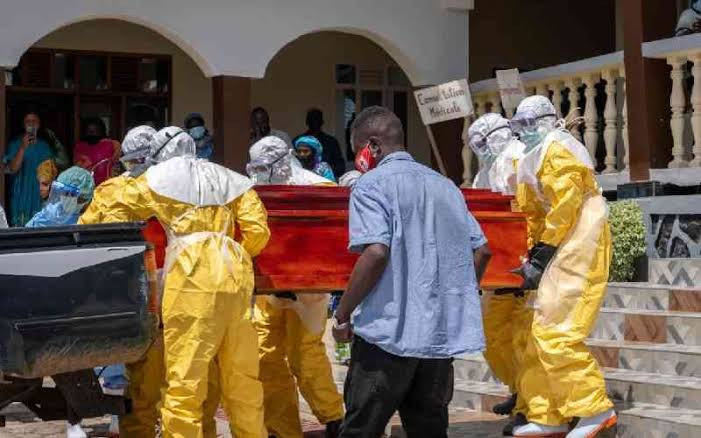
The coffin of a person suspected of having died from Ebola is hoisted onto a pick-up truck by health works at a hospital in Bunia , in the eastern DRC , on May 25, 2026. [AFP]
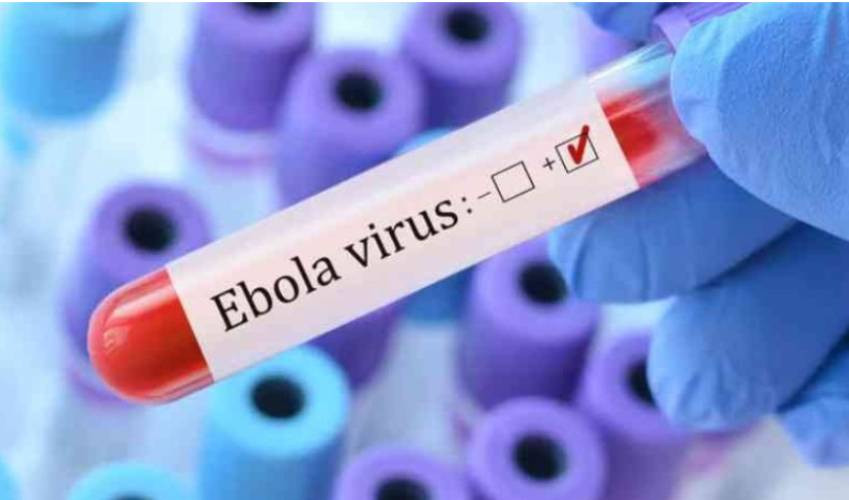
The Ebola outbreak in the Democratic Republic of Congo (DRC) has taken a turn with a fatal case reported in Bas-Uele province, extending the epidemic’s reach to a sixth province. The case, a motorcycle-taxi driver who traveled from Haut-Uele to Bas-Uele’s capital, Buta, before succumbing has heightened concerns about cross-border movement between northern DRC and South Sudan.
Haut-Uele’s proximity to South Sudan and the region’s flow of people and goods across borders highlights the risks linked to this development.
Latest DRC government figures show 4,449 confirmed cases, including 2,061 deaths, with 716 patients still hospitalized or isolated. The case fatality rate stands at 46.3 percent, while contact tracing reaches 82.7 percent, according to authorities.
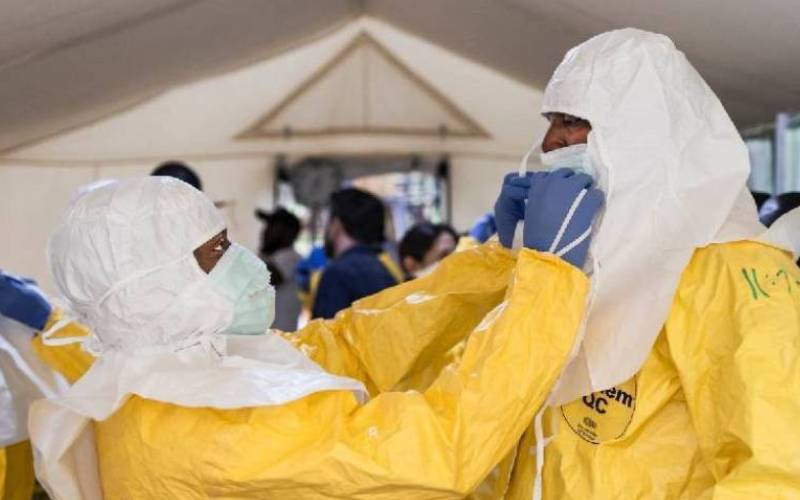
“Surveillance and health control mechanisms remain fully mobilized,” officials said. “Teams continue investigations, case transfers to treatment centres, and screening at entry points.”
The outbreak is driven by the Bundibugyo ebolavirus; a rare strain without any licensed vaccine or specific treatment. While Ituri province remains the epicenter, the appearance of a fatal case in Bas-Uele reveals the difficulty of containing Ebola in an area marked by frequent cross-administrative and international movement.
This case amplifies fears about onward spread to South Sudan. The International Organization for Migration (IOM) supports health screenings and surveillance at border crossings and along critical travel routes, having conducted over one million health checks in Ebola-affected and at-risk regions.
- Duale: Three suspected Ebola cases tested negative, surveillance upped
- Ebola by force
- US backs Kenya's Ebola fight with Sh1.9 billion, targets 22 counties
- MSF Ebola training in Kenya prepares doctors for 'intense' job
Keep Reading
In South Sudan, nearly 700,000 people were screened at border posts in the first two months of the outbreak, and close to half a million received Ebola awareness messaging. Market days at busy border crossings can draw up to 1,500 people, highlighting the scale of movements health teams must monitor.
Attention now turns to South Sudan and Kenya’s Turkana County, both key points along established movement corridors. Buta lies roughly 650 to 750 kilometers from Juba, South Sudan’s capital, while Turkana borders South Sudan farther east, making it crucial for early detection given regular cross-border traffic.
Kenya has raised its Ebola preparedness to nearly 90 percent, from 60 % early this year reflecting months of training, improved surveillance, and infection control measures as part of efforts to guard against spread from affected neighbors.
While the geography raises concern, it does not imply that Ebola is actively moving along these corridors. Ebola spreads only through direct contact with bodily fluids of symptomatic or deceased patients. Merely sharing a border or route poses no automatic risk.
The challenge lies in identifying cases quickly, especially when infected individuals travel before symptoms appear or contacts are traced. Prompt surveillance at borders, transport hubs, and communities with frequent cross-border movement is therefore essential as the outbreak pushes north.
Kenya has singled out five counties for intensified Ebola preparedness. Turkana leads this list due to its border with South Sudan and active movement of people and goods. Other priority areas include Nairobi, Mombasa, Kisumu, Bungoma, and several counties with significant travel links.
The Ministry of Health has strengthened surveillance and response in Turkana, boosting community awareness and ensuring suspected cases can be rapidly identified, isolated, and referred.
The outbreak’s control is hampered by delayed detection, insecurity, population displacement, and complexities in contact tracing. WHO has emphasized that insecurity and mistrust in affected areas severely hinder surveillance and response.
WHO Director-General Dr. Tedros Adhanom Ghebreyesus underlined that Ebola cannot be tackled separately from the ongoing humanitarian and security challenges.
“Insecurity, displacement, and population movement complicate response efforts, alongside deep mistrust within communities,” he said.
Dr. Tedros also warned against broad travel bans, which disrupt critical movements and response without mitigating Ebola transmission risks.
“Blanket travel restrictions are an unnecessary overreaction that can do more harm than good,” he said, advocating instead for focused screening at points of departure.







 join
join