
 The Standard Group Plc is a multi-media organization with investments in media
platforms spanning newspaper print
operations, television, radio broadcasting, digital and online services. The
Standard Group is recognized as a
leading multi-media house in Kenya with a key influence in matters of national
and international interest.
The Standard Group Plc is a multi-media organization with investments in media
platforms spanning newspaper print
operations, television, radio broadcasting, digital and online services. The
Standard Group is recognized as a
leading multi-media house in Kenya with a key influence in matters of national
and international interest.

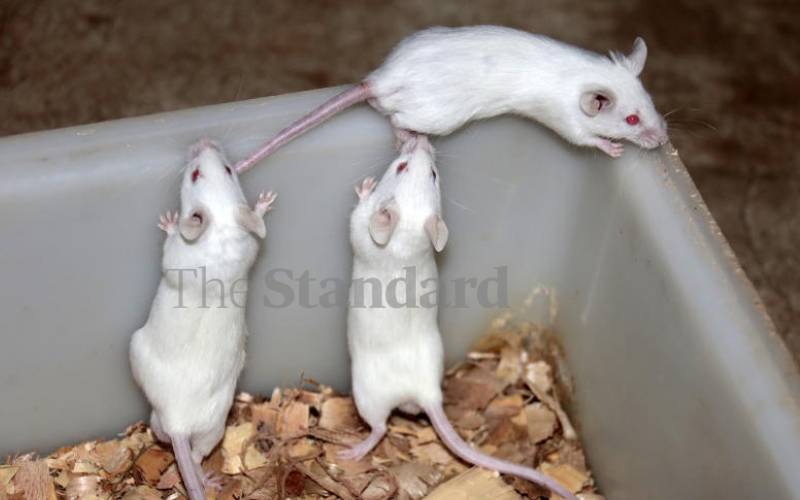
Before the Covid-19 vaccines were used on you, they were first tested on mice. White mice, that is. For ages, medical researchers use animals to verify the safety of medicines and vaccines. Besides biomedical research, mice are also used in psychological experiments. But why mostly white mice and rats, not cats?
For starters, mice and rats used for medical research is not the kind found nibbling at overnight ugali in your house. Or wild rats roaming in sewer lines. Lab rats, also nicknamed ‘test tubes with tails’, are mostly bred in controlled environments and are of specific strain so that a researcher in Chicago, USA, gets the same results as one in Siakago, Kenya.
The University of Nairobi’s School of Biological Sciences, Chiromo campus, for instance, has for ages been breeding white mice and rats for research. The commonest strain is the Wistar rats, which are kept and fed in well-lit and aerated rooms with a cage holding about 10 mice.
Facts First
Unlock bold, fearless reporting, exclusive stories, investigations, and in-depth analysis with The Standard INSiDER subscription.
Already have an account? Login













 join
join