
 The Standard Group Plc is a multi-media organization with investments in media
platforms spanning newspaper print
operations, television, radio broadcasting, digital and online services. The
Standard Group is recognized as a
leading multi-media house in Kenya with a key influence in matters of national
and international interest.
The Standard Group Plc is a multi-media organization with investments in media
platforms spanning newspaper print
operations, television, radio broadcasting, digital and online services. The
Standard Group is recognized as a
leading multi-media house in Kenya with a key influence in matters of national
and international interest.

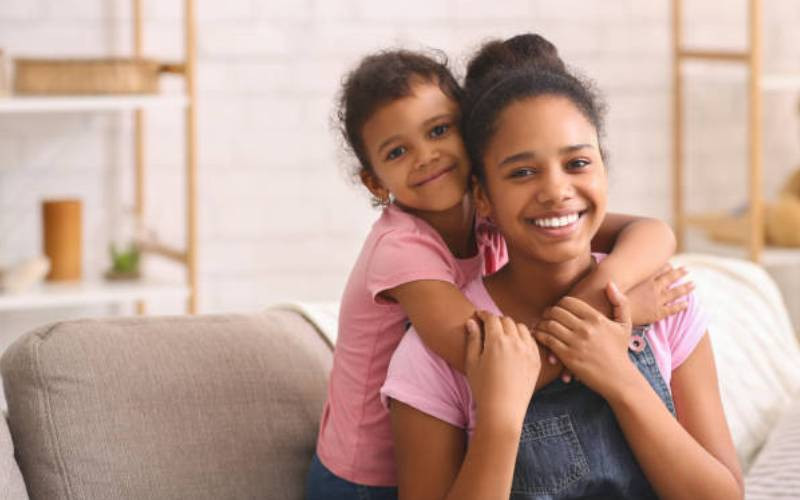
You've probably heard about parentification but didn't quite know what it meant, or perhaps you've even witnessed it without having a name for it. It's that subtle shift where a child, often quietly, steps into responsibilities far beyond their years, effectively becoming a miniature adult in the household.
At 12 years old, Shiru could cook rice, bathe a baby, and rock her toddler brother to sleep on her hip, all while mentally preparing for a math test the next morning. Her father lived with them, but mostly stayed in his room watching TV. Her mother, though physically present, was usually too overwhelmed or emotionally checked out to function. The message was clear: take care of your siblings, or no one will.
Across town, in a more well-off neighbourhood, Brian was handling similar duties. His parents, both professionals, often worked late. He learned early how to entertain his younger sister, prepare simple meals and calm her during meltdowns. "It became automatic," he says now, "Like I was the backup parent. No one asked, I just did what was needed."
And that's exactly how parentification creeps in. Quietly. Without a formal handover or permission. A child, regardless of age or gender, starts to carry emotional and practical responsibilities meant for adults. It becomes their second skin.
What is parentification?Parentification is when a child is forced to take on the role of a parent, either by looking after their siblings, managing household tasks, or providing emotional support to adults in the home. It often happens when a parent is absent, struggling, or emotionally unavailable. While it may appear as responsibility or maturity, it places an unfair emotional and physical burden on the child, often at the cost of their own development and well-being.
Psychologist Carolyne Karanja, who works as a family therapist in Kiambu County, says parentification isn't limited to low-income or single-parent homes, though those conditions can certainly make it happen more often.
"We see it across the board, from homes where parents are absent due to work or migration, to those where addiction, grief, poverty, or untreated mental illness has left a vacuum. Even in homes that look 'stable' from the outside, the oldest child is sometimes silently raising the others," says Carolyne.
Carolyne explains that there are two types of parentification: instrumental (when the child takes on practical tasks like caregiving, cooking and cleaning) and emotional (when the child becomes the parent's confidant, mediator, or emotional anchor). Often, the two blend, and children, eager to please or avoid chaos, step into roles they can't yet carry.
- How can I help my kids build stronger social skills?
- Money talk at the dinner table: Teach children value
- How to prepare your toddler for a new sibling
- Teaching kids to choose the right company early
Keep Reading
But while society may praise them, calling them "mature," "responsible," or "such a good helper," the impact runs deeper. "These children are robbed of their right to just be kids," Carolyne says. "They become hyper-independent, suppress their needs, and often grow into adults who struggle with burnout, anxiety, and difficulty setting boundaries."
It can be difficult to recognise parentification, especially when a child appears capable or helpful. However, there are common signs that suggest a child is carrying an undue burden. For instance, they might act like a "mini-adult," constantly worrying about others, taking care of siblings, and trying to "hold the family together" instead of playing, exploring, or expressing their own needs.
They also tend to put everyone's needs before their own, rarely saying they're tired, sad, or overwhelmed, but always rushing to help others, often to their own detriment.
You might notice they show signs of stress, anxiety, or perfectionism, panicking when things go wrong, over-apologising, or feeling personally responsible for things outside their control.
Furthermore, they can seem emotionally withdrawn or overly mature, rarely crying or "acting out" because they've internalised that emotions are a burden or are only for "children"; they may also struggle to relax or connect with other kids their age.
Finally, they might feel guilty when focusing on themselves; even small joys like playtime or rest can feel "selfish" to them, and they may resist things meant just for them, like birthdays, new clothes, or praise.
Collins, now 25, remembers becoming the "second father" at home, even though his biological father was still around. "He was there, yes, but not involved. So I'd attend school meetings, help with fees, explain periods to my little sister, and cook when Mum was unwell. Looking back, I was not just a big brother. I was a parent, emotionally and practically." He admits he didn't think of it as abnormal until university. "I'd meet people who got pocket money just to exist. Me? I was still sending money back home at nineteen."
And therein lies the problem: parentification becomes so normalised in many African homes that the children raised this way don't even realise they're wounded. They just think they're useful.
Carolyne warns that this "silent harm" can spill into adulthood. "Many parentified children grow into people-pleasers, over-functioners, or chronic fixers. They don't know how to rest. They feel guilty when they focus on themselves. Some even avoid having children altogether out of fear they'll repeat the cycle." Yet because these children are often the dependable ones, the strong ones, the ones who "never gave any trouble," they're the least likely to be noticed, let alone helped.
So what can be done?
Carolyne says awareness is the first step. "Parents need to reflect: Is your child stepping in out of love, or because you've left them no choice? Are you leaning too heavily on them emotionally or practically? Are they thriving, or just coping?" She also advises open conversations within families: rotating responsibilities, involving extended family or support systems, and most importantly, allowing children to be children again.
Parentification doesn't always come from cruelty. Sometimes, it comes from desperation. From grief. From silence. But its effects are loud and lasting.





 join
join