
 The Standard Group Plc is a multi-media organization with investments in media
platforms spanning newspaper print
operations, television, radio broadcasting, digital and online services. The
Standard Group is recognized as a
leading multi-media house in Kenya with a key influence in matters of national
and international interest.
The Standard Group Plc is a multi-media organization with investments in media
platforms spanning newspaper print
operations, television, radio broadcasting, digital and online services. The
Standard Group is recognized as a
leading multi-media house in Kenya with a key influence in matters of national
and international interest.


A Kenyan researcher has won a Sh446 million award for advancing the early detection of oesophageal cancer, a disease that continues to claim thousands of lives in the country every year.
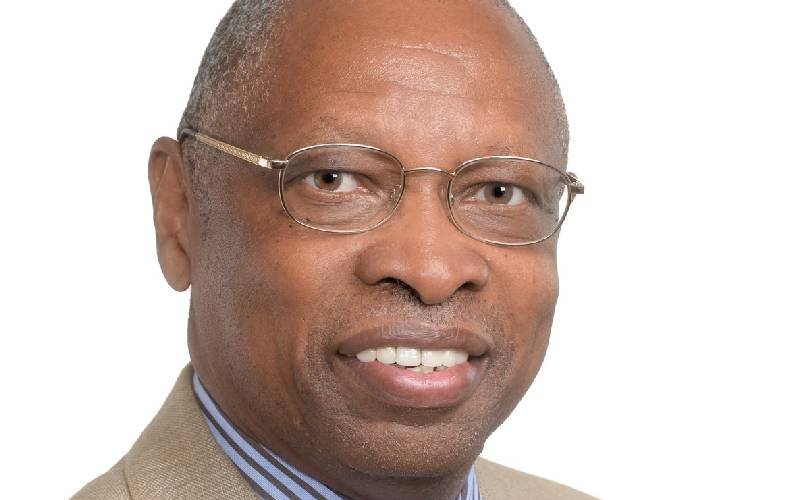
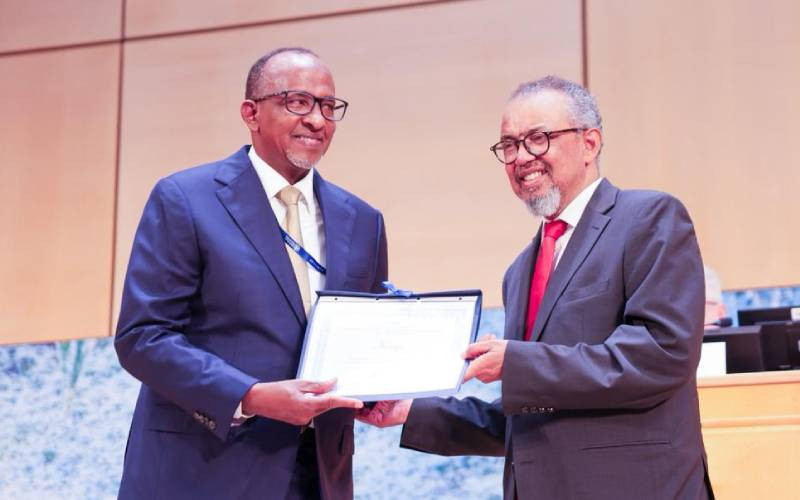
Prof George Njoroge, a co-principal investigator at Kenyatta University Teaching, Referral and Research Hospital (KUTRRH), received the Greater Manchester Cancer Award 2026 alongside a United Kingdom team led by Professor Robert Bristow of the University of Manchester and The Christie NHS Foundation Trust.
Through a co-created hub-and-spoke model, the team combined community engagement, rapid pathology services, and new genomic capacity to tackle a cancer that is often diagnosed too late, significantly improving chances of timely treatment.
Speaking to The Standard, Prof Njoroge said the award recognises efforts aimed at improving the diagnosis and treatment of oesophageal cancer.
“We are very happy that the research has been successful. Early detection is critical because cancer is more treatable, less expensive to manage, and places a lower burden on society when identified at an early stage,” said the scientist.
The project, which started three and half years ago, sought to improve the management of oesophageal cancer, commonly referred to as cancer of the throat or food pipe.
“The realisation was that mortality from oesophageal cancer is extremely high. Once a patient is diagnosed, the chances of survival are very low because most cases are detected too late,” he said.
- MPs call for urgent action to stop rising cancer deaths
- Nairobi targets system gaps as late cancer diagnoses strain care capacity
Keep Reading
The researcher explained that many patients in Kenya initially present with symptoms such as persistent cough, sore throat, or heartburn, which are often mistaken for minor illnesses.
“Patients may be given cough suppressants or medication to calm the symptoms, but by the time they return unable to swallow food, the cancer has already progressed from stage one or two to stage three or four, making treatment much more difficult,” he explained.
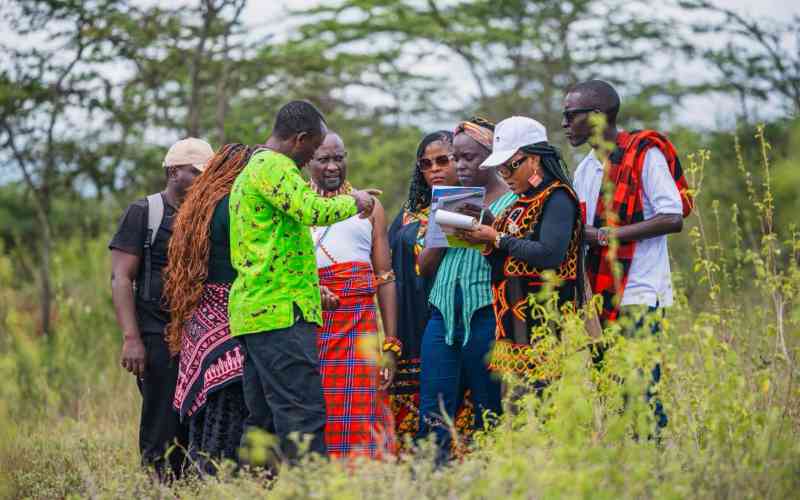
To address this challenge, the researchers developed a mobile clinic in five counties namely Kisii, Nyeri, Nakuru, Kiambu, and Meru to provide screening and diagnostic services closer to communities.
Working across the five counties, the team co-designed community awareness campaigns, trained more than 400 clinicians and 500 community health workers, and introduced a mobile endoscopy service that has carried out more than 1,000 procedures.
“A mobile clinic was stationed in the counties so that patients could access diagnostic evaluation without travelling long distances for healthcare,” Prof Njoroge said.
Before the rollout of the project, awareness campaigns were conducted through TV, radio stations, and churches to encourage communities to seek screening services.
Individuals identified as being at risk underwent endoscopic examinations, where clinicians examined the throat and oesophagus for early signs of cancer development.
The research team also collected tissue samples for laboratory analysis to determine the stage of the disease and guide treatment.
“We took some of the cells and examined them under a microscope to determine the stage of cancer. This was very helpful in guiding treatment,” said Prof Njoroge.
The findings, he said, are expected to help shape Ministry of Health policies on early detection and management of oesophageal cancer.
The proposal was submitted to the United Kingdom’s National Institute for Health and Care Research (NIHR), which competitively awarded funding for the three-and-a-half-year project.
Prof Njoroge credited the success of the initiative to the support of KUTRRH leadership, including current CEO Zeinab Gura and former board chairperson Olive Mugenda.
In Kenya, the leading cancers are breast, cervical, oesophageal and prostate.
Oesophageal cancer, though third most common cancer, it has the highest mortality rate among all cancers, causing about 4,400 deaths annually.
Although surgery, chemotherapy, and radiotherapy can improve outcomes, the disease remains highly lethal due to delayed diagnosis and treatment.
“Although present-day therapeutic interventions of surgery, chemotherapy and radiotherapy can positively influence disease prognosis, cancer of the oesophagus cancer remains a highly lethal disease in Kenya. Indeed, it has a case fatality rate of 99.3 percent due to late recognition of symptoms by both patients and health care workers,” noted Prof Njoroge.
Researchers say variations in incidence across the country may be linked to genetics, lifestyle, socio-economic, and environmental factors, with Western and Central Kenya recording the highest burden.
The project brought together the University of Manchester, The Christie NHS Foundation Trust, Kenyatta University Teaching, Referral and Research Hospital and Kenya’s Ministry of Health in a long-term partnership aimed at improving cancer outcomes.
KUTRRH also collaborated with Jomo Kenyatta University of Agriculture and Technology, Kenya Medical Research Institute, Mount Kenya University and the National Cancer Institute of Kenya.
“Success of this research will help reduce the morbidity and mortality associated with cancers such as oesophageal cancer,” said Prof Njoroge.
The project also sought to establish a clinical outcomes unit to track oesophageal cancer patient outcomes, which researchers hope could become a model for a nationwide cancer outcomes monitoring system.
Researchers say the project demonstrated that early cancers can be detected, more clinicians can be trained where need is greatest, and scalable models for cancer care can be developed across the country.
Findings from the research are expected to be published in scientific journals and shared with healthcare decision-makers and communities involved in the project, for policy making.
Prof Njoroge, 67, was born and raised in Kamuchege village in Lari Sub-County, Kiambu County.
He attended Kamuchege and Kiawairia primary schools before joining Thika High School for his secondary education. He later pursued Organic Chemistry at the University of Nairobi.
His fascination with drug discovery was inspired by his maternal grandmother, a respected herbal medicine practitioner in rural Kenya.
“The respect my grandmother received from society encouraged me to pursue a career where I could continue helping people in a similar way,” he said.
After graduating from the University of Nairobi, he joined Case Western Reserve University in Cleveland, Ohio, for graduate studies in physical and synthetic organic chemistry.
Proj Njoroge later joined the University Hospitals of Cleveland as a postdoctoral researcher, where he studied the chemistry behind food browning and its relationship with ageing and diabetes.
His research established links between glucose reactions in foods and biological systems, leading to the identification of the “pyrraline” adduct, now recognised as a useful biomarker in diabetes progression and ageing studies.
In September 2016, Prof Njoroge achieved another milestone when he was granted his 100th patent by the United States Patent and Trademark Office for discoveries related to treatments for various diseases.
“It was tremendously gratifying to imagine that one had discovered a drug entity that alleviated human suffering and saved lives,” he said.
Among his proudest moments, he says, was seeing one of his medicines approved by the United States Food and Drug Administration for patient use.
“It gave me a feeling similar to that of a climber reaching the summit of Mount Everest — mission accomplished,” he said.
Over the years, Prof Njoroge has published 134 papers in peer-reviewed journals and secured 100 patents in the United States.
He has also received numerous accolades, including two presidential awards for the discovery of Sarasar and Victrelis, the Emerald Award for professional achievement in the pharmaceutical industry, the New Jersey Minority Achievers Award, and the Thomas Alva Edison Patent Award for the Victrelis patent.
Prof Njoroge’s ultimate goal is to establish a biotechnology company in Africa with the goal of nurturing the bright minds of our country in engaging with ground-breaking research.






 join
join