
 The Standard Group Plc is a multi-media organization with investments in media
platforms spanning newspaper print
operations, television, radio broadcasting, digital and online services. The
Standard Group is recognized as a
leading multi-media house in Kenya with a key influence in matters of national
and international interest.
The Standard Group Plc is a multi-media organization with investments in media
platforms spanning newspaper print
operations, television, radio broadcasting, digital and online services. The
Standard Group is recognized as a
leading multi-media house in Kenya with a key influence in matters of national
and international interest.

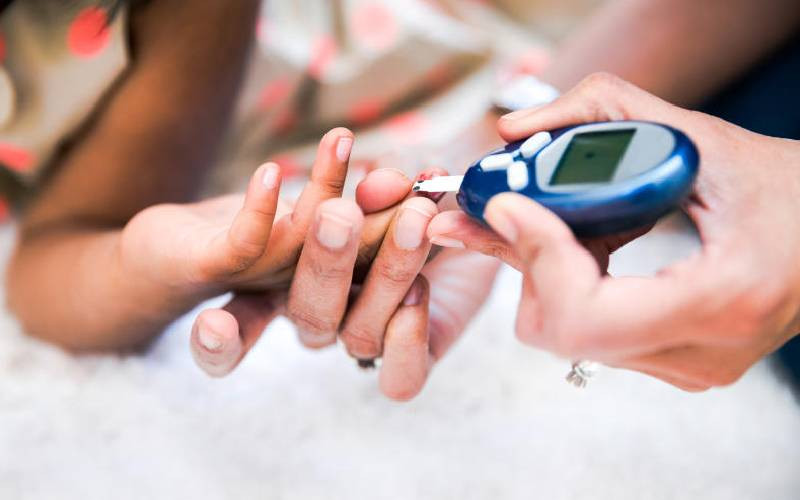
A mother checks her daughter's diabetes by monitoring blood glucose. [Courtesy]
For children living with Type 1 diabetes (T1D) in Kenya, daily survival depends on more than insulin. It depends on a healthcare system fraught with gaps. From delayed diagnosis to inconsistent access to essential medicines, limited trained personnel, and scarce psychosocial support, these systemic shortcomings turn a manageable condition into a life-threatening struggle for children and families.
T1D often goes undetected until children present with severe complications such as diabetic ketoacidosis (DKA). Symptoms like excessive thirst, frequent urination, and fatigue can mimic malaria, pneumonia, or other common childhood illnesses, leading to misdiagnosis and delayed treatment. Antony Omondi, RDN, CDE & Diabetes Dietitian Specialist, explains.
“Low community awareness and limited training at primary healthcare facilities mean children are frequently misdiagnosed. Delays in detection compromise growth, health, and survival.”
Late diagnosis increases mortality risk, prolongs hospital stays, delays referrals, and contributes to long-term complications. Persistent gaps at the community level, including poor health-seeking behaviour, stigma, denial, and limited healthcare worker training, exacerbate this problem.
According to Omondi, even when insulin is available, families often face stock-outs, high prices, and import or taxation barriers. Glucometers, testing strips, and continuous glucose monitoring (CGM) devices are expensive and inaccessible to most. "Programs such as Changing Diabetes in Children (CDiC) provide free supplies, yet reliance on donor support is unsustainable. Limited glucose monitoring leads to poor glycemic control, frequent hypo- or hyperglycemic episodes, emergency admissions, and preventable complications," he adds.
“The biggest gaps in T1D care from diagnosis to long-term follow-up include inconsistent availability of essential commodities, weak follow-up systems, and high loss to care during adolescence and transition to adulthood,” Omondi notes.
- Living on a needle's edge: When your child has Type 1 diabetes
- Tiny warriors, big battles: Reality of children living with Type 1 diabetes
Keep Reading
Caregiver education is fragmented and inconsistent. Language barriers, the complexity of diabetes science, fear of injections or hypoglycemia, stigma, and time constraints all hinder effective management. Teachers and caregivers often lack confidence in insulin administration, glucose monitoring, and emergency response, leaving children at risk in schools and community settings. Many schools have no insulin storage, and children frequently face stigma or isolation.
According to experts, most public health facilities outside urban centres are ill-equipped to manage paediatric T1D. Diagnostics, essential medicines, and trained personnel are limited, and stock-outs are frequent. Omondi says, general clinicians at primary care levels often lack exposure to paediatric diabetes, use outdated knowledge, and have poor access to guidelines, leading to inconsistent care, delayed referrals, and over-reliance on higher-level hospitals. While the Ministry of Health is working to bridge these gaps through training and capacity building, many lower-level facilities remain unreached.
Mental health services for children and caregivers are largely absent. Anxiety, depression, burnout, and even suicidal tendencies can arise, particularly during adolescence. Few psychologists are trained in chronic disease management, and services are costly, poorly integrated, and contribute to loss of follow-up. Families also face financial strain, caregiver fatigue, and neglect of other children due to the constant demands of diabetes care.
Proper diabetes management in Kenya costs approximately Sh12,000 per month, or Sh144,000 per year far beyond the reach of most families. This includes insulin, monitoring devices, hospital visits, and transport. Many families must ration supplies or rely on donor support, further compromising care.
“Paediatric T1D care must be integrated into universal health coverage. Supply chains should be strengthened, taxes on essential diabetes commodities removed, and psychosocial support fully integrated. Continuous training of healthcare workers, school-based support, and structured follow-up systems are critical. Long-term improvement depends on data-driven decisions, research investment, and reduced reliance on donors," Omondi says.
According to Dr Sofia Mwinyishee, Consultant Paediatrician at Nairobi West Hospital, accessibility to quality care depends on the economic capacity of the family and where they stay. Urban areas have more access, while rural children travel long distances. The burden affects the whole family parents must adjust lifestyles to care for a child with diabetes.
"Comprehensive diabetes centres provide counseling and psychosocial support, but such resources are scarce outside major towns. More trained personnel, school nurses, and diabetes-aware teachers are critical to ensure children feel supported in all environments. Support groups for caregivers and children help families navigate challenges together,” Dr Mwinyishee observes.
Globally, the burden of diabetes is rising. WHO reports that cases increased from 200 million in 1990 to 830 million in 2022, with low- and middle-income countries experiencing the fastest growth. Over half of people with diabetes did not take medication in 2022, and diabetes-related complications blindness, kidney failure, heart disease, stroke, and amputations remain preventable with proper care.
In Kenya, T1D is more than a medical challenge it is a test of the healthcare system’s capacity to deliver consistent, equitable, and comprehensive care. Until systemic gaps in diagnosis, medicines, trained personnel, psychosocial support, and policy reform are addressed, children and families remain in a daily struggle far greater than the disease itself.










 join
join