
 The Standard Group Plc is a multi-media organization with investments in media
platforms spanning newspaper print
operations, television, radio broadcasting, digital and online services. The
Standard Group is recognized as a
leading multi-media house in Kenya with a key influence in matters of national
and international interest.
The Standard Group Plc is a multi-media organization with investments in media
platforms spanning newspaper print
operations, television, radio broadcasting, digital and online services. The
Standard Group is recognized as a
leading multi-media house in Kenya with a key influence in matters of national
and international interest.

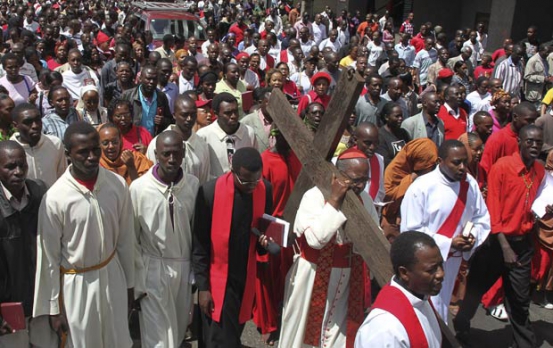
The Catholic Church, the largest in the world, has over the decades been at a crossroads.
Modern challenges continue to question long established truths that have been held dear by the Catholic fraternity.
However, dwindling faithful numbers and a quest for relevance in a fast-changing world have recently forced the Church to look inward and interrogate its role in society.
In spite of this, reproductive health remains a volatile topic of discussion for the 1.2 billion Catholics around the world and the more than 9 million in Kenya, according to the Kenya National Bureau of Statistics.
And on Tuesday, Pope Francis added his voice to the decade’s long reproductive health undertones that have been whispered all around Vatican corridors.
In a letter to the Vatican, the Pope practically opened a small window for women of Catholic faith who might have been estranged from the church because of abortions to come back into the fold, as long as they seek forgiveness. “The forgiveness of God cannot be denied to one who has repented,” the Pope said in a letter released on Tuesday. “I am well aware of the pressure that has led them to this decision. I know it is an existential and moral ordeal,” alluding to the dilemma that hundreds of thousands of women go through as a result of unplanned pregnancies.
According to the Ministry of Health, more than 400,000 unsafe abortions are procured in the country every year.
“Unsafe abortion remains a leading cause of maternal morbidity and mortality in Kenya,” reads the 2013 report on Incidence and Complications of Unsafe Abortions in Kenya. According to the report, about 464,690 induced abortions occurred in 2012.
Filling the empty pews
Of these, 57,762 women received care for complications of induced and spontaneous abortions in health facilities in the same year. Of these, 119,912 were experiencing complications of induced abortions. Despite these figures, abortion still remains an offence in Kenyan Law.
At the drafting of the Constitution, Article 26 was the bone of contention between the pro-life and pro-choice groups in the buildup to the 2010 referendum.
Of importance though, is that the Article states that the life of a person begins at conception, and that a person shall not be deprived of life intentionally, except to the extent authorised by the Constitution or other written law.
Since the start of his papacy, Pope Francis has on several occasions shown a willingness to break away from a certain stiffness of the Church that liberals believe has led to empty pews and a disconnect between officials and the people in light of modern day challenges.
For instance, the local Catholic has been at loggerheads with the Government over allegations that State ordered vaccination campaigns, tetanus and polio are a ploy to secretly introduce family planning.
The Rev Timothy Njoya has also weighed in on the matter, saying that the church must have these conversations if it is to survive the coming years. Njoya also said that by advocating for mercy and forgiveness to those who find themselves needing it, the church will only have offered solace to those in need, but will not have addressed the root cause of the need for forgiveness such as contraception and stigmatisation as a result of traditions and beliefs by the church.
The Pope, in the letter to the Vatican, said he had heard from several bishops of some followers’ “good faith and sacramental practice” and that, “motivated by the need to respond to the good of these faithful,” those who approached priests of the rebel authority to receive forgiveness shall be absolved of sins. While those priests are considered ordained, they are not usually considered authorised to minister.
The letter was to mark the extra-ordinary Jubilee of Mercy starting on December 8, 2015 to November 20, 2016.
During this period faithful are supposed to rediscover the richness encompassed by the spiritual and corporal works of mercy.








 join
join