
 The Standard Group Plc is a multi-media organization with investments in media
platforms spanning newspaper print
operations, television, radio broadcasting, digital and online services. The
Standard Group is recognized as a
leading multi-media house in Kenya with a key influence in matters of national
and international interest.
The Standard Group Plc is a multi-media organization with investments in media
platforms spanning newspaper print
operations, television, radio broadcasting, digital and online services. The
Standard Group is recognized as a
leading multi-media house in Kenya with a key influence in matters of national
and international interest.

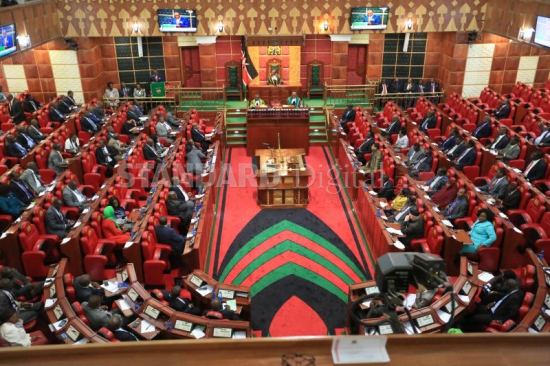
The government has given legislators a major boost in the fight to maintain a hold on the Constituency Development Fund (CDF).
This is after the Treasury Cabinet Secretary Henry Rotich declared that the Sh35.2 billion kitty will now only be used to fund national government functions.
Mr Rotich said in his budget statement on Thursday that CDF will only be used to fund education and security at the constituency level. The court in February declared the fund unconstitutional and gave the national government 12 months to align it with the law.
But the turn of events is now a major breakthrough for MPs plotting to change the CDF law to align it to the Constitution.
Mumias East MP Benjamin Washiali welcomed the move saying it was in line with their argument all along that there were some functions that though not devolved, can only be handled by CDF. “We have been building schools and this cannot be done by the county governments. We have been saying this all along,” Mr Washiali said.
Legislators argued that CDF remains the most innovative product in the country and scrapping it would have dealt their constituencies a major blow.
But by limiting the CDF functions to only national government projects, this essentially has returned the money into the national government kitty. It will also deny MPs a chance to fund projects under devolved functions such as health, water and the environment.
Projects
Public Accounts Committee Chairman Nicholas Gumbo, who has sat in the CDF board for the past eight years says there was no way the fund was going to be scrapped.
He says more than 60 per cent of the CDF fund has always been used on education.
“From this, we will now compel county governments to do the devolved functions by putting pressure on them,” Eng Gumbo said.
Legislators will now spend most of the money on education by building new schools, bursaries and other development activities.
On security, the legislators will build police camps, put up street lights and could fund some activities such as the Nyumba Kumi initiative.
This will also limit what projects constituents can suggest to the constituency development boards.
Initially, constituents would suggest any project they felt needed to be implemented urgently.
But before accepting any proposal, MPs will now be forced to counter check if they are strictly national government projects or not.
Security
However, Gumbo maintained that MPs can still fund most of the projects they were handling before, as long as they justify them as being part of the national government functions.
“Security is wide. We can build a road and justify it as a security project or street lighting and so on. I once bought boats for patrol and they were security projects. There is so much we can still do under security and the change will not limit us,” he said.
The support by the Treasury is also likely to widen the rift between the national and county governments coming at a time when the devolved governments have been accusing legislators of being used by the national government to weaken devolution.
It is not clear what will happen to incomplete projects in health and water sectors that were being funded by CDF.
“We are still in transition and things are still not very clear, but there should not be a problem if MPs complete such projects and hand them to the county governments to run as it is required by the Constitution,” Washiali said.
MPs had vowed to go back to court to seek an extension of the one-year deadline they were given to wind up CDF.
Experts had also weighed in on the debate supporting the High Court verdict. Mr Wachira Maina, a constitutional lawyer, invited by the legislators at a recent meeting, caused a storm when he told them the fund was illegal, and unless they call a referendum to amend the Constitution, it will be futile to make changes to the Acts of the House.
A consolidated petition by the Institute of Social Accountability and the Centre for Enhancing Democracy and Good Governance sought declarations that the CDF Act No. 30 of 2013, which replaced the CDF Act 2003, violates the Constitution.
The fund, which constitutes 0.5 per cent of the national budget, has been in operation for the last decade and is disbursed to the 290 constituencies to fund development projects.














 join
join