
 The Standard Group Plc is a multi-media organization with investments in media
platforms spanning newspaper print
operations, television, radio broadcasting, digital and online services. The
Standard Group is recognized as a
leading multi-media house in Kenya with a key influence in matters of national
and international interest.
The Standard Group Plc is a multi-media organization with investments in media
platforms spanning newspaper print
operations, television, radio broadcasting, digital and online services. The
Standard Group is recognized as a
leading multi-media house in Kenya with a key influence in matters of national
and international interest.


January is the time for new calendars, new school term, new uniforms, new fees, new promises whispered between tired parents at dawn bus stops and kitchen tables.
For many families, January feels less like a fresh start and more like a test of endurance.
For them, it is not a fresh page. It is a continuation of conversations left unfinished in December. Promises to “do better” as parents sit quietly alongside exhaustion, grief, financial pressure, and emotional overload.
“January exposes us,” says Prof Rebecca Wambua. “It forces parents to confront the gap between who they want to be and what life realistically allows.”
It is in that gap, she says, that purposeful parenting finds its meaning.
“Every year, I tell myself I will be calmer, more present, less reactive,” says Shem Alunga, a father of five. “But by the second week, reality catches up. Work pressure, school demands, exhaustion. The children are the same. I am the same.”
That realisation, experts say, is not failure. It is honesty.
And honesty, says Family coach and counsellor Risa Wanjiro, is where purposeful parenting begins.
- Ways parents can help children set New Year resolutions
- Why structure is your child's greatest security
- Art of parenting highly sensitive children
- Why exhaustion is not a badge of honour
Keep Reading
Wanjiro says January exposes the limits of parenting resolutions.
“Resolutions assume perfection and control, and parenting does not work that way, as children are not projects you reset on January 1st,” she explains.
She expounds those common resolutions, such as: “I will never shout again. I will be fully present every day, and I will balance everything perfectly, but I often collapse under the weight of real life.
Intention,s however, she says, offers a different path.
“Intentions acknowledge humanness, as they ask parents to stay committed to values, not flawless behaviour.”
Prof Wambua writes in one of her guidebooks to parenting that for children, the return to routine can be unsettling, as holiday freedoms disappear abruptly, as expectations rise, and academic pressure returns.
“Children may not have language for it, but they experience January as loss – loss of freedom, loss of attention, and loss of rest,” says psychologist David Munyasia.
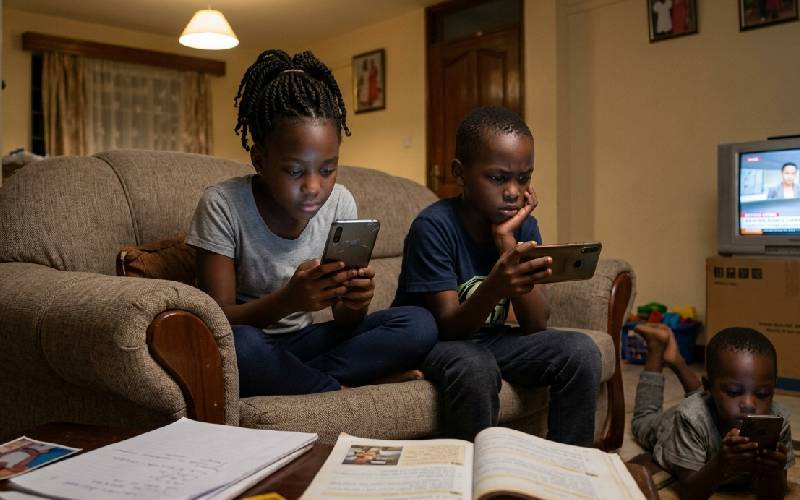
Some children respond with withdrawal, while others respond with defiance, moodiness, or sudden emotional outbursts.
The expert says when parents interpret these changes as misbehaviour rather than transition, children feel misunderstood.
“Purposeful parenting recognises that adjustment is emotional work, and children need time, reassurance, and patience — not immediate correction, as children do not cross into the new year untouched,” he explains. They carry last year’s academic pressure, sibling rivalry, fears, disappointments, unasked questions, emotional wounds, and quiet victories.
“When parents expect instant transformation, children begin to feel like problems to be fixed instead of people to be understood,” Prof Wambua says.
She advocates for purposeful parenting, as opposed to resolution parenting, and asks gentler, deeper questions, such as: Who is my child becoming? What changed in them last year? What do they need more of this season — reassurance, structure, freedom, attention? A parent should ask themselves, what can I realistically offer without breaking myself?
Family coach Catherine Mugendi describes purposeful parenting as rhythm rather than performance.
“It is not about doing everything right,” she says. “It is about choosing what you will consistently return to,” she says.
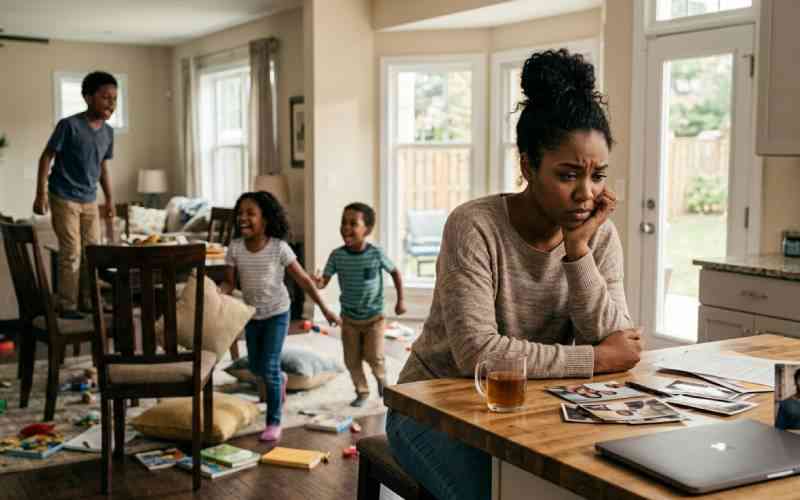
January parenting often occurs while adults themselves are stretched thin, financially strained, emotionally exhausted, grieving losses, or still recovering from the year that has ended.
Psychologist Munyasia reminds parents that children do not need emotionally perfect adults. “They need emotionally honest ones,” he says, acknowledging fatigue, frustration, or uncertainty, without burdening children with adult problems, as this teaches the children resilience.
“When a parent says, ‘I am tired today, but I still care,’ children learn regulation, not fear,” Munyasia explains. Repair, he adds, is more important than control.
“A parent who apologises after conflict teaches accountability more powerfully than one who pretends never to be wrong,” he says.
Purposeful parenting looks different across stages. For young children, it may mean predictable routines and physical reassurance. For adolescents, it may mean space, listening without interrogation, and trust.
“Teenagers especially need parents who resist the urge to lecture,” says Mugendi, adding: “Presence matters more than constant advice.”
She explains that checking in without prying – asking how rather than why- keeps communication open.
“Purposeful parenting adapts, as it grows as the child grows,” she says.
Instead of grand declarations, experts recommend small, repeatable rhythms that anchor family life. These may include: One daily check-in question, one weekly shared meal, one consistent bedtime ritual, and one monthly one-on-one moment with each child.
“These rituals create emotional safety, as safety is the foundation of discipline, learning, and trust,” says Munyasia. Children, he explains, thrive not on intensity, but on predictability.
There is pressure in January to “correct” – academic gaps, behavioural issues, emotional struggles. However, Prof Wambua urges parents to pause.
“January is for observation, for noticing who your child became last year, what grew stronger? What became quieter? What is being carried silently?”
Parenting purposefully, she adds, should begin with curiosity, not correction.
She says purposeful parenting demands that parents be wary of comparison, especially through social media influence.
She says social media amplifies comparison – disciplined children, organised homes, academic success stories, parenting advice that feels unattainable. She warns that comparison quietly undermines purposeful parenting.
“Parents compare milestones, discipline styles, academic performance, and even emotional maturity, often without realising the damage it causes,” says Wambua, who is also an author.
She explains that comparison steals presence, as it pulls parents away from the child in front of them and into imagined standards, adding that children internalise comparison as pressure. They learn to perform rather than belong.
Letting go of comparison, she says, allows parents to notice progress instead of perfection, effort instead of outcome.
“Your child’s journey is valid even when it looks different,” Prof Wambua adds.
Comparison, experts warn, distorts reality.
“Children grow at different rates, emotionally and developmentally,” Mugendi says. “When parents compare, children internalise pressure instead of possibility.”
Purposeful parenting requires letting go of borrowed timelines and choosing to see the child in front of you.
Purposeful parenting does not promise ease. It promises presence, while inviting parents to return again and again to listening, repairing, noticing, and loving imperfectly.
“Children do not remember perfect years,” but they will remember feeling safe, seen and supported,” Munyasia says.
According to the expert, January, then, is not a restart button. It is an invitation to parent with intention, not expectation. Purposeful parenting is not loud. It lives in everyday moments – the pause before reacting, the decision to listen, the willingness to try again after failure. January does not demand reinvention. It invites attention: To notice who our children are becoming. To meet them where they are. To walk with them, imperfectly, patiently, and honestly.
Parenting, like life, is not about starting over. It is about staying present and returning, again and again, with purpose.












 join
join