×

The Standard e-Paper
Join Thousands Daily
 The Standard Group Plc is a
multi-media organization with investments in media platforms spanning newspaper
print operations, television, radio broadcasting, digital and online services. The
Standard Group is recognized as a leading multi-media house in Kenya with a key
influence in matters of national and international interest.
The Standard Group Plc is a
multi-media organization with investments in media platforms spanning newspaper
print operations, television, radio broadcasting, digital and online services. The
Standard Group is recognized as a leading multi-media house in Kenya with a key
influence in matters of national and international interest.

Audio By Vocalize
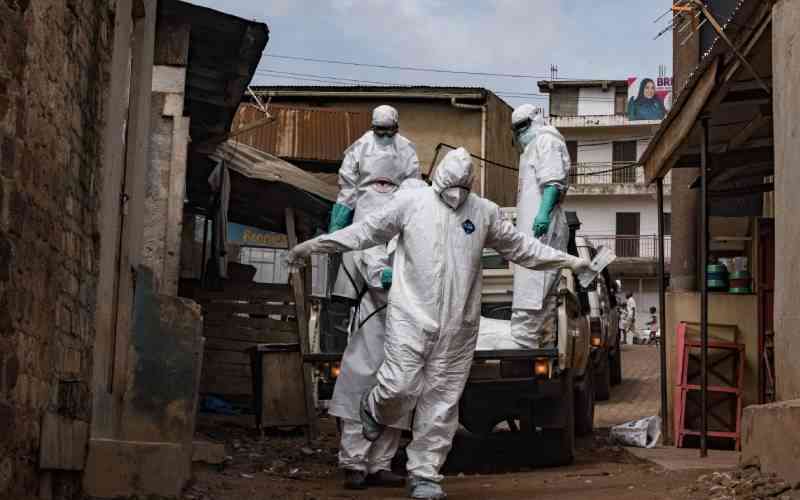
A Uganda Red Cross Society worker in protective gear is sprayed with disinfectant during the evacuation of the body of a suspected Ebola victim in Kampala on May 26, 2026. [AFP]
Uganda will deploy medical experts and establish additional Ebola treatment centres in eastern Democratic Republic of the Congo, stepping up regional efforts to contain the rapidly expanding outbreak as hospitals fill beyond capacity and frontline health workers threaten to down their tools over delayed salaries.
The announcement by Uganda's Health Minister, Chris Baryomunsi, comes as the epidemic pushes the health system in eastern Congo to its limits. Treatment centres are operating at 96 per cent bed occupancy, while healthcare workers in Ituri Province, the epicentre of the outbreak, have warned they could suspend services unless long-standing salary delays are resolved.
"Priority is health first. Let us make our people healthy and free of disease. Once we establish these treatment centres, we shall eventually open the borders. If we are sure to get all patients to treatment centres, we can trace the contacts, they are isolated and follow up, then that will not be a worry," Baryomunsi said.
His remarks stress growing regional concern that the outbreak could spill across borders if it is not brought under control.
Uganda's intervention builds on more than two decades of experience responding to Ebola and other deadly viral haemorrhagic fevers. Since containing a major Sudan virus disease outbreak in 2000, the country has responded to multiple Ebola outbreaks, including the first-ever Bundibugyo virus outbreak in 2007.
Those experiences have strengthened Uganda's surveillance systems, laboratory capacity, emergency response teams and cross-border disease monitoring, making it one of Africa's most experienced countries in Ebola preparedness and response.
The contrast between the two neighbouring countries is striking.
Across the region, the Bundibugyo Ebola outbreak has so far infected 1,645 people, claimed 523 lives and left 290 survivors.
Nearly all of those infections have been recorded in the Democratic Republic of the Congo, which has reported 1,624 confirmed cases, 521 deaths and 273 recoveries, making it one of the country's largest Ebola outbreaks in recent years.
Uganda, meanwhile, has recorded 20 confirmed cases, with 16 recoveries and two deaths. While the numbers remain relatively small, public health experts attribute the country's success to rapid case detection, aggressive contact tracing, early isolation of patients and coordinated surveillance along its porous border with the DRC.
The difference is equally evident in-patient outcomes. In the DRC, the outbreak has recorded a case fatality rate of about 32 per cent, compared with 10 per cent in Uganda.
Although both countries are battling the same Bundibugyo strain of the Ebola virus, the disparity illustrates the importance of early diagnosis, prompt clinical care and a coordinated public health response. It also reflects the enormous operational challenges facing eastern Congo, where armed conflict, mass displacement and a fragile healthcare system continue to fuel transmission.
According to the World Health Organisation (WHO), the outbreak remains active, with health authorities still working to establish its full extent.
Stay informed. Subscribe to our newsletter
WHO Representative to the Democratic Republic of the Congo, Dr Anne Ancia, said more than 10,000 contacts are currently under daily follow-up as surveillance teams intensify efforts to break chains of transmission.
To cope with the growing caseload, treatment capacity has been expanded to approximately 700 beds across 22 Ebola treatment centres, with another 300 beds expected to become operational in the coming weeks. Even so, many facilities remain close to full occupancy, highlighting the increasing strain on health services.
Following visits to Ebola treatment centres in Bunia, Beni, Butembo and Katwa, Dr Ancia commended healthcare workers who continue treating patients despite increasingly difficult working conditions.
"I witnessed first-hand the dedication of staff who continue to serve their communities despite enormous challenges," she said.
The outbreak response continues to be complicated by insecurity, repeated population displacement and concurrent outbreaks of malaria and measles, all of which place additional pressure on an already overstretched health system.
Despite those obstacles, health authorities have made significant gains in laboratory capacity.
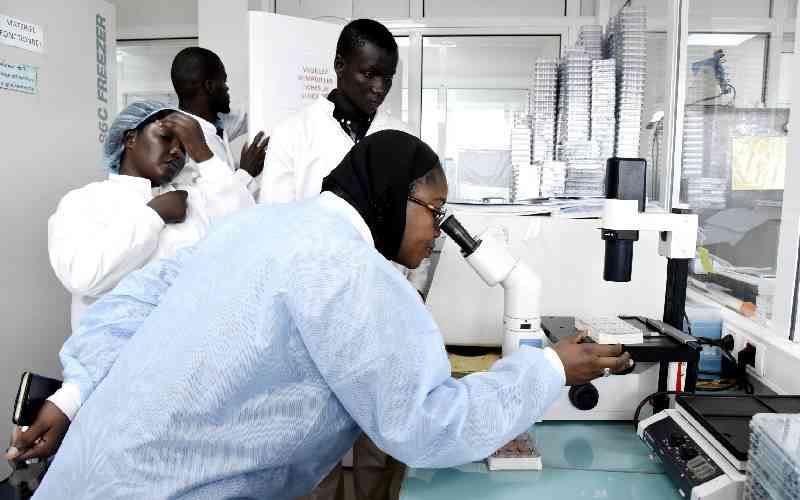
Testing has increased from just 30 samples a day at the beginning of the outbreak to more than 2,000 daily, supported by a network of ten laboratories across affected provinces, including a newly established facility in Bunia that has significantly reduced turnaround times.
Researchers are also exploring new treatment options. A clinical trial launched this month is evaluating two promising therapies -MBP134, a monoclonal antibody, and the antiviral remdesivir- to determine whether they can improve survival among Ebola patients. More than 1,200 treatment doses have already been secured for the study.
Dr Ancia said early diagnosis, quality supportive care and community participation remain central to bringing the outbreak under control.
"The people and communities affected by this outbreak remain at the centre of WHO's response," she said.
The response has, however, been tested by labour unrest after healthcare workers staged industrial action over delayed payments. While WHO says many have since returned to duty following discussions with response managers, concerns remain over the sustainability of the response if funding challenges persist.
"WHO is working to make sure that payments are not an obstacle and that healthcare workers can be rewarded for their dedication and the risks they are taking to treat patients," Dr Ancia said.
Preparedness efforts have also been intensified in neighbouring provinces, including South Kivu, where laboratories have been established despite no confirmed cases being reported, as authorities seek to stay ahead of any further spread.
Even as Uganda reinforces the regional response, WHO warns that the fight against Ebola remains constrained by funding shortages. The agency estimates it requires US$115 million to sustain operations but has secured only about one-third of the amount needed, raising fears that critical surveillance, treatment and community engagement activities could be disrupted at a time when the outbreak continues to expand.
Subscribe to our newsletter and stay updated on the latest developments and special offers!


 Prefer the Standard on Google





 join
join