×

The Standard e-Paper
Stay Informed, Even Offline
 The Standard Group Plc is a
multi-media organization with investments in media platforms spanning newspaper
print operations, television, radio broadcasting, digital and online services. The
Standard Group is recognized as a leading multi-media house in Kenya with a key
influence in matters of national and international interest.
The Standard Group Plc is a
multi-media organization with investments in media platforms spanning newspaper
print operations, television, radio broadcasting, digital and online services. The
Standard Group is recognized as a leading multi-media house in Kenya with a key
influence in matters of national and international interest.

Audio By Vocalize
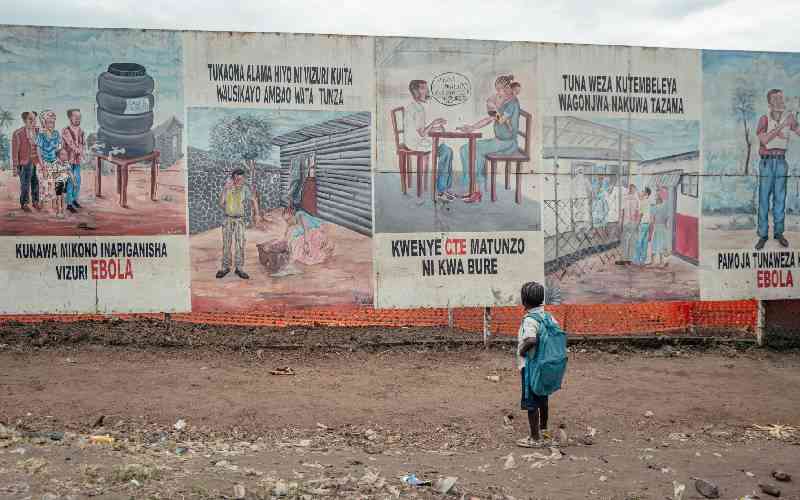
A child looks at Ebola awareness illustrations displayed on the signboards of the Ebola Treatment Center in Munigi on June 2, 2026. [AFP]
The trial of two potential treatments for the Bundibugyo species of Ebola behind the deadly outbreak in the DR Congo began in the country on Thursday, the World Health Organization said.
There are no approved vaccines or treatments for the rare strain which has been spreading in the northeastern provinces of the Democratic Republic of Congo.
There have been 1,406 confirmed cases and 438 confirmed deaths in the DRC, while 208 people have recovered from the virus, according to figures from the WHO.
"Today, the clinical trial of two therapeutics began, with the enrolment of the first patient," WHO chief Tedros Adhanom Ghebreyesus told reporters.
The trial is evaluating the monoclonal antibody MBP134 and the antiviral drug remdesivir, alone and in combination.
"Patients who enrol in the trial will receive comprehensive supportive care and close follow up," Tedros insisted.
"We are also working to ensure they have access to the two drugs should they prove safe and efficacious in the trial."
The outbreak is heavily centred in the DRC's Ituri province.
Vasee Moorthy, who leads the WHO's research and development blueprint arm, said the trial would begin in one treatment facility in Ituri before gradually expanding to others in the province.
He said patients would be randomised into four groups: those who receive remdesivir; MBP134; neither; or both, to see if combination provides additional benefits.
The numbers of patients required would depend of how effective the therapeutics appear to be: the more effective they are, the fewer patients who would be needed, Moorthy said.
He said the trial would take months and could even run into next year, and might require more than 1,000 patients to produce definitive answers.
He said the trial already had enough remdesivir and MBP134 for 1,200 patients to be enrolled.
Ensuring post-trial access to any product that proves safe and efficacious "is absolutely central to our thinking", he insisted.
Stay informed. Subscribe to our newsletter
The case fatality rate in the DRC is currently 31 percent.
"Even without approved therapeutics, people are recovering from this disease, but of course, we could save many more lives with safe and effective therapeutics in our toolkit," said Tedros.
The WHO meanwhile said the Ebola response was facing many challenges, taking place against the backdrop of a region ravaged by conflict, with pre-existing deep humanitarian needs.
Tedros said the outbreak was continuing to expand, with an average of 38 new confirmed cases every day for the past two weeks.
He said there were now 10 testing laboratories, and though contact tracing had improved, with four in five contacts now being followed up, many more contacts per case needed to be identified.
As for treatment capacity, there are 650 beds in 22 health centres, though around 96 percent of beds are currently occupied.
A futher 300 beds are planned.
But the UN health agency's chief warned that the response on the ground was being hampered by mistrust and violence.
"Just this week, an Ebola treatment centre in Ituri province was attacked, resulting in the deaths of two people. The centre was set on fire, and patients fled," he said.
"Such acts not only endanger patients and health workers but also impede efforts to stop transmission and save lives."
WHO emergencies chief Chikwe Ihekweazu lamented that "every time there's an incident, this sets the whole response back."
He said community figures were being invited into treatment centres to see the quality of care provided, and to explain to them what medics were doing and why their support was needed.
Subscribe to our newsletter and stay updated on the latest developments and special offers!


 Prefer the Standard on Google




 join
join