×

The Standard e-Paper
Kenya’s Boldest Voice
 The Standard Group Plc is a
multi-media organization with investments in media platforms spanning newspaper
print operations, television, radio broadcasting, digital and online services. The
Standard Group is recognized as a leading multi-media house in Kenya with a key
influence in matters of national and international interest.
The Standard Group Plc is a
multi-media organization with investments in media platforms spanning newspaper
print operations, television, radio broadcasting, digital and online services. The
Standard Group is recognized as a leading multi-media house in Kenya with a key
influence in matters of national and international interest.

Audio By Vocalize
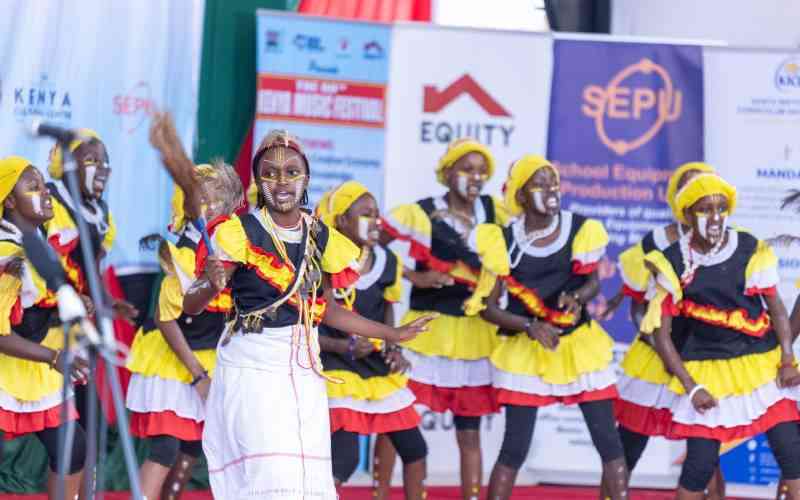
The creme de la creme of the Kenya Music Festival opened its winners’ concert at Kibabii University with a spectacular celebration of Kenya’s cultural diversity, as learners from different communities used music, dance and traditional instruments to tell stories of identity, unity and social harmony.
From the rhythmic beats of Mijikenda drums to the graceful movements of Luo, Maasai, Samburu, Somali, Luhya, Kamba, Turkana and Taita traditional performances, the stage demonstrated that cultural diversity can be a powerful force for national cohesion.
The performances were not merely about entertainment. They offered younger generations an opportunity to learn traditions that might otherwise disappear as communities increasingly embrace modern lifestyles.
At Manyulia Junior Academy in Western Kenya, an African instrumental ensemble brought traditional rhythms to the stage, demonstrating how indigenous instruments can both entertain and educate.
The performance celebrated Africa's musical heritage while encouraging young people to appreciate traditional forms of artistic expression.
The importance of preserving culture was similarly demonstrated by Nyangweso School for the Hearing Impaired from Homa Bay County.
The learners presented the Luo Dodo, a dance traditionally performed by elderly women during joyous occasions such as weddings. Through graceful movements, the performance celebrated hard work, social responsibility, community solidarity and Luo heritage.
Traditional instruments also took centre stage. Christine Akoth of Ulalwe Apate Junior Secondary School showcased the Nyatiti, an instrument traditionally associated with Luo musical expression and celebrations.
From Taita Taveta, Mwakitutu Primary School presented Mwazindika, a Wadawida traditional dance associated with spiritual healing, communal wellbeing and cultural heritage.
The performance showed how traditional dances carried meanings that went beyond entertainment, connecting communities to their history, beliefs and social values.
In Mandera, Elwak DEB presented Manta, a Somali dance performed by young girls during weddings and naming ceremonies. It celebrated happiness, family relationships and cultural identity.
Meanwhile, Mobamba D.O.K Primary School from Nyamira presented Enchaburuta, a Bagisu folk dance performed by young women during happy occasions such as weddings.
The Samburu community was represented by Raap Comprehensive School from Isiolo through Enshibai, a dance performed by Samburu warriors to entertain newlyweds and guests.
Ol Donyo Senior School also presented Enkai Yai, a Samburu folk performance that serves as a prayer for rain, water and pasture for people and animals.
The festival also demonstrated how traditional music can teach values. St. John's Kosogol Kapel used the Iteso folk song Maune to condemn greed and selfishness through satire and humour, encouraging fairness, respect and communal sharing.
Stay informed. Subscribe to our newsletter
At Kitui Teachers College, a Kamba folk song explored the meaning of home, stressing that strong families and communities are built on relationships, unity, mutual respect and peaceful coexistence.
Young people were also portrayed as custodians of the future. Webuye DEB presented Nguzo, a choral verse portraying youth as pillars of society whose contribution is essential to national development.
The message of empowerment extended to girls. Eruba Keyo Junior School from Migori presented Ajaki Kanando, a Luo folk song about a young woman who overcomes challenges to pursue education abroad before returning home empowered to contribute to society.
The performance promoted girls' education, determination and women's empowerment.
At Naikarra Special School in Narok, Enchipai, a Maasai folk dance, celebrated the recovery of stolen livestock and the victory of Maasai warriors, expressing courage, happiness, unity and communal strength.
The festival also brought different cultures together through modern adaptations. Lugulu Boarding Primary showcased an ensemble blending African and Western instruments, demonstrating that cultural preservation does not necessarily mean rejecting modern influences.
At the coast, Mtwapa Elite Academy presented an African-style Digo singing game traditionally performed by children while awaiting the evening meal. The performance highlighted recreation, cooperation, social interaction and cultural transmission.
The Mijikenda tradition was further represented through Ngoma za Mijikenda, featuring Chapuo, Chiroma and Mbumbumbu drums traditionally played during weddings, childbirth celebrations and other communal festivities.
Subscribe to our newsletter and stay updated on the latest developments and special offers!


 Prefer the Standard on Google






 join
join