×

The Standard e-Paper
Home To Bold Columnists
 The Standard Group Plc is a
multi-media organization with investments in media platforms spanning newspaper
print operations, television, radio broadcasting, digital and online services. The
Standard Group is recognized as a leading multi-media house in Kenya with a key
influence in matters of national and international interest.
The Standard Group Plc is a
multi-media organization with investments in media platforms spanning newspaper
print operations, television, radio broadcasting, digital and online services. The
Standard Group is recognized as a leading multi-media house in Kenya with a key
influence in matters of national and international interest.

Audio By Vocalize
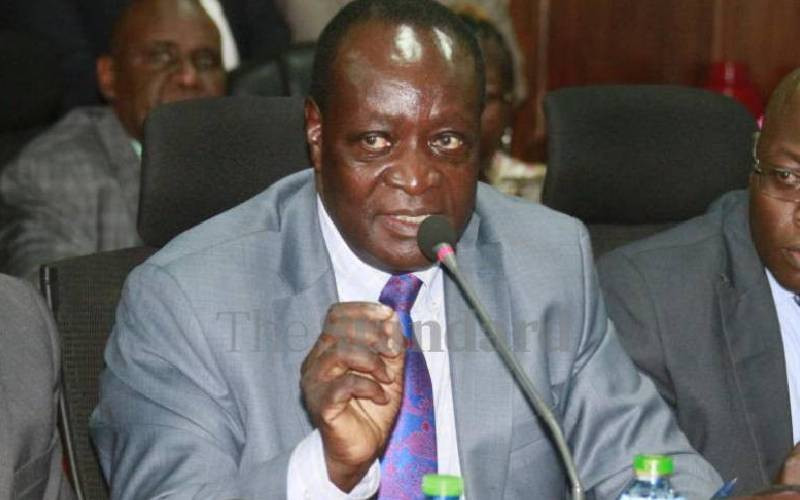
Vihiga Governor Wilber Ottichilo's Sh7.72 billion budget for the 2026/2027 financial year has received the green light from the Vihiga County Assembly, setting the stage for what is likely to be the defining financial blueprint for his administration.
The budget is Sh820 million higher than the Sh6.9 billion approved for the 2025/26 financial year, reflecting increased allocations from the national government and grants.
However, while the larger budget gives the county more fiscal space, it also raises questions about implementation, revenue collection and the ability to clear mounting pending bills.
According to the estimates, the budget will be financed through Sh6.08 billion from the equitable share, Sh1.17 billion in conditional and unconditional grants, and Sh472 million from own-source revenue.
Of the approved budget, Sh5.26 billion, representing 70 per cent, has been allocated to recurrent expenditure, while Sh2.32 billion, or 30 per cent, will fund development projects.
Recurrent expenditure has increased from Sh4.71 billion in the 2025/26 financial year to Sh5.26 billion, while development funding has risen only modestly from Sh2.2 billion to Sh2.32 billion.
This means much of the additional Sh820 million will go towards salaries, operations and existing commitments rather than new projects.
The budget also comes against the backdrop of growing pending bills.
Recently, Governor Ottichilo disclosed that Vihiga's outstanding pending bills had reached Sh1.171 billion.
Although the Assembly has allocated Sh402.5 million towards settling accumulated pending bills, the amount represents only about a third of the debt previously disclosed by the county.
This suggests that clearing all outstanding obligations may extend beyond the current financial year unless additional resources are identified.
It was this concern that prompted the Budget and Appropriations Committee to scrutinise the proposed allocations.
Committee Chairperson Patrick Akhwale said members discovered duplication and inconsistencies in the pending bills schedule, leading to savings of Sh173 million.
"The committee observed inconsistencies, duplication and errors in the allocation of funds towards pending bills. Following verification, we realised savings of Sh173 million, which have now been redirected to priority programmes that directly benefit residents," said Akhwale while moving the budget approval motion.
Stay informed. Subscribe to our newsletter
Governor Ottichilo has maintained that settling verified pending bills remains one of his administration's priorities.
"Our priority in this budget is to ensure we continue implementing development projects while settling genuine pending bills owed to suppliers and contractors," the governor said while outlining his administration's priorities a week ago.
The budget has also reintroduced a Sh100 million bursary allocation for bright and needy students across all sub-counties after the programme was halted in the 2025/26 financial year.
The Department of Education and Technical Vocational Training received Sh594 million.
Healthcare, one of Ottichilo's flagship sectors since taking office in 2017, remains the largest departmental beneficiary, with Sh1.94 billion.
The allocation includes Sh105 million for medical drugs, Sh12.5 million for non-communicable disease medicines and Sh23 million to complete stalled projects such as Sabatia Maternity Ward, Kegondi Health Centre and Iduku Health Centre.
The Assembly also allocated Sh20 million to clear electricity bills owed by the Vihiga Water and Sewerage Company (VIWASCO) and boosted climate financing by Sh40 million to unlock funding under the Financing Locally-Led Climate Action (FLLoCA) Programme.
In addition, Sh500 million has been earmarked for the Ward Development Programme to ensure the equitable distribution of projects across all 25 wards.
Vihiga-based finance expert Evans Kamadi welcomed the increase in the budget but cautioned that implementation would depend on realistic revenue projections and fiscal discipline.
"An increased budget is welcome if it translates into improved service delivery and accelerated development. However, the county must demonstrate that its revenue projections are realistic and achievable," Kamadi said.
"There is also a need to enhance own-source revenue collection and ensure the prudent use of public funds to avoid widening the financing gap and accumulating more pending bills."
Subscribe to our newsletter and stay updated on the latest developments and special offers!


 Prefer the Standard on Google




 join
join