×

The Standard e-Paper
Fearless, Trusted News
 The Standard Group Plc is a
multi-media organization with investments in media platforms spanning newspaper
print operations, television, radio broadcasting, digital and online services. The
Standard Group is recognized as a leading multi-media house in Kenya with a key
influence in matters of national and international interest.
The Standard Group Plc is a
multi-media organization with investments in media platforms spanning newspaper
print operations, television, radio broadcasting, digital and online services. The
Standard Group is recognized as a leading multi-media house in Kenya with a key
influence in matters of national and international interest.

Audio By Vocalize
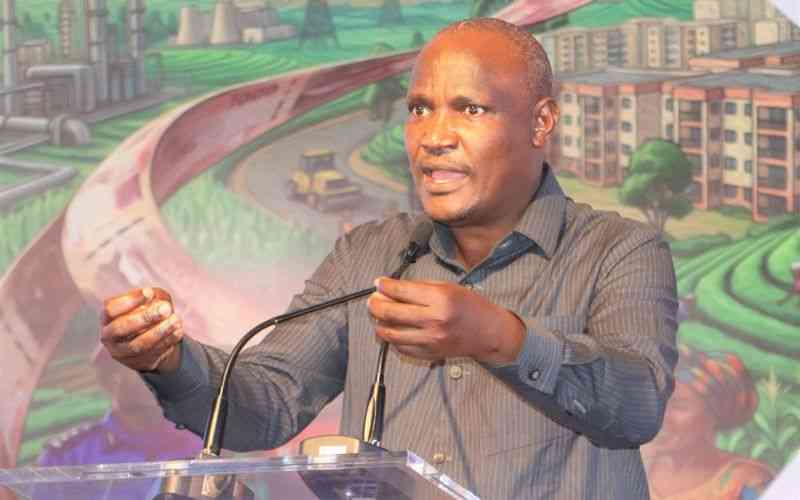
Treasury Cabinet Secretary John Mbadi has said that Ebola in Kenya has not reached a level that would warrant emergency funding from the national treasury.
Mbadi stated that the two reported cases in the country could be traced and did not meet the threshold for classification as an outbreak.
Speaking after an economic forum held ahead of Mashujaa Day celebrations in Eldoret, the CS urged Kenyans to remain calm, saying the government had put in place measures to prevent the disease from spreading.
Mbadi said the reported cases could be traced, adding that the situation did not warrant special budgeting by the National Treasury.
“We don’t foresee an Ebola outbreak in the country and Kenyans should not panic,” he said.
The CS termed reports of an impending outbreak misleading, warning that such claims could have wider economic consequences, including scaring away investors.
Kenya confirmed its first imported case of Bundibugyo Ebola Virus Disease on October 6, after a citizen who had been living in the Democratic Republic of Congo travelled through Uganda to Nairobi.
According to the Ministry of Health, he was admitted to Nairobi Hospital and later died. The second case, confirmed on October 14, involved a close family member of the first patient, who was already in quarantine.
Health Cabinet Secretary Aden Duale had told Parliament in June that an estimated Sh2.6 billion would be required to support border screening and surveillance, laboratory services, risk communication, emergency logistics, infection prevention and the deployment of additional health workers. The funding requirement was based on preparations for a potential first 100 cases.
“Kenya is well protected, and the government has all the machinery to prevent the spread of the disease that has killed hundreds in the Democratic Republic of Congo and scores in parts of Uganda,” said Mbadi.
On the economy, Mbadi said Kenya’s debt burden had become unsustainable, leaving the government with limited fiscal space to finance major infrastructure projects through the national budget.
He said the government was therefore exploring innovative ways of funding projects without putting additional pressure on the Exchequer.
“We have identified commercially viable investments such as the expansion of Jomo Kenyatta International Airport (JKIA),” Mbadi said.
He added that other projects lined up for alternative financing included the proposed dualling of the Rironi-Mau Summit road, other road projects and investments in the energy sector.
Stay informed. Subscribe to our newsletter
Mbadi said the government was establishing a National Infrastructure Fund that would work with the private sector to finance major projects outside the conventional budget framework.
The fund, he said, would complement rather than replace Public-Private Partnerships (PPPs).
Mbadi said the new financing mechanism would ease pressure on the national budget while allowing the government to continue investing in critical infrastructure despite constrained fiscal space.
Subscribe to our newsletter and stay updated on the latest developments and special offers!


 Prefer the Standard on Google







 join
join