×

The Standard e-Paper
Stay Informed, Even Offline
 The Standard Group Plc is a
multi-media organization with investments in media platforms spanning newspaper
print operations, television, radio broadcasting, digital and online services. The
Standard Group is recognized as a leading multi-media house in Kenya with a key
influence in matters of national and international interest.

Audio By Vocalize
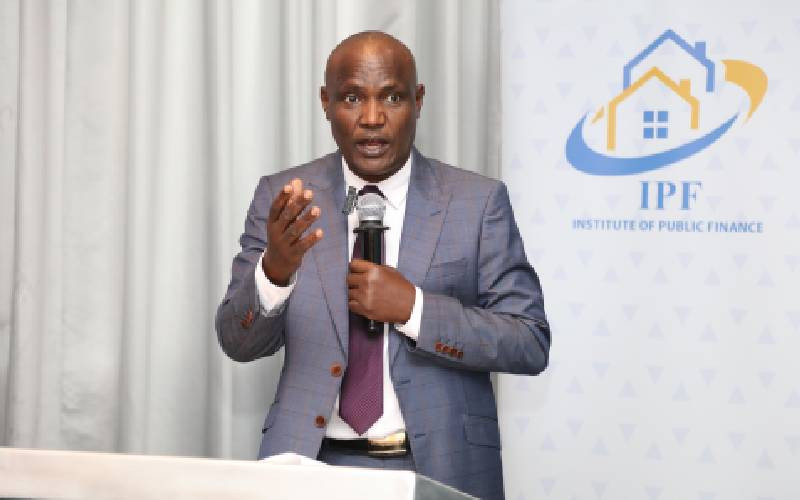
Treasury Cabinet Secretary John Mbadi has challenged universities to invest in research, innovation and skills development in driving Kenya’s economic transformation.
At the same time the CS has pledged to seek government funding for the construction of a Science and Technology Complex at the Adventist University of Africa (AUA).
Mbadi said he would push for provision for the project in the upcoming supplementary budget, subject to consultations with President William Ruto, in a commitment that could give a major boost to the university’s plans to expand its research and technology capacity.
The proposed complex is among five priority projects the university wants to undertake as it positions itself to respond to changing demands in higher education and research.
Speaking during AUA’s 20th anniversary celebrations in Ongata Rongai, Kajiado County, Mbadi said universities must move beyond awarding degrees and become centres of research, innovation and industrial development.
He said Kenya’s ambitions beyond Vision 2030, including its aspiration to become a high-income country by 2063, would depend on the country’s ability to turn knowledge into practical solutions.
“The post-2030 framework calls for a shift from projects to outcomes and from crisis response to anticipation and resilience. These shifts require sound research,” he said.
According to Vice-Chancellor Professor Ademola Stephen Tayo, the facility will house advanced computing, artificial intelligence, data science and cybersecurity laboratories, alongside innovation and incubation spaces.
It will also include smart classrooms and laboratories for biomedical, molecular biology and public health research.
Tayo said the project had become urgent as the university prepares to expand online learning after receiving provisional approval from the Commission for University Education.
“Online education cannot be sustained by intention alone. It requires reliable digital infrastructure, appropriate laboratories, smart classrooms, secure learning platforms, technical support and an environment that guarantees academic quality,” he said.
He described the proposed facility as the academic and technological backbone of the university’s next phase of development.
Mbadi pointed to the projected addition of more than 620 million people of working age in sub-Saharan Africa between 2025 and 2050, saying the continent must prepare its young population with relevant skills.
“With the right skills, this is an opportunity. Without them, it could be a disaster,” he said.
Stay informed. Subscribe to our newsletter
He outlined five areas where universities should contribute: developing high-level skills, generating research to inform public policy, driving innovation and the digital economy, connecting knowledge to industry, and shaping ethical leadership.
The Treasury CS said research institutions should work with government and the private sector to address challenges in public health, governance, technology and industrialisation.
He cited nine value chains identified by the government for development, including leather, cotton, dairy, edible oils, tea, rice, the blue economy, natural resources and building materials.
“Each area needs research, technology and skilled managers and entrepreneurs to add value before export,” he said.
Mbadi also called on universities to help prepare young people for emerging technologies, including artificial intelligence and data centres, arguing that Kenya needed people capable of designing, building and managing such systems.
“AUA’s computer science programmes position it to contribute to this effort,” he said.
Other projects identified in the university’s 2023–2033 master plan are a scholarship endowment, residential apartments for faculty and staff, a wellness centre and a sports complex.
The proposed scholarship endowment is intended to support students who qualify for postgraduate education but face financial barriers, particularly women and candidates from underserved regions.
Tayo said the university was seeking support from government, the church, development partners, alumni and other benefactors to implement the projects.
He pledged that resources received would be managed transparently, with the university providing accountability on expenditure and progress.
Mbadi said universities would be central to Kenya’s post-2030 development framework and the African Union’s Agenda 2063, which envisions a prosperous and integrated continent.
He also linked economic transformation to good governance, saying a high-income country would require leaders committed to accountability and responsible use of public resources.
“A high-income Kenya must also be a well-governed Kenya. We need leaders who regard public office as a trust and understand that every shilling lost to waste or corruption is a shilling denied to a classroom, denied to a clinic or denied to a road,” he said.
Subscribe to our newsletter and stay updated on the latest developments and special offers!


 Prefer the Standard on Google