×

The Standard e-Paper
Kenya’s Boldest Voice
 The Standard Group Plc is a
multi-media organization with investments in media platforms spanning newspaper
print operations, television, radio broadcasting, digital and online services. The
Standard Group is recognized as a leading multi-media house in Kenya with a key
influence in matters of national and international interest.
The Standard Group Plc is a
multi-media organization with investments in media platforms spanning newspaper
print operations, television, radio broadcasting, digital and online services. The
Standard Group is recognized as a leading multi-media house in Kenya with a key
influence in matters of national and international interest.

Audio By Vocalize
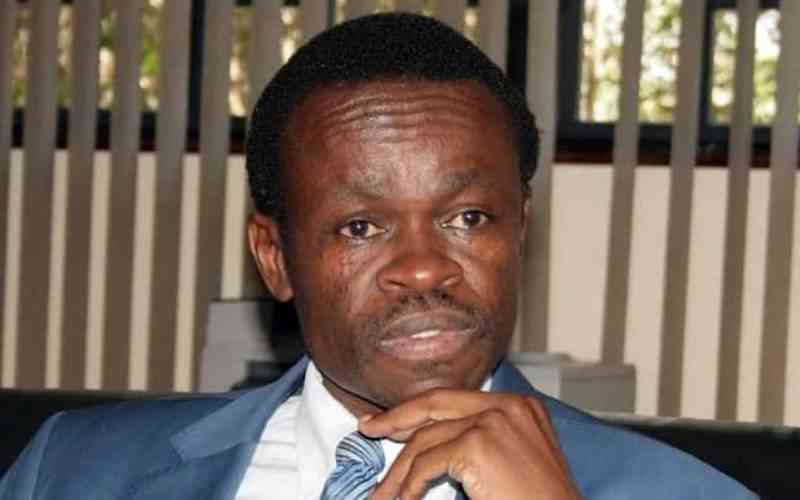
Kenya is slowly drifting away from the path of good governance due to growing ethnicity, lawlessness and a political class more interested in the next election than the next generation.
Advocate and governance expert PLO Lumumba on Monday said the current political climate, barely a year before the next General Election, shows the country is on a dangerous path.
"The rhetoric from politicians, ethnic cocoons and goonism tells us the country is not on the right trajectory. Kenya is on tenterhooks," he said.
While speaking on Spice FM interview, Lumumba expressed concern over what he described as the emergence of individuals, both in government and the opposition, who believe they are above the law.
"The tragedy in Kenya is that we now have a crop of individuals across the political divide who believe they are above the law," he said.
His remarks come at a time when the country is grappling with corruption, rising public debt, youth unemployment, high cost of living, growing cases of police brutality and abductions, as well as increasing political intolerance and violence.
Lumumba pointed to the June 12 attack at the All-Saints Cathedral, where a post-budget dialogue organised by civil society groups was disrupted after groups of suspected goons stormed the venue.
He questioned the government's way of handling of such incidents, saying Kenyans deserve clear answers.
"We were informed that those arrested were released and that those whose phones were stolen were compensated. Who compensated them?" he posed.
He further raised concern over increasing reports of abductions, carjackings and insecurity, saying there is little public confidence that those responsible are being held accountable.
"Today we wake up and are told young people have been abducted. By who? We are told carjackings are happening. By who? We are told the country is dealing with the issue, but we do not see the evidence. We ought to be alarmed," he said.
The governance expert also criticised what he termed as premature political campaigns, saying leaders are disregarding the Constitution they sworn to uphold it.
He said while Kenya has a constitution, many leaders have failed to embrace constitutionalism.
"Campaigns are everywhere, yet the law does not allow campaigns at this time. The drums of war are already being beaten like in 2007," he said.
Lumumba said ethnicity continues to weaken national unity and the rule of law, with some politicians relying on tribal loyalty to shield themselves from accountability.
Stay informed. Subscribe to our newsletter
"Some believe they cannot be arrested because if they are arrested, their ethnic group will rise in their defense," he said warning that ethnicity only fuels division.
"How do you say you do not like an entire ethnic community because of one individual from that community? We must not allow ethnicity to destroy our nation.”
According to him, the growing frustration among Kenyans is a reflection of widespread dissatisfaction with the country's leadership.
"Kenyans are angry, and that anger is a product of a certain kind of discontentment."
He further criticised the political class, saying many view leaderships as the quickest path to wealth instead of public service.
"If you want to become wealthy with little effort in Kenya, acquire political office," he said.
To reverse the trend, Prof Lumumba called for greater civic education, saying institutions such as the Church, the media and civil society must boldly educate citizens and hold leaders accountable.
"When you see the reaction of politicians when criticised and held to account, it means they are beginning to feel the pinch. Kenyans must reclaim their country."
On governance reforms, Lumumba proposed reducing the number of counties, reducing the size of parliament with proportional representation, “so that we don’t have these ethnic groupings which masquerade as political parties.”
He said there is urgent need to review MPs remuneration, consider making parliamentarians part timers, strengthen the independence of the civil service and restructuring institutions to improve efficiency.
"Today's politicians are thinking about the next election instead of the next generation. The corrupt cannot be allowed to fight corruption. They are the problem."
He challenged Kenyans to elect leaders based on integrity rather than ethnicity or political rhetoric.
Subscribe to our newsletter and stay updated on the latest developments and special offers!


 Prefer the Standard on Google




 join
join