×

The Standard e-Paper
Kenya’s Boldest Voice
 The Standard Group Plc is a
multi-media organization with investments in media platforms spanning newspaper
print operations, television, radio broadcasting, digital and online services. The
Standard Group is recognized as a leading multi-media house in Kenya with a key
influence in matters of national and international interest.

Audio By Vocalize
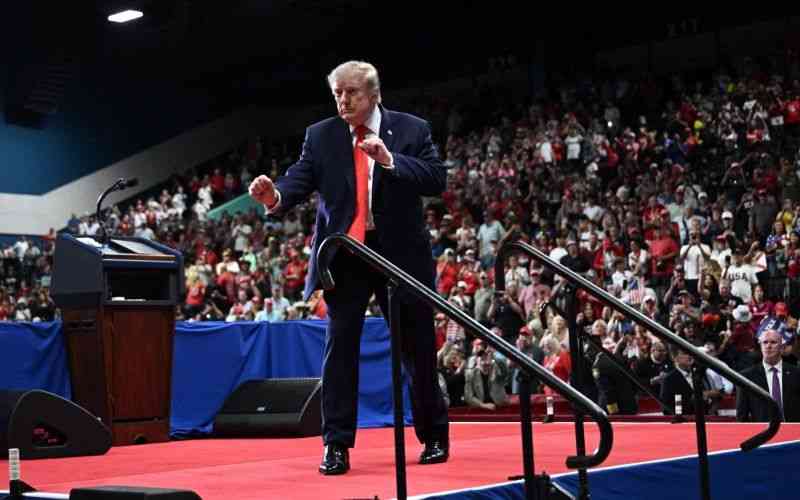
On Tuesday next week, Americans will hold their mid-term elections. These elections hardly get attention in Africa, usually treated as domestic political contests, useful only in offering clues about presidential popularity and the balance of power in Washington. The 2026 midterms could however, be different.
Voters across America’s 50 states will decide whether President Donald Trump’s Republicans retain control of Congress or whether the Democratic Party will shift the balance of power in one or both chambers.
With Trump’s approval rating languishing at just 31 per cent and Democrats leading Republicans 47 per cent to 35 per cent on the generic congressional ballot, the political earthquake already reverberating through Washington is being felt in capitals across Africa, including in Nairobi.
The stakes for the continent are not abstract. The outcome will reshape and redefine who controls congressional oversight in the areas of budget and foreign aid allocations, trade legislation, and domestic immigration or economic policies.
The impact will therefore be felt across the entire spectrum of US–Africa relations. This will include the fate of the Africa Growth and Opportunity Act (AGOA), the fragile trade preference regime on the brink of expiry as its extension expires in 2008.
Also to be affected is the global health financing model which remains in upheaval after dismantling of USAID. Whispered in many power corridors is a scramble for Africa’s critical minerals that pits Washington against Beijing and a security engagement, sometimes related to the minerals scramble, stretched thin across Sudan, the Sahel, and the Eastern Congo.
For Kenya’s vast diaspora, the concerns are the impact of the elections on their legal and economic standing which currently hangs in the balance, with several Kenyans already deported back home.
Despite all these realities, Africa has barely been mentioned in the primaries. In America, Africa is treated as peripheral, engaged selectively in resource-rich regions, and viewed through the lens of great-power rivalry with Beijing and Moscow.
Fundamental reality
The US still does not really have a single clear-cut Africa policy. To Washington, Africa is more often treated like a petulant and wasteful stepchild. America’s Africa strategy changes with its whims, frequently shifting between administrations, and how each of them feels at the given moment.
While the midterms may not change that fundamental reality, they may change the terms on which Africa engages with Washington. A more fragmented US political system, with a Congress controlled by one party and the White House by another, creates multiple entry points for African governments, lobbyists and diaspora organisations.
It creates opportunities for coalition-building with members of Congress who have specific interests in Africa, whether in the Congressional Black Caucus, the Senate Foreign Relations Committee, or the various caucuses focused on trade, health, and security. It creates the possibility of anchoring US–Africa relations in legislative frameworks that survive changes of administration, rather than in the personal relationships that have too often defined the relationship. That is not itself the ultimate solution.
As the continent has learnt in the last two years, legislation can be repealed, funding can be withheld, and congressional attention can shift. But in a political system where Africa has so often been an afterthought, the midterms offer a rare moment when the continent’s fate is entangled with the internal dynamics of American democracy.
While the outcome of the elections will not be decided in any of Africa’s capitals, its consequences will be felt there, in health clinics and peace negotiations, in visa queues and diaspora communities.
The story of the 2026 US midterms is therefore not just about how the world’s most powerful democracy chooses to govern itself, it is also about what that choice means for a continent that has learned, often painfully, to live with the consequences.
Stay informed. Subscribe to our newsletter
On Africa’s part, the story must revolve around asking how long a continent with so much by way of resources, including its youthful and energetic human capital, remains on the peripheral of American and global political and economic discourse. Weaving that story requires an innovative and strategic continent-wide approach.
The non-focus of America towards Africa in these and other elections may just provide another catalyst for Africa to say it will no longer be peripheral. The latter is the challenge for Africa’s leaders.
-The writer is an advocate of the High Court of Kenya
Subscribe to our newsletter and stay updated on the latest developments and special offers!

 Prefer the Standard on Google