×

The Standard e-Paper
Fearless, Trusted News
 The Standard Group Plc is a
multi-media organization with investments in media platforms spanning newspaper
print operations, television, radio broadcasting, digital and online services. The
Standard Group is recognized as a leading multi-media house in Kenya with a key
influence in matters of national and international interest.

Audio By Vocalize
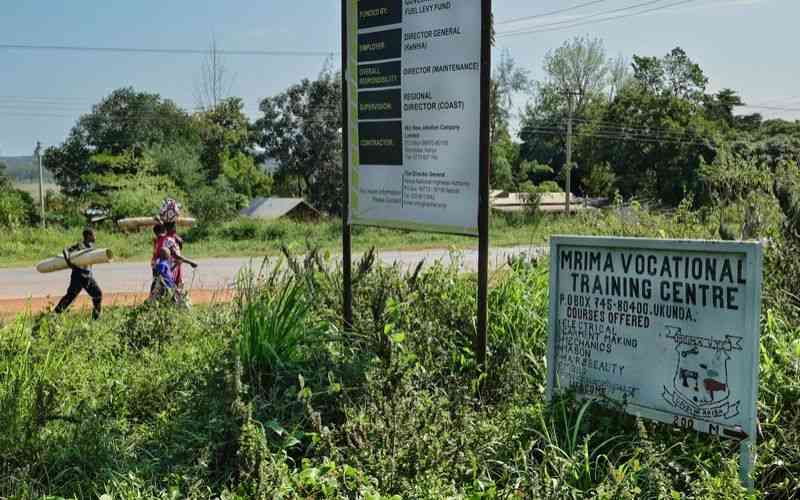
An American-led consortium is moving closer to winning rights to one of the world's largest untapped rare earth deposits in Kenya, after two Chinese firms withdrew from the race.
Mining Cabinet Secretary Hassan Ali Joho told Reuters that five contenders submitted tenders on October 21 for the Mrima Hill deposit in coastal Kwale County.
They include two US consortia, one US-affiliated consortium, an Australian consortium and a Kenyan-British joint venture.
"American entities have strongly showcased or demonstrated interest by participating in our transparent process in identifying the developer of Mrima Hill," Joho said in an interview with Reuters.
"Within the next two to three weeks we should be able to award Mrima Hills to the successful bidder."
The two Chinese companies that pulled out, according to Joho, were Hunan Research Institute for Nonferrous Metals and Jinan Yuxiao Group Co. Ltd, Reuters reported. Joho said he did not know why they withdrew, as quoted by Reuters.
The site is estimated by the government to hold minerals worth more than $62 billion (Sh8.05 trillion). That is about half of Kenya's annual economic output.
The race over Mrima Hill comes as the United States and China compete for access to Africa's mineral wealth. President Donald Trump's administration has been courting Kenya for a minerals deal, and China controls about 70 per cent of the world's processing capacity for critical minerals.
But Joho insisted Kenya faced no pressure from either Washington or Beijing.
"I don't think it is in the place of anybody to tell us how and who to work with. Our decisions are purely informed by the interest of this country," he said.
He also said the government had not negotiated alternative arrangements with any bidder.
"We haven't had any conversation with anybody, and we haven't offered any alternative to anybody... We want a transparent process," Joho said.
Reuters reported the Chinese firms had bid for other state mining projects in Kenya on the same day the Mrima Hill tender was due. Four other tenders for coltan, manganese, copper and chromite projects were due that day.
Joho confirmed one Chinese company filed a bid for another project the same day but declined to elaborate, saying it would compromise the process.
Even as the American bid advances, Kenya says it wants Chinese money and expertise too.
Stay informed. Subscribe to our newsletter
Joho told a mining conference in Tianjin, China, in September that Nairobi is seeking deeper Chinese investment in its mining sector.
He pitched Kenya's deposits of coltan, copper, lithium, niobium and rare earths to investors at the 28th China Mining Conference.
"We are strengthening governance, enhancing transparency and creating a predictable investment environment backed by competitive incentives designed to make investments in Kenya profitable, inclusive and fair," Joho said in Tianjin.
Kenya has declared 14 minerals as strategic and critical, including rare earths and niobium. The government hopes Chinese expertise in satellite remote sensing and green mining will help map deposits that remain largely unexplored.
President William Ruto has said Kenya will not choose between Washington and Beijing.
"There are opportunities for everybody," he said in June.
The numbers involved explain why so many countries are watching the hill.
Kenya's public debt stands at about Sh13.47 trillion. The minerals believed to lie under Mrima Hill are worth enough, on paper, to clear nearly 90 per cent of that debt.
The deposit holds niobium, used to strengthen steel for jet engines and oil pipelines, and rare earths such as neodymium and yttrium, which go into batteries and missile guidance systems.
Joho said preliminary indicators suggested the coastal deposit contains tens of billions of dollars' worth of rare earth minerals and niobium.
The scramble for the site has been intense. An Australian consortium of RareX and Iluka Resources has also announced a joint bid.
The American consortiums include Meridian Mineral Holdings, which includes engineering giant Fluor Corp and Tetra Tech, and Frontier Minerals LLC, which includes rare earths startup ReElement Technologies. A US-affiliated consortium called Mrima Earth is led by Critical Metals Corp.
Chinese firms have also shown strong interest. Their withdrawal has not been explained publicly.
Mrima Hill is not just a mining prospect. It is also a protected national forest and a sacred site for the Mijikenda and Digo communities, who have vowed to defend its shrines.
Residents have raised concerns about the destruction of sacred sites and the risk of radioactive waste, a common byproduct of rare earth mining.
The tender was launched in March, and the government says it wants a partner that will create jobs and develop processing capacity at home, rather than shipping raw ore abroad.
The timing is sensitive. Washington's new ambassador to Kenya, Henry Wooster, is expected to arrive in Nairobi any time now after the US Senate confirmed him by unanimous consent, filling a post that had been vacant for nearly two years.
His arrival matters for the Mrima Hill process because the minerals deal with Kenya has so far been driven from Washington and by Ruto's office, with no confirmed US envoy in Nairobi to oversee it. Wooster now becomes the senior American official on the ground as the tender enters its final stretch, and his handling of the file will shape how the deal is seen in both capitals.
Wooster told US senators during his confirmation hearing that Washington was "not picking sides" in Kenya's 2027 presidential election.
"We are not choosing A over B, or any other party. What we are looking for is stability, i.e., no violence," he said.
His predecessor, Meg Whitman, left in November 2024 after remarks about Kenya's 2022 election that drew sharp criticism from the opposition.
The Mrima Hill race fits into a broader pattern across Africa.
Western nations are trying to reduce their dependence on China for minerals needed for the energy transition. At the G7 summit in June, leaders agreed to step up coordination on critical minerals, including joint stockpiling.
China, for its part, has deepened trade ties across the continent. It has fully implemented zero-tariff treatment for 53 African countries that have diplomatic relations with Beijing.
For now, the focus in Kenya is on whether an American consortium can seal the deal, and whether the promises of local processing and jobs will hold up.
The Standard could not immediately reach the Mining Ministry for additional details on the tender timeline or the terms of the winning bid.
Back in Kwale, the hill sits quietly, covered in forest. What happens next will be watched far beyond Kenya's borders.
Subscribe to our newsletter and stay updated on the latest developments and special offers!

 Prefer the Standard on Google