×

The Standard e-Paper
Smart Minds Choose Us
 The Standard Group Plc is a
multi-media organization with investments in media platforms spanning newspaper
print operations, television, radio broadcasting, digital and online services. The
Standard Group is recognized as a leading multi-media house in Kenya with a key
influence in matters of national and international interest.
The Standard Group Plc is a
multi-media organization with investments in media platforms spanning newspaper
print operations, television, radio broadcasting, digital and online services. The
Standard Group is recognized as a leading multi-media house in Kenya with a key
influence in matters of national and international interest.

Audio By Vocalize
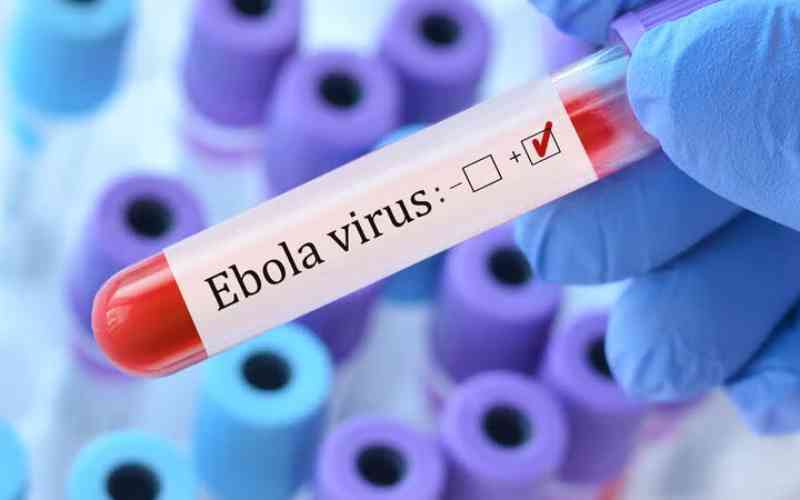
UAE has pledges US$10 million to boost efforts to contain Ebola in Africa as countries strengthen surveillance and preparedness against the outbreak.
The United Arab Emirates has pledged US$10 million (Sh1.296 billion) to fight Ebola in Africa as Kenya strengthens surveillance and border preparedness.
The UAE Aid Agency announced the allocation during a meeting convened by the United States on the sidelines of the United Nations General Assembly (UNGA) to discuss the outbreak and international response.
Kenya has no confirmed Ebola case but has increased surveillance, laboratory capacity, infection prevention and emergency response measures as the outbreak continues in the region.
As a regional transport and trade hub, the country has placed greater focus on preparedness, with thousands of people crossing its borders each day and freight moving through Kenya to Uganda, Rwanda, Burundi, South Sudan and the Democratic Republic of the Congo (DRC).
At the Busia border crossing, more than 3,000 people cross each day, and freight moves along the Northern Corridor toward several countries in the region.
The World Health Organization (WHO) has identified cross-border surveillance and coordination as key measures to limit the spread of Ebola between countries.
Dr Tareq Ahmed Al Ameri, chairman of the UAE Aid Agency, said the contribution formed part of the UAE’s support for international efforts to respond to health emergencies and protect communities from disease outbreaks.
“As part of its efforts to help contain the outbreak, the UAE has sent more than 150 tonnes of aid and supplies to affected areas,” Al Ameri said.
The supplies include protective equipment, infection-control materials and other items that have supported about 280 health facilities, as well as shelter supplies and food for affected communities.
Al Ameri called for faster international action to contain the outbreak and strengthen health systems so they can detect and respond to disease threats at an early stage.
The UAE contribution comes as Kenya continues to expand its public health emergency systems, including surveillance, laboratory services, infection prevention and control, risk communication and case management.
Ministry of Health is also advancing plans for a 200-bed National Infectious Diseases Centre that will bring together diagnosis, treatment, isolation, surveillance, research and training.
Subscribe to our newsletter and stay updated on the latest developments and special offers!


 Prefer the Standard on Google




 join
join