×

The Standard e-Paper
Stay Informed, Even Offline
 The Standard Group Plc is a
multi-media organization with investments in media platforms spanning newspaper
print operations, television, radio broadcasting, digital and online services. The
Standard Group is recognized as a leading multi-media house in Kenya with a key
influence in matters of national and international interest.
The Standard Group Plc is a
multi-media organization with investments in media platforms spanning newspaper
print operations, television, radio broadcasting, digital and online services. The
Standard Group is recognized as a leading multi-media house in Kenya with a key
influence in matters of national and international interest.

Audio By Vocalize
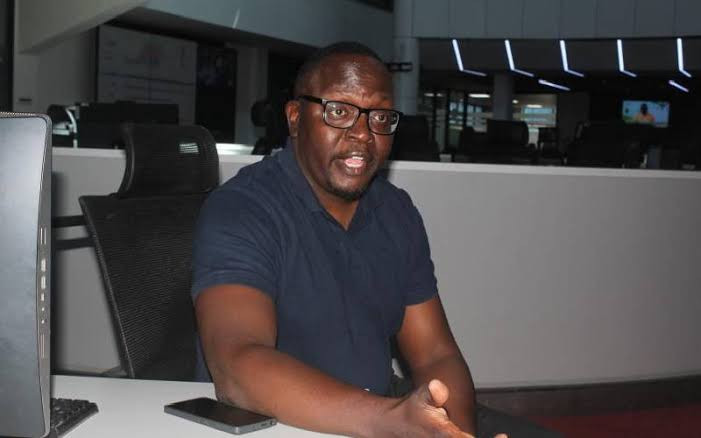
The Rural and Urban Private Hospitals Association of Kenya (RUPHA) Chairman, Dr Brian Lishenga, has stepped down.
He resigned yesterday evening following what he described an increasingly hostile working relationship. This, he said has been experienced with the Ministry of Health and the Social Health Authority (SHA).
“I have decided to quit RUPHA leadership. It has been a journey of perseverance but it is so hostile to keep up,” Lishenga said.
In an interview with The Standard, the doctor said the relationship between RUPHA and key government health agencies had deteriorated to a point where there can be no meaningful engagement on issues affecting private healthcare providers, primary healthcare facilities and SHA payments.
The defunct National Health Insurance Fund (NHIF) legacy debts and patient access had become increasingly difficult. In recent past, he said RUPHA officials have experienced reduced access to senior officials in the Ministry of Health, SHA and related agencies.
It is also alleged that informal instructions had been issued within parts of the health bureaucracy to treat the association as hostile rather than as a legitimate stakeholder representing private healthcare providers. However, Lishenga said his resignation should not be read as withdrawal from the health sector.
“I will remain active within RUPHA in an advisory role and will continue to champion healthcare reforms, especially reforms aimed at strengthening primary healthcare, protecting patient access and fixing the financing model for Kenya’s largely informal economy,” he said.
Over the past two years, Lishenga has been one of the more visible private-sector voices during Kenya’s transition from NHIF to SHA. His leadership at RUPHA placed private hospitals, clinics and primary care providers at the centre of national conversations on Universal Health Coverage, SHA contracting, provider payments, digital health, NHIF arrears and the sustainability of primary healthcare.
Under his chairmanship, RUPHA pushed several issues that placed it at odds with government agencies. Lishenga has been vocal and bold in unearthing the rot about the rot at the Ministry of Health, and SHA.
In September last year, the official went into hidings, out of Nairobi, after allegedly being threaten by unknown individuals. At then, had been vocal about fraud at SHA, irregular payment of SHA claims to hospital and unpaid SHA and defunct NHIF claims.
The tough speaking doctor also highlighted struggles facing the authority, that is the vehicle to actualisation of Universal Health Coverage (UHC).
The threat forced him to get off mobile phone, and disconnected his social media platforms, including being off active media engagements. This seems to have angered the government, which has now resorted to intimidating and threatening hospitals that have spoken out about their financial struggles.
During the push for payment, hospitals including private, public, and faith-based facilities were owed Sh43 billion under SHA and Sh33 billion from the defunct NHIF, bringing to a total of over Sh76 unpaid claims.
According to Lishenga, the mounting debt had left facilities struggling to stay afloat, with some unable to pay staff or procure essential medicines and supplies. Instead of addressing the crisis, he said threats were directed at private and faith-based facilities under RUPHA.
Stay informed. Subscribe to our newsletter
Lishenga argued that many small and medium private facilities were being asked to support the new SHA system while still carrying unpaid debts from the old NHIF regime.
In his view, the transition to SHA could not be credible if providers were expected to absorb old liabilities while continuing to offer services on credit. RUPHA became increasingly vocal on delayed SHA payments, especially to Level 2, Level 3 and selected Level 4 facilities offering primary healthcare services.
He argued that primary healthcare was being turned into an unfunded mandate, with facilities expected to provide consultations, medicines, chronic disease follow-up, maternal and child health services, basic diagnostics and other frontline services without timely reimbursement.
Further, he challenged the financing design of SHA, particularly its reliance on contributory payments from a large informal sector. “Kenya needs to move toward a more tax-funded health financing model for the poor, the near-poor and the informal sector, while reserving contributory mechanisms for populations with predictable incomes,” he said in a previous interview.
His position has been that forcing informal households into a contributory architecture risks excluding the very citizens UHC is meant to protect.
Lishenga questioned the use of means testing and household income estimation under SHA, warning that such systems can be inaccurate, difficult to appeal and potentially punitive for low-income households. SHA, has premiums capped at 2.75 percent of earnings, with individuals in private sector too expected to undergo means testing to determine their annual premiums to Social Health Insurance Fund (SHIF).
According to Lishenga, health financing reform should be designed around real household affordability, not theoretical income assumptions. So far, at least 31 million Kenyans have registered with SHA, but remittance remain low, among individuals in informal sector.
Individuals in the informal sector have also been reported to cheat means testing, an issue that affect total collections at the authority. Lishenga’s resignation also comes at a politically sensitive time where he has declared his candidature for the Kakamega Senate seat in 2027 elections.
He says concerns affecting healthcare facilities and patients have increasingly been politicised, making it harder to engage government purely on policy and service-delivery grounds. His position is that payment delays, weak primary healthcare financing and provider exclusion from decision-making are not partisan matters; they are patient-care and health-system issues.
But in an interview with The Standard, he maintained that his political ambitions do not negate the legitimacy of the healthcare issues he has raised. “The danger is that genuine concerns raised by private healthcare providers may be dismissed as political simply because the person articulating them is also seeking elective office,” he said.
For many private healthcare providers, Lishenga’s tenure at RUPHA coincided with one of the most difficult transition periods in Kenya’s health sector.
This included the winding down of NHIF, the rollout of SHA, the shift to new contracting arrangements, the introduction of digital claims systems and rising pressure on providers to continue offering services despite delayed payments.
His exit from the chairmanship therefore marks not only a leadership transition within RUPHA, but also a signal of the depth of frustration among private providers over how the SHA transition has been managed. RUPHA executive is expected to hold an impromptu meeting today (Thuerday) in Nairobi, to get Lishenga’s replacement.
Under his leadership, RUPHA used provider surveys, scorecards and member feedback to document the operational challenges of the SHA transition.
This included portal challenges, delayed payments, contracting uncertainty, claims processing issues, unresolved NHIF arrears, provider cash-flow distress, supplier debts, salary delays and reduced service capacity in some facilities.
Subscribe to our newsletter and stay updated on the latest developments and special offers!


 Prefer the Standard on Google