
 The Standard Group Plc is a multi-media organization with investments in media
platforms spanning newspaper print
operations, television, radio broadcasting, digital and online services. The
Standard Group is recognized as a
leading multi-media house in Kenya with a key influence in matters of national
and international interest.
The Standard Group Plc is a multi-media organization with investments in media
platforms spanning newspaper print
operations, television, radio broadcasting, digital and online services. The
Standard Group is recognized as a
leading multi-media house in Kenya with a key influence in matters of national
and international interest.

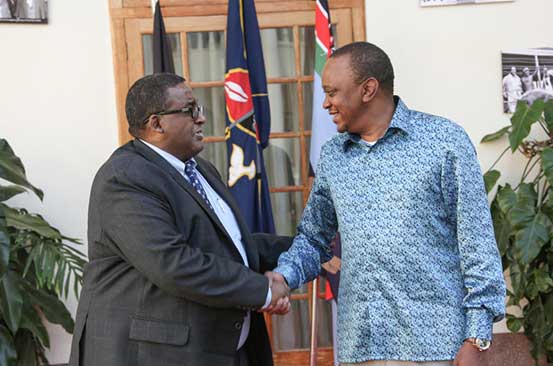
NAIROBI: As the noose tightens on Devolution Cabinet Secretary Anne Waiguru over widespread corruption allegations and claims of inflation of tenders under her watch, Kenyans are painting a grim picture of the state of corruption in the country.
The President’s silence on corruption may be deafening. Sources have told The Standard on Sunday that the Jubilee administration has narrowly defined the fight on corruption and are engaged in a completely different battle; a battle to save the government from real and imagined enemies.
But the clergy, civil society, opposition leaders and even vocal sections of Jubilee politicians have told the President to crack the whip and take charge of the real war to save Kenya.
But today hoi polloi, the masses to whom Cabinet Secretaries and the President owe allegiance, are pronouncing themselves on the matter of corruption.
From Mombasa to Kisumu, Moyale to Kakamega, across all political divides, Kenyans have told The Standard on Sunday that they can no longer put up with the stench of corruption.
Eunice Kimani owns a salon in Nakuru town. Two years ago she used to purchase 20 litres of shampoo at Sh950 but now the same costs Sh2,000.
“A combination of high taxation, corruption, bad decisions on the part of government and poor leadership is to blame for the tough times I face as a small-scale entrepreneur,” she says as she plaits a client’s hair.
Ken Ng’ang’a, an electrical dealer is fully aware of the 30 per cent tender slot for youths and special groups but complains that it is not enough for the youth to have the capacity to supply or even apply for the tenders.
“It is a question of whether you are known or not. Who is your father? The point is; you must be connected to access these opportunities. And that is the cold and hard fact of our times,” Ng’ang’a explains.
Mactilda Kuchio, a parent in Kakamega says corruption is a serious threat to national security and unity of the people.
She attributed the deadly terror attacks at the Westgate Mall and Garissa University College to pervasive corruption among Kenyans.
“Everyone is vulnerable nowadays including the security officers manning our borders. They allowed the entry and safe retreat of suspected terrorists who massacred innocent children and hardworking Kenyans. I lost neighbours, friends and relatives,” said Kuchio.
Saaid Saad, a tomato farmer in Marigat, Baringo County has been forced to reduce his farming acreages from 10 acres to only 5 acres due to high cost of inputs. A kilo of fungicide, which used to cost Sh900 two years ago now costs Sh1,500.
“Production is being hampered by inability to access quality inputs. Some of us have had to resort to poor quality counterfeit products which affect production. The way genuine things are priced would make you think it’s intended to promote counterfeits,” he says.
His colleague in the tomato business complains that government subsidised fertiliser hardly reaches targeted farmers due to corruption cartels involving brokers and large scale farmers.
The despair is not restricted to production in the farm. Those in charge of nurturing young brains to run the country in the future are crying at the effect of corrupting the exam system.
“Education determines careers that our children undertake. With such widespread exam leakages, we are headed to a situation where we will have many square pegs in round holes which has a direct relationship with their productivity and happiness,” Ms Maina, the Deputy Principal of Nakuru Girls said.
Titus Oluoch, who has just sat for his Kenya Certificate of Secondary Education (KCSE) is aware that some of his colleagues had access to leaked copies of the exam prior to sitting the papers. He says the feeling is disheartening. Nixon Wangula, who also sat for KCSE at St Charles Lwanga in Kakamega is worried that KNEC which denied reports of leakage will grade the exams.
Dennis Luvembe, a small scale wine and spirits owner in Kakamega town took a loan early this year to expand his business. He was repaying well until a month ago when the bank informed him of increased interest charges.
Peter Menengai, a supplies dealer claims agencies, courts and security officers are compromised that seeking help from them is meaningless. He recounts a story where his business rivals conspired to haul him before court on false claims.
David Njuguna, a farmer in Githunguri complains of strained cash flow. He claims corrupt individuals in national and county governments have hidden the money in their homes obstructing the flow. As for Joseph Njoroge, a matatu operator in Kiambu, operating in the industry is the hardest thing because of corruption.
“We have been pushed to the wall; we have to give bribes to the traffic officers on a daily basis at times we spend up to Sh350 which is a lot of money. If you calculate after 30 days it’s no small money, giving bribes to traffic officers has now become a norm,” said Njoroge.
The breadth and depth of corruption is qualified by Ventillah Sabiri who works for a gender-based violence NGO. She is disappointed that victims of gender violence take too long to access justice. In her duties, she gets frustrated at some police stations and hospitals that demand money.
“At police stations, we are asked to pay money to speed up the process of accessing justice. In hospital, sometimes we are asked to pay money for P3 forms,” laments Ms Sabiri. In what looks like remaining true to the words of the Holy Bible in 1 Timothy 6:10 about the love of money being the root of all evil, Butula parents and guardians are turning against their young ones for the curse in the shilling.
“We have high cases of defilement, at least four in a week and my inquest tells that the cases are not pursued to the judgment because many parents especially guardians’ collude with perpetrators to defeat justice,” Butula Deputy County Commissioner Mr Bosek Langat says.
For others, they cannot quantify the evils meted out on them courtesy of corruption. Sectors like local music industry are almost grinding to a halt. This is according to Francis Hamisi, a local artist whose stage name is “Frasha”.
In Moyale, residents complained that road blocks are used as ATMs by police officers who man them.














 join
join