×

The Standard e-Paper
Fearless, Trusted News
 The Standard Group Plc is a
multi-media organization with investments in media platforms spanning newspaper
print operations, television, radio broadcasting, digital and online services. The
Standard Group is recognized as a leading multi-media house in Kenya with a key
influence in matters of national and international interest.
The Standard Group Plc is a
multi-media organization with investments in media platforms spanning newspaper
print operations, television, radio broadcasting, digital and online services. The
Standard Group is recognized as a leading multi-media house in Kenya with a key
influence in matters of national and international interest.

Audio By Vocalize
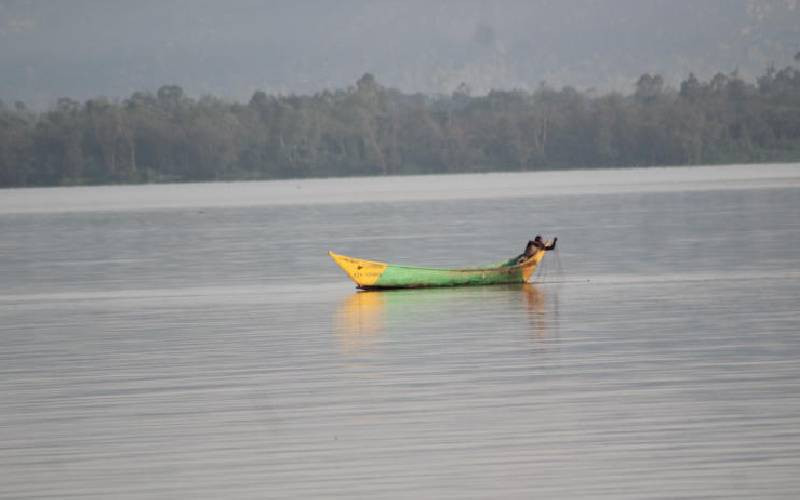
Every day, millions of Kenyans draw water, catch fish and earn a living from Lake Victoria. Yet few stop to consider where much of that water begins its journey.
Beyond Kenya's borders, an intricate network of wetlands in Uganda filters water, traps sediment, stores carbon and supports wildlife before rivers drain into East Africa's largest freshwater lake. Scientists warn that damage to these upstream ecosystems could ripple across national boundaries.
Those concerns have gained fresh urgency following the release of research alleging that Uganda's oil developments are degrading wetlands within the wider Lake Victoria catchment.
The findings come as construction advances on Uganda's oil infrastructure, including the East African Crude Oil Pipeline (EACOP), the Kingfisher feeder pipeline and the Victoria Nile Pipeline Crossing, projects that underpin the country's emerging petroleum industry.
The research links the developments to siltation, air pollution, habitat disturbance and increased human activity in ecologically sensitive areas. Among the sites identified is the Kibale/Bukoora wetland, part of the internationally recognised Sango Bay-Musambwa Island-Kagera (SAMUKA) Ramsar wetland system.
Published this week by the Africa Institute for Energy Governance (AFIEGO), the report argues that the environmental impacts are already emerging in wetlands that regulate water flows, sustain fisheries and support biodiversity. Researchers documented evidence of environmental degradation and increased human-wildlife conflict in five districts hosting oil infrastructure.
The findings are mostly significant for Kenya because several of the affected wetlands form part of the broader Lake Victoria Basin, a shared ecosystem relied upon by communities in Kenya, Uganda and Tanzania.
Based on fieldwork conducted between March and June, the study drew on interviews and focus group discussions with residents, tourism operators and other stakeholders in Buliisa, Hoima, Kikuube, Kakumiro and Kyotera districts.
Researchers say construction linked to EACOP has caused siltation and blocked tributaries feeding wetlands such as Wambabya, Kafu and Kibale/Bukoora, while impacts have also been observed in wetlands associated with the Lake Albert and Victoria Nile basins.
Uganda's wetlands cover about 13.9 per cent of the country's land area and contribute more than US$1 billion annually to the economy. According to the report, more than 80 per cent of Ugandans rely directly on wetland resources for household food security, highlighting their importance to livelihoods and economic development.
The researchers attribute many of the impacts to increased heavy truck traffic, earthworks and diesel-powered machinery operating in environmentally sensitive areas.
The report also links water abstraction from the Rutooha River during construction of the Kingfisher feeder pipeline to reduced water availability in nearby forests. Communities told researchers that chimpanzees have increasingly entered villages in search of water after river flows declined.
"The research released by AFIEGO today is clear: Uganda's oil activities are negatively impacting important wetlands on which millions depend," AFIEGO Chief Executive Dickens Kamugisha said.
He said Uganda could not achieve sustainable economic transformation by degrading ecosystems that underpin livelihoods, urging authorities to require oil companies to restore damaged wetlands and reconsider further oil expansion.
Scientists interviewed for the study say the impacts extend beyond visible landscape changes.
Stay informed. Subscribe to our newsletter
One biodiversity expert cited in the report says persistent noise and vibrations from heavy machinery can disrupt animal communication, feeding patterns and movement. Emissions from diesel generators, including carbon monoxide, nitrogen dioxide and sulphur dioxide, may also weaken wildlife immunity and reproductive success.
Particular concern surrounds the Murchison Falls-Albert Delta Ramsar wetland, home to 78 waterbird species, 25 reptile species, more than 52 fish species and 27 amphibian species. The delta is also a vital breeding ground for Lake Albert fisheries, which produced 51 per cent of Uganda's fish catch in 2023.
Environmental experts say the findings underscore the need for greater regional cooperation because wetlands provide services that extend well beyond the countries in which they are located. They regulate water flows, reduce flooding, improve water quality and trap sediments before they reach rivers and lakes.
Although the report does not assess environmental impacts inside Kenya, it highlights the interconnected nature of the basin and the importance of monitoring shared ecosystems.
For Kenya, the implications are significant. Lake Victoria supports one of the country's largest inland fisheries, supplies water to millions of people and underpins transport, agriculture and tourism in counties including Kisumu, Homa Bay, Migori, Siaya and Busia.
The study also raises broader questions about balancing economic development with environmental protection.
Uganda's National Development Plan identifies oil and gas as key drivers of economic growth while recognising that natural resources must be managed sustainably. AFIEGO argues that expanding oil infrastructure through ecologically sensitive landscapes risks undermining the ecosystems that sustain agriculture, fisheries, tourism and climate resilience.
The organisation is calling for a comprehensive assessment of all wetlands affected by oil development, public release of the findings and restoration of damaged ecosystems by project developers.
The report is likely to intensify scrutiny of EACOP, the 1,443-kilometre heated crude oil pipeline linking Uganda's oilfields to Tanzania's Indian Ocean coast. Environmental organisations have long questioned the project's potential impacts on biodiversity, freshwater resources and the climate, while the developers maintain that construction complies with national regulations and international environmental standards.
For Kenya, the debate extends beyond Uganda's petroleum ambitions to how East African countries will protect the shared ecosystems that sustain millions of people. As governments pursue energy development, the future of Lake Victoria may increasingly depend on decisions made far upstream.
Subscribe to our newsletter and stay updated on the latest developments and special offers!

 Prefer the Standard on Google








 join
join