News Links
- Home
- News
- Business
- Editorial
- Columnists
- Commentaries
- Cartoon
- Madd Madd World
- Pictures
- Special Reports
- Draft Constitution
- Politics
- Parliament
- World News
- OdD nEwS
- Blogs
- Magazines
- Real Estate
- Agriculture
- Hunger Watch
- Environment
- Travel
- Art & Literature
- Fashion
- Relationships
- Children
- Education
- Letters
- Point Blank
- Careers
- Celebrating Life
- Feedback
Poll
Your Say
Radical proposals as minister tables land policy
Related Stories
Leaders claim threshold for top job too low
MPs raise alarm over Sh4.7b idle roads cash
Did review team’s call for more MPs miss the point?
The deal that never was
Draft has nothing similar to US system
Court yet to decide fate of several MPs, ministers
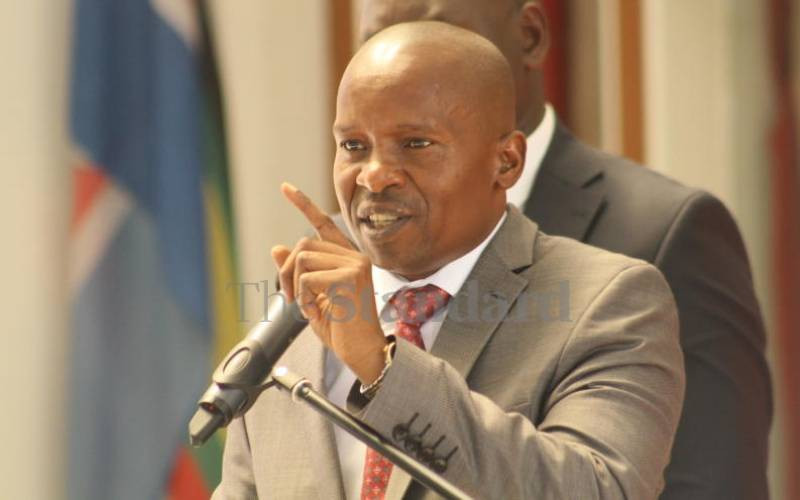
The Government tabled a sessional paper with radical proposals on land in Parliament.
Lands Minister James Orengo on Wednesday tabled the Draft National Land Policy, which, if enacted and implemented, will be Kenya’s first comprehensive document governing land reform since Independence.
It contains recommendations such as reducing the colonial 999-year leases to 99 years and also seeks to address historical land dispossession in Coast and Rift Valley provinces by restoring the claims of indigenous communities.
Tenure systems
The Kenya National Land Alliance supports the radical proposals that include land redistribution to benefit the poor, while land barons fronted by the Kenya Land Owners Association, have vowed to oppose it.
It proposes new land tenure systems and laws, recognises community/indigenous/customary land rights, historical dispossession of tribes by colonial and post-colonial regimes and promises to re-open land allocation, especially at the Coast since 1895.
It defines historical land injustices as "grievances, which stretch back to colonial land administration practices and laws that resulted in disinheritance of communities of their land".
It creates an enabling legal mechanism for the Government to acquire any land in Kenya.
It also limits legal protection for private property acquired illegally, irregularly or out of historical injustice.
If implemented, foreign ownership of investment in Kenya will no longer be unfettered, but local peasants will also not enjoy absolute will to subdivide their land.
When he tabled Sessional Paper No 3 of 2009 in Parliament, Mr Orengo accused the Kenyatta regime of inheriting the colonial state with its unfair land tenure systems and laws, and using them to enrich and empower a new political and economic elite.
Registration laws
The minister said Kenyatta’s successors received and fostered the same colonial state, including land adjudication and registration laws.
He said Kenya’s land laws are unfair and cannot sustain agricultural production and economic development. The draft policy seeks to address historical claims of landless indigenous African dating a century against absentee Arab landowners.
Describing landlessness in Coast Province as most acute, the policy traces historical dispossession of Africans to the Land Titles Act (Cap 282) of 1908, which disinherited the indigenous population along a ten-mile strip on the coast in favour of "absentee land owners".
— Stories by David Ochami, Peter Opiyo, Alex Ndegwa and Beauttah Omanga
Read all about: Parliament Kenya National Land Alliance
Business
KenGen signs Sh98.6b geothermal contract
Kenya Electricity Generating Company (KenGen) has signed a Sh98.6 billion ($1.314 billion) contract with a New Zealand firm t...more
Sports News
AFC Leopards face the axe
A week after Kenyan football suffered the setback of McDonald Mariga’s failed move to Manchester City, CAF Confederations Cup...more
Today's magazine
Crime, Courts & InvestigationsThe deal was sealed with a handshake before the two men headed in different directions. One of them went to Kenya Revenue Authority headquarters while the other went to his office to await some money.
Adverts