×

The Standard e-Paper
Stay Informed, Even Offline
 The Standard Group Plc is a
multi-media organization with investments in media platforms spanning newspaper
print operations, television, radio broadcasting, digital and online services. The
Standard Group is recognized as a leading multi-media house in Kenya with a key
influence in matters of national and international interest.
The Standard Group Plc is a
multi-media organization with investments in media platforms spanning newspaper
print operations, television, radio broadcasting, digital and online services. The
Standard Group is recognized as a leading multi-media house in Kenya with a key
influence in matters of national and international interest.

Audio By Vocalize
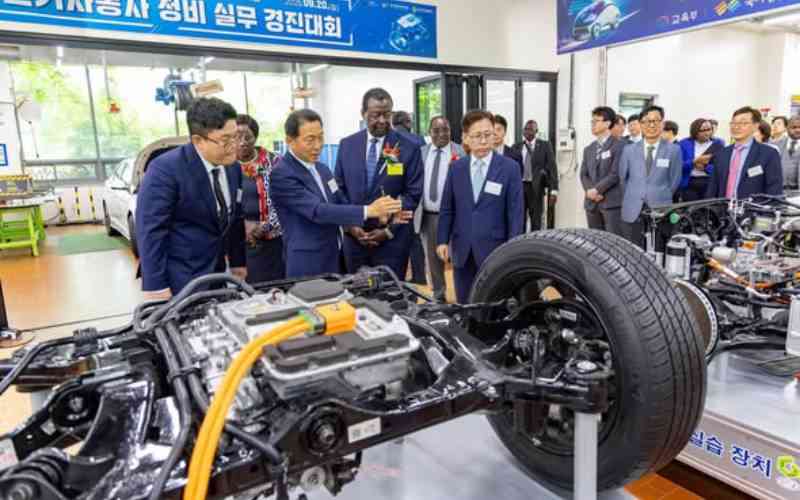
Kenya is seeking deeper economic and technological ties with South Korea as part of its broader strategy to accelerate industrialization, create jobs, and equip its workforce with skills needed for the future economy.
Prime Cabinet Secretary Musalia Mudavadi said Kenya is ready to forge transformative partnerships with South Korean companies in key sectors including manufacturing, automotive technology, renewable energy, information and communication technology, construction, and smart city development.
Speaking during a meeting with representatives of Korean industry and civil society at the Gyeonggi University of Science and Technology (GTEC) in Siheung City, Gyeonggi Province, South Korea, Mudavadi said Kenya is positioning itself as a preferred investment destination in Africa.
“Kenya is a gateway to a market of over 500 million people in the East African region, supported by a stable democracy, a skilled workforce, and a rapidly modernizing infrastructure,” said Mudavadi. “Kenya and Korea share a common belief that human capital, innovation, and technology are the engines of national transformation.”
His remarks come as Kenya continues to pursue foreign direct investment to support its industrial growth agenda and create employment opportunities for its growing youthful population.
The government has been actively courting investors from Asia, Europe, and the Middle East while strengthening partnerships in education, technology, and manufacturing.
Mudavadi praised South Korea's remarkable economic transformation, describing the Asian nation as a global model of industrial excellence that Kenya can learn from.
“Korea has become a global benchmark for industrial excellence, and Kenya is looking forward to tapping into the immense Korean potential to build a future anchored in innovation, skills, and shared prosperity,” he said.
The Prime CS emphasized that Kenya is not merely seeking capital investment but long-term partnerships that deliver tangible benefits to citizens through skills development and industrial expansion.
“Kenya is not just open for business—we are eager for partnerships that create jobs, transfer skills, and build industries that will define the future. We value Korean companies for their reputation in quality, innovation, and long-term commitment,” he said.
Mudavadi also highlighted the importance of educational collaboration, noting that Kenya is expanding Technical and Vocational Education and Training (TVET) institutions to equip young people with practical skills aligned to industry demands.
“I am encouraged by the ongoing collaborations between GTEC and Kenyan institutions, and I welcome the possibility of expanding these partnerships through student exchanges, faculty cooperation, joint research, and technology transfer. Kenya is ready to learn from Korea’s remarkable experience in linking education to industrial growth,” he noted.
He further acknowledged the contribution of civil society organizations in promoting social development and supporting vulnerable communities.
“We look forward to deeper collaboration with organizations that share our vision of inclusive development and empowerment,” said Mudavadi.
Stay informed. Subscribe to our newsletter
He urged both countries to strengthen institutional and business ties, saying such cooperation has the potential to transform lives and unlock shared prosperity for future generations.
Subscribe to our newsletter and stay updated on the latest developments and special offers!

 Prefer the Standard on Google









 join
join