×

The Standard e-Paper
Smart Minds Choose Us
 The Standard Group Plc is a
multi-media organization with investments in media platforms spanning newspaper
print operations, television, radio broadcasting, digital and online services. The
Standard Group is recognized as a leading multi-media house in Kenya with a key
influence in matters of national and international interest.
The Standard Group Plc is a
multi-media organization with investments in media platforms spanning newspaper
print operations, television, radio broadcasting, digital and online services. The
Standard Group is recognized as a leading multi-media house in Kenya with a key
influence in matters of national and international interest.

Audio By Vocalize
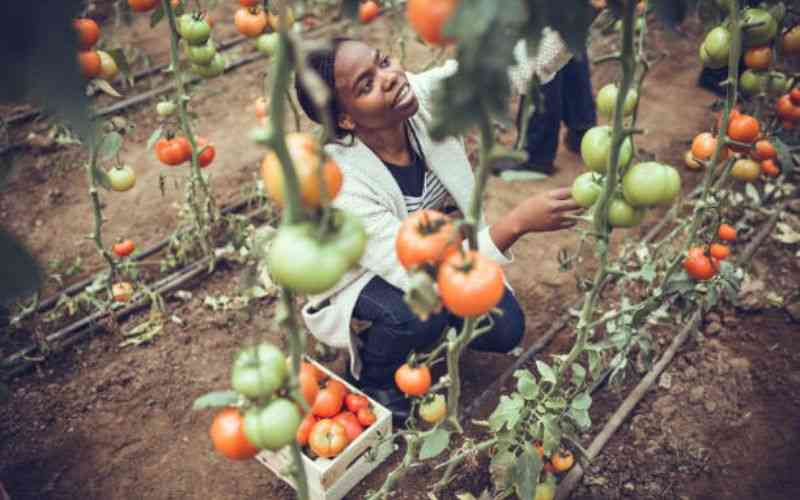
Imagine an Africa where all farmers have equal access and control of land, finance, mechanisation, knowledge and freedom to make key agricultural decisions. Rural incomes would rise, livelihoods improve, and fewer families would go hungry.
Food systems would be more productive, and communities better equipped to withstand climate shocks. This is the kind of transformation Africa needs. Women account for nearly 40 per cent of the over 916 million people working in agri-food systems globally. In sub-Saharan Africa, they make up almost half of the agri-food systems workforce. Yet, women are more than just a labour force; they offer invaluable expertise, leadership and resilience.
Women are custodians of agricultural biodiversity. For generations, they have selected, preserved and exchanged seeds, safeguarding local crop varieties that sustain household nutrition and help farming systems adapt to climate change. They guide critical decisions on which crops are grown for sustenance and commercial markets.
Women also shoulder the “triple burden” of productive, reproductive and community responsibilities. Though they plant, weed, harvest, process and store crop, they also manage households chores. Despite their indispensable role, women continue to farm under profoundly unequal conditions.
Limited land ownership bars many women from using land as collateral to access credit, restricting their ability to expand agricultural enterprises. A recent Focus Group Discussion (FGD) in Ethiopia revealed:- “There is a dilemma with rented land. Why should I improve the soil with compost if the owner might take the land back next year? The full benefit of compost comes after three years.”- (FGD_Ejere_Enaftu_Women in Cooperatives).
Labour-saving technologies are barely made with women in mind, forcing them to spend long hours on physically demanding tasks that reduce productivity and limit opportunities for entrepreneurship. According to the Food and Agriculture Organisation (FAO), closing gender gaps in agricultural productivity could increase global gross domestic product by nearly one trillion dollars while lifting 45 million people out of food insecurity. However, climate change is making these inequalities more costly. Prolonged droughts, floods and erratic rainfall continue to increase pressure on agriculture.
Fortunately, evidence shows what is possible when these barriers are removed. In Burundi, women now lead more than half of supported seed enterprises. In Zimbabwe, women-owned seed businesses have expanded significantly, while women’s participation throughout the seed sector continues to grow. In Kenya and Tanzania, women-led farmer groups are supplying structured markets with improved bean varieties, demonstrating that when women gain equal access to quality seed, technical support and markets, they thrive as commercial farmers.
These achievements have been made possible through interventions by CGIAR’s Alliance of Bioversity International and CIAT (The Alliance) jointly with strategic partners and funders. The results demonstrate that integrated investments in gender responsive seed systems, agricultural training, access to finance, market linkages, digital innovation and programmes that promote equitable household decision-making can unlock women’s full potential as agricultural entrepreneurs and leaders.
The year 2026 marks the United Nations International Year of the Woman Farmer, a global recognition of the indispensable role women play in transforming agrifood systems and advancing food security, nutrition and rural livelihoods. CGIAR’s campaign, “Empowered women. Investable innovations. Transforming agrifood systems.” underscores the importance of investing in women and science to build more resilient and sustainable food systems.
Women are investors, innovators, employers, entrepreneurs in the agricultural food system. Policies should therefore guarantee equal access to secure land rights, finance, extension services, mechanisation, climate information, digital technologies and profitable markets.
Women-owned agribusinesses also need patient capital, stronger business networks and fair opportunities in formal value chains. Financial products must be designed around women’s realities rather than requiring collateral they have historically been denied. If women farmed on equal terms, the world would harvest more than food. It would harvest resilience, prosperity and a more secure future.
-The writer is Gender and Social Inclusion Expert, Alliance of Bioversity International and CIAT.
Subscribe to our newsletter and stay updated on the latest developments and special offers!


 Prefer the Standard on Google








 join
join