×

The Standard e-Paper
Smart Minds Choose Us
 The Standard Group Plc is a
multi-media organization with investments in media platforms spanning newspaper
print operations, television, radio broadcasting, digital and online services. The
Standard Group is recognized as a leading multi-media house in Kenya with a key
influence in matters of national and international interest.

Audio By Vocalize
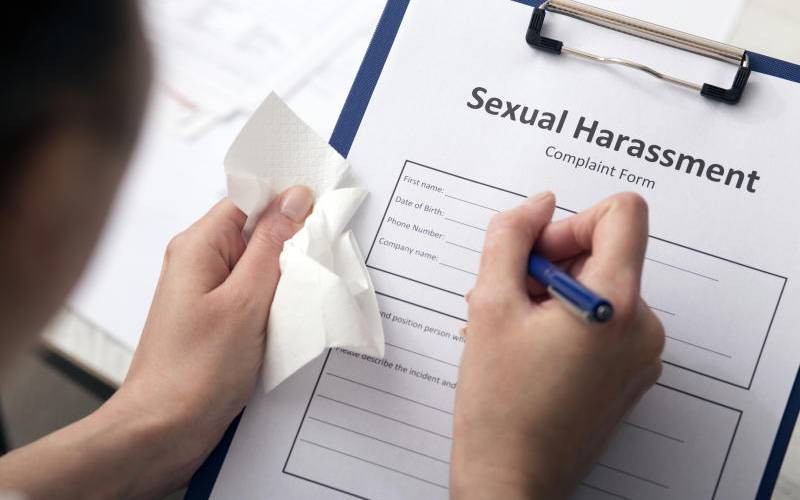
Fear of homelessness, hunger and losing their livelihoods is making it difficult for women to leave sexually abusive workplaces or report their experiences, a new report has revealed.
The Sexual Exploitation, Abuse and Harassment (SEAH) in Kenyan workplaces report shows that 61 out of 83 participants (73 per cent) said fear of homelessness or hunger makes it difficult for women to leave harmful jobs.
A further 74 per cent identified fear of losing income or work as a major reason women do not report sexual exploitation, abuse and harassment (SEAH) in the workplace.
The findings, from two community dialogues in Mathare and Mukuru, point to how employers, business owners and other people in positions of power use control over jobs and opportunities to exploit women.
According to the combined report by Your Voice, Your Power KE and partner organisations, 57 out of 83 participants (69 per cent) said employers or business owners hold power over women at work, while 43 (52 per cent) identified customers and clients as people who also wield such power.
The report further found that young and first-time workers are among the most vulnerable, with 61 out of 83 participants (73 per cent) identifying them as the group most at risk.
Sexual harassment has also become normalised in some workplaces, making it difficult for victims to speak out.
The findings show that 60 out of 86 participants (70 per cent) considered sexual comments and jokes unacceptable, yet 52 out of 80 (65 per cent) said such behaviour has become so normal that people ignore it.
Apart from sexual comments and jokes, other forms of harassment identified include unwanted touching, demands for sex in exchange for work or opportunities, comments about women's bodies and clothing, repeated invitations after refusal, forced sexual acts, threats and stalking, and sexual messages and images.
Despite the experiences, formal reporting channels remain largely unused, with only ten per cent of participants saying they would first report to a labour officer, while 11 per cent would approach an employer or human resource office.
Instead, 48 out of 84 participants (57 per cent) said women would first turn to friends or family when reporting harassment.
The report also highlights gaps in the legal framework, noting that existing workplace protections largely focus on formal employment, leaving informal workers, freelancers, job seekers and people in the creative economy inadequately protected.
It further notes that there is no national figure capturing the extent of sexual exploitation, abuse and harassment in Kenyan workplaces, with existing studies using different samples and definitions.
The report comes as the world marks the 16 Days of Activism Against Gender-Based Violence, running from November 25 to December 10, under the UNiTE campaign theme, "Ensure justice, protect survivors, end impunity."
Stay informed. Subscribe to our newsletter
It draws on community discussions involving 89 participants in Mathare and Mukuru in Nairobi County.
The organisations are now calling on the Ministry of Labour, the Kenya National Bureau of Statistics (KNBS), the National Gender and Equality Commission (NGEC) and the Kenya National Commission on Human Rights (KNCHR) to commission Kenya's first national report on workplace sexual exploitation, abuse and harassment.
They want the proposed report to cover informal workers, the creative economy and political and public offices, while documenting cases across counties and tracking what happens after victims report abuse.
The organisations also want safer reporting channels, including confidential reporting options, protection against retaliation and access to female responders to encourage more survivors to speak out.
Subscribe to our newsletter and stay updated on the latest developments and special offers!

 Prefer the Standard on Google