×

The Standard e-Paper
Kenya’s Boldest Voice
 The Standard Group Plc is a
multi-media organization with investments in media platforms spanning newspaper
print operations, television, radio broadcasting, digital and online services. The
Standard Group is recognized as a leading multi-media house in Kenya with a key
influence in matters of national and international interest.

Audio By Vocalize
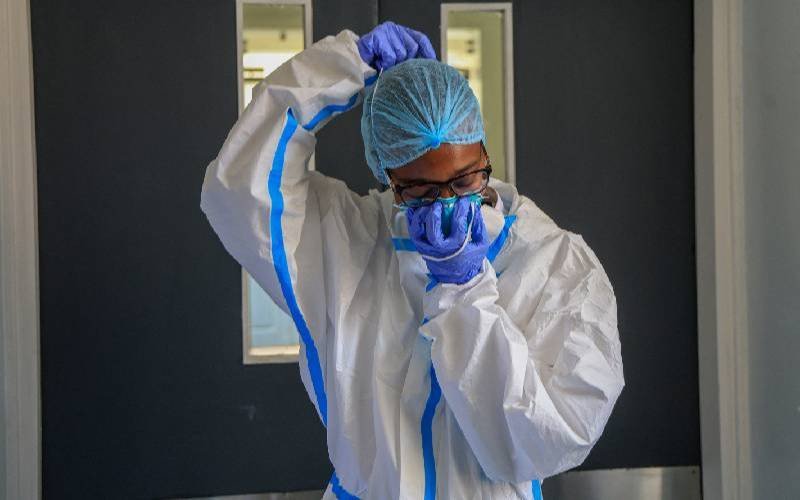
The World Health Organisation (WHO) has warned that efforts to contain Ebola in the Democratic Republic of Congo (DRC) risk being undermined by armed conflict, mass displacement and restricted access to affected communities, even as infections decline in some areas and rise in others.
WHO Regional Director for Africa Dr Mohamed Yakub Janabi said the response was making progress but cautioned that transmission remained a concern across eastern DRC, where the outbreak has affected eight provinces.
“We are seeing good progress; however, we need to be very cautious. We have 66 health zones affected, including eight provinces. All countries should focus on four key areas: to identify infections earlier, to interrupt transmissions, to protect healthcare workers,” he said.
While infections have declined in Ituri, the initial epicentre, cases have risen in North Kivu, including Beni.
“Without peace, it will not be able to reach people. In a disease like Ebola, just one case is like having 100 cases. Those processes of tracing, treating, and prevention are just the same,” Dr Janabi said.
He called for a cessation of hostilities to allow health workers to reach affected communities and interrupt transmission.
The regional threat has grown following the detection of Bundibugyo Ebola cases beyond the DRC, including in Kenya and Nigeria. The Africa Centres for Disease Control and Prevention has called a meeting of health ministers to coordinate the response.
Kenya has confirmed its ninth case, involving a 24-year-old close family contact of the first patient. The infection was detected while the patient was in quarantine.
WHO opposes general restrictions on travel and trade, arguing that they should be supported by scientific evidence and could drive travellers towards informal crossings, complicating surveillance.
“It is not just America. It is not a travel ban but an advisory. A Kenyan going to Uganda should take caution, and vice versa. We should all be cautious,” Dr Janabi said.
He said Kenya had screened about 700,000 travellers at its points of entry since the outbreak began.
“Kenyans should not be worried. Having one case today, tomorrow, from the index case and contact case, is a common thing with Ebola,” he said.
He added: “WHO is a scientific organisation. We do not agree with travel bans or restrictions. There should be scientific evidence that shows that closing the borders will indeed prevent the spread of Ebola. There are a lot of ‘panya routes’ that people can use to get into the country.”
Several countries have introduced or updated travel measures, although their scope differs. El Salvador has reportedly imposed entry restrictions covering travellers from Kenya and other listed countries, while the United Kingdom has updated its travel guidance. South Korea has reportedly strengthened screening, while Canada, Australia and China have also issued travel guidance. These measures should not be confused with blanket entry bans.
Stay informed. Subscribe to our newsletter
The US-Kenya Contradiction
The US advisory has raised questions about the contrast between Washington’s warning to its citizens and its support for Ebola preparedness in Kenya, including a US-linked isolation facility in Laikipia. The facility has attracted controversy over transparency, safeguards and community consultation.
WHO Director-General Dr Tedros Adhanom Ghebreyesus has reiterated the agency’s position.
“WHO advises against any restriction of travel to, or trade with, the affected countries based on the currently available information,” he said.
Kenya’s Ministry of Health echoed that position on Wednesday, saying: “Kenya remains open, with no restrictions on travel, trade or public gatherings.”
Uganda, which previously reported Bundibugyo cases, was declared Ebola-free in July. Its Ministry of Health said on October 20 that there were no active Ebola cases in the country, following confirmation of a case in Nigeria involving a woman who had travelled through Uganda after visiting the DRC.
Authorities are investigating her movements and possible exposures. Transit through Uganda alone does not establish that she acquired the infection there.
Subscribe to our newsletter and stay updated on the latest developments and special offers!


 Prefer the Standard on Google