×

The Standard e-Paper
Kenya’s Boldest Voice
 The Standard Group Plc is a
multi-media organization with investments in media platforms spanning newspaper
print operations, television, radio broadcasting, digital and online services. The
Standard Group is recognized as a leading multi-media house in Kenya with a key
influence in matters of national and international interest.
The Standard Group Plc is a
multi-media organization with investments in media platforms spanning newspaper
print operations, television, radio broadcasting, digital and online services. The
Standard Group is recognized as a leading multi-media house in Kenya with a key
influence in matters of national and international interest.

Audio By Vocalize
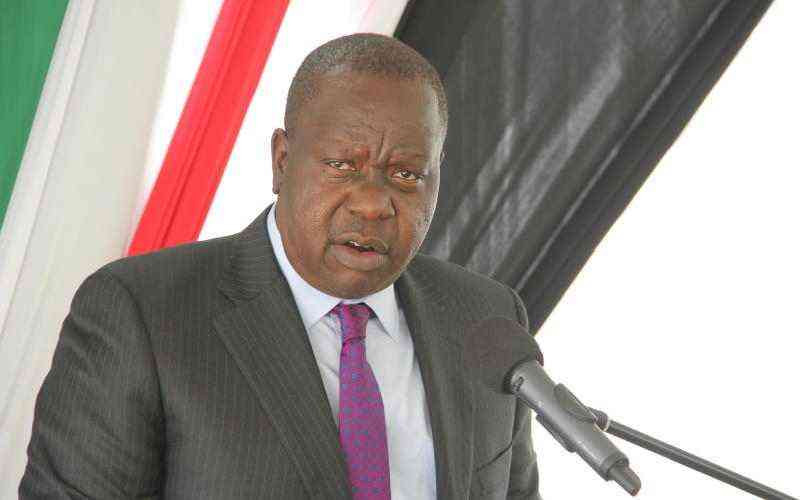
Dr. Fred Matiang'i has dismissed President William Ruto's proposal for a national conversation on Kenya's development beyond Vision 2030, arguing that the initiative is meant to divert attention from pressing governance and constitutional challenges facing the country.
Matiang'i described the proposed dialogue as "a misplaced priority," contending that the country should instead focus on addressing what he termed constitutional violations, insecurity, institutional decline and a growing trust deficit in government.
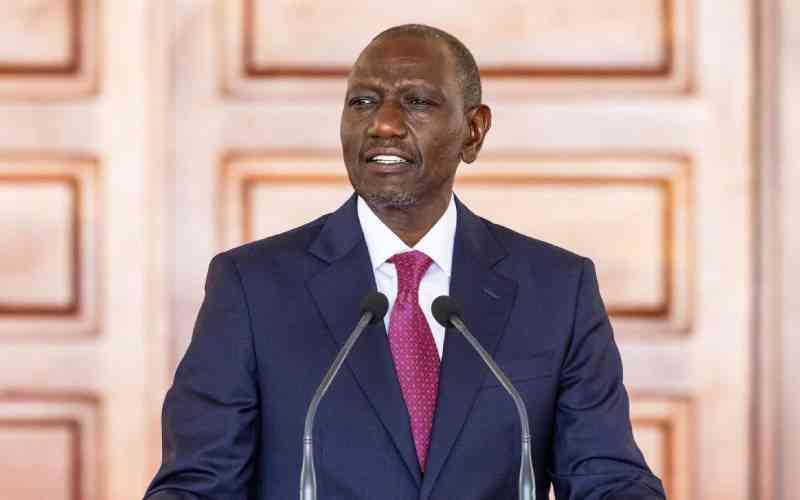
The remarks come as President Ruto seeks to initiate a national conversation aimed at shaping Kenya's development agenda as we are approaching the end of Vision 2030, the country's long term economic blueprint launched in 2008, and another road map towards 2060.
However, Matiang'i questioned the timing and intent of the proposed discussions, arguing that fundamental governance issues must be resolved before embarking on a fresh national agenda.
"President William Ruto's proposal to launch a national conversation on Kenya's development post-Vision 2030 is a clear case of misplaced priority," Matiang'i said. "This is only meant to divert our attention from Ruto's gross violations of the Constitution and leadership failures that are pressuring him to address."
The former Interior Cabinet Secretary accused the President of failing to uphold constitutional principles while simultaneously calling for national unity and dialogue.
According to Matiang'i, it is contradictory for the Head of State to urge Kenyans to embrace constitutional values and human rights while in his view, failing to address growing concerns over law and order.
He cited a series of security incidents that he said demonstrate weaknesses in the government's handling of public safety.
Matiang'i claimed that criminal gangs have increasingly targeted motorists on major highways in broad daylight, while worshippers have faced attacks in churches.
He also alleged that political leaders have been subjected to violent disruptions during public rallies without those responsible being held accountable.
"It is a contradiction that Ruto has the temerity to lecture us about human rights and the patriotic clauses of our Constitution when he has failed to address cases of rampant thuggery and the wanton breakdown of law and order," Matiang'i stated.
The Jubilee presidential candidate further argued that the country has experienced what he described as a weakening of public institutions, alleging that many government agencies have become ineffective because of excessive executive control.
Matiang'i referenced comments he attributed to former National Treasury Cabinet Secretary Prof. Njuguna Ndung'u, claiming they support his assertion that state institutions have increasingly become subordinate to the Executive rather than operating independently.
According to Matiang'i, any meaningful national conversation should first address the independence and effectiveness of public institutions.
"This is where the so-called new conversation must start," he said, questioning whether President Ruto possesses "the basic tolerance and the necessary respectful attitude towards public institutions" required to lead such a process.
Stay informed. Subscribe to our newsletter
Beyond institutional concerns, Matiang'i argued that public confidence in the government has been eroded by what he described as an expanding trust deficit. “There is a trust deficit that Ruto administration has come to epitomise,” he stated.
He pointed to previous political agreements and commitments, including the National Dialogue Committee (NADCO) process and the Broad-Based Government arrangement, suggesting that many promises made under those initiatives remain unfulfilled.
Although he did not provide specific examples, Matiang'i maintained that the government's record on implementing agreed reforms has contributed to public skepticism regarding new political initiatives.
He further urged restoring trust through concrete action, which should take precedence over launching another national dialogue.
Despite his criticism of the administration, Matiang'i urged citizens not to lose hope, expressing confidence that democratic processes would provide an opportunity for change during the next General Election scheduled for August 2027.
"As Kenyans, we must never lose hope," he said. "We will turn the page on 10 August 2027 and embark on a more trustworthy journey towards fixing our nation."
His latest remarks also reflect broader political debate over the role of national dialogue in addressing Kenya's challenges.
Supporters of a national conversation, such as the Interior CS, have argued that it could provide an opportunity for Kenyans to collectively define the country's long-term development priorities after Vision 2030, while also fostering national unity and consensus on key reforms.
“I join fellow Kenyans in congratulating H.E the President on his unveiling of the Beyond Vision 2030 conversation- a bold, inclusive and people-centered initiative that will shape the socio-economic future of our Nation,” stated Murkomen.
He added, “As a Ministry responsible for internal security and national administration, we remain committed to fostering a safe and conducive environment where meaningful dialogue can thrive, and development can flourish. We stand ready to embrace, participate in and facilitate this important national exercise when it is formally launched on Wednesday, 12th August 2026. Together, and in one accord, we will reimagine and build the Kenya we want”.
However, critics such as Nairobi senator Edwin Sifuna contend that dialogue alone cannot substitute for the implementation of existing constitutional provisions or the fulfillment of previous political agreements.
“Ruto just spent 40 minutes trying to create a false equivalence between our national values set out in the constitution and his so called “developmen.t” Kenyans, please trust me when I tell you there is a reason the Preamble comes before Article 43. You don’t get to the “development “ clauses until and unless you have taken into account the reasons we passed this constitution in the first place. Democracy, Human Rights, Freedom, Equality, Rule of Law and Social Justice,” Sifuna posted on his social media
Matiang'i's statement places him firmly within the latter camp, arguing that resolving immediate governance concerns should take precedence over discussions about Kenya's long-term development framework.
The former CS maintained that addressing insecurity, strengthening public institutions, protecting constitutional principles and rebuilding public trust should form the foundation of any future national engagement.
President Ruto has previously defended his administration's commitment to constitutional governance, institutional reforms and national unity, while maintaining that broad public participation will be central to shaping Kenya's development beyond Vision 2030.
The proposed national conversation continues to elicit debate, with the differing positions highlighting the competing visions emerging ahead of the next electoral cycle, with government leaders emphasising long-term planning and sections of the opposition insisting that immediate governance challenges must first be addressed.
Subscribe to our newsletter and stay updated on the latest developments and special offers!

 Prefer the Standard on Google








 join
join