×

The Standard e-Paper
Join Thousands Daily
 The Standard Group Plc is a
multi-media organization with investments in media platforms spanning newspaper
print operations, television, radio broadcasting, digital and online services. The
Standard Group is recognized as a leading multi-media house in Kenya with a key
influence in matters of national and international interest.
The Standard Group Plc is a
multi-media organization with investments in media platforms spanning newspaper
print operations, television, radio broadcasting, digital and online services. The
Standard Group is recognized as a leading multi-media house in Kenya with a key
influence in matters of national and international interest.

Audio By Vocalize
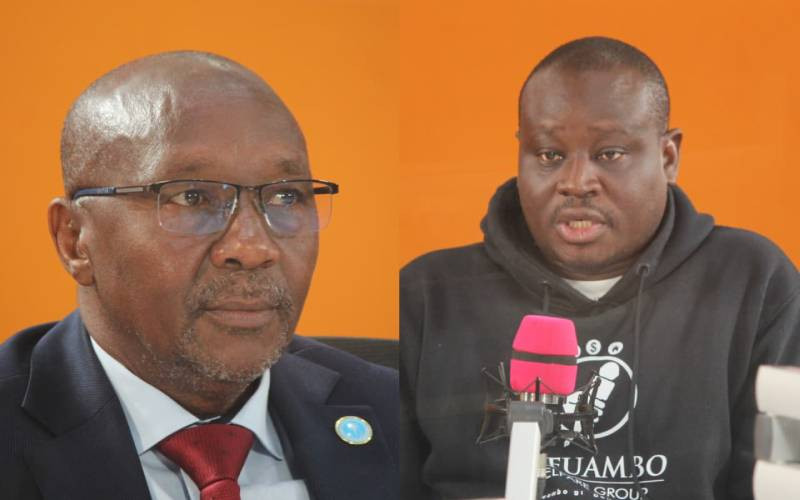
Advocate of High court and Senior Lecturer at Daystar University Erneo Nyakundi and Kenya Union of Journalists(KUJ)Secretary General Eric Oduor during an interview at Spice FM on August 19,2026. [Benard Orwongo,Standard]
Attacks on journalists and destruction of their equipment are creating an information blackout that could prevent Kenyans from knowing what happens during political events, media stakeholders have warned.
Kenya Union of Journalists (KUJ) Secretary General Eric Oduor and Advocate of the High Court and Daystar University Head of Public Law Dr Erneo Nyakundi said journalists must be allowed to work freely, particularly during political rallies.
“There are people who want journalists to operate in information darkness and not do their jobs. We are seeing the breakdown of our systems,” Oduor warned during an interview on Spice FM on Wednesday.
Nyakundi said the attacks violate constitutional protections, including Article 33, which guarantees the freedom to seek, receive and impart information.
“If you block that, you cannot say you believe in the rule of law,” he argued.
The remarks came days after eight journalists and five drivers from different media houses were attacked during the Linda Mwananchi rally in Homa Bay on Sunday.
The Media Council of Kenya says 18 journalists and at least two drivers from different media houses have been assaulted or injured in the past two months.
Oduor said the attacks appear to form a targeted strategy by politicians and their supporters to keep journalists away from political events or destroy their equipment when they document violence.
“There appears to be a strategy to ensure that media personnel are either not present or, if they are, that their cameras are destroyed,” Oduor observed.
He called for safe corridors for journalists covering events and urged media bodies to pursue legal action where evidence identifies those responsible.
Nyakundi challenged journalists and media houses to move beyond condemning attacks and pursue petitions, public interest cases and compensation for journalists who suffer injuries or lose equipment.
“Journalists and their outfits need to move beyond condemning and complaining and take serious action,” he urged.
The stakeholders also defended the role of mainstream media in countering misinformation and disinformation despite the growing influence of social media.
Stay informed. Subscribe to our newsletter
Oduor warned that failing to hold attackers accountable could encourage similar assaults against other institutions.
“Today it’s journalists, next time they will invade police stations, hospitals, courts,” he warned.
He urged media bodies to pursue cases where evidence has already been captured and seek justice against those responsible, including alleged sponsors of attacks.
“Sometimes, as journalists, we are not loud enough about our own issues, yet we are loud about other people’s issues,” Oduor added.
Nyakundi urged the media to continue reporting attacks on journalists while leaving criminal prosecutions to the state.
“Let’s leave it to the state to prosecute and let’s make sure that journalists are amplifying these cases so that they are known out there. We should bring those who are hell-bent on wiping out the media to court,” he stated.
Oduor also called on media houses to seek compensation for affected journalists and consider denying platforms to individuals associated with violence, while remaining guided by the journalistic Code of Conduct.
Among those accused by the Linda Mwananchi movement of orchestrating violent disruptions during its political tour are Homa Bay Governor Gladys Wanga and Homa Bay Town MP Peter Opondo Kaluma. The allegations remain contested.
“I wouldn’t be surprised if we see Kaluma and Wanga in any of the media stations. We should take a position and not allow anyone associated with violence to appear on media stations. That would be a step in the right direction,” Oduor said.
“By having the media entertain those who are associated with violence, they become part of the problem. They should not allow them to sanitise themselves on their platforms,” he added.
Nyakundi cautioned media houses against abandoning the presumption of innocence, saying accused individuals must have an opportunity to respond.
“From a legal point of view, we need to give everybody an equal chance. Presumption of innocence, if you’re bad today doesn’t mean you’re bad forever. However, the freedom must come with responsibility,” he explained.
Oduor maintained that while courts should determine criminal responsibility, media houses have a responsibility to protect their audiences and uphold the public interest.
Subscribe to our newsletter and stay updated on the latest developments and special offers!


 Prefer the Standard on Google





 join
join