×

The Standard e-Paper
Smart Minds Choose Us
 The Standard Group Plc is a
multi-media organization with investments in media platforms spanning newspaper
print operations, television, radio broadcasting, digital and online services. The
Standard Group is recognized as a leading multi-media house in Kenya with a key
influence in matters of national and international interest.
The Standard Group Plc is a
multi-media organization with investments in media platforms spanning newspaper
print operations, television, radio broadcasting, digital and online services. The
Standard Group is recognized as a leading multi-media house in Kenya with a key
influence in matters of national and international interest.

Audio By Vocalize
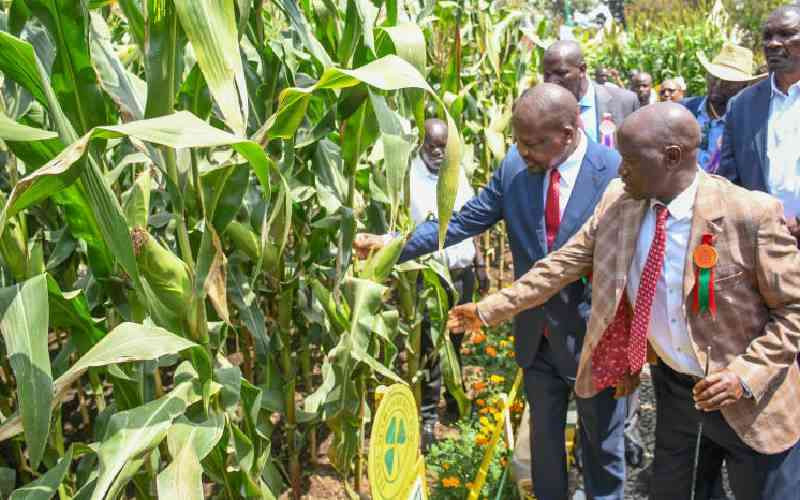
Leaders from the private sector, development organisations, and the agriculture industry have called for stronger investment in Africa’s food systems, warning that farmers are increasingly exposed to climate shocks, rising input costs and global supply chain disruptions affecting agricultural productivity.
Speaking during a panel discussion on food security and climate resilience, James E. Rongo Mwangi, Chief Executive Officer of Africa Climate Adventures, said farmers are facing intensifying pressure from both climate and economic shocks.
“Farmers will be called upon to show resilience in the face of both past and upcoming shocks,” he said, noting that rising fertiliser prices and unpredictable weather patterns are already threatening yields and farm incomes.
Mwangi called for increased investment in soil health solutions, including organic fertilisers and soil organic carbon initiatives, arguing that they can improve water retention and strengthen resilience against drought and erratic rainfall.
He further urged expanded access to both equity and debt financing for agribusiness startups, saying high borrowing costs are preventing companies from scaling production infrastructure beyond pilot regions.
He added that organic fertiliser production should be treated as strategic agricultural infrastructure, requiring both investment capital and supportive policy frameworks to expand nationally.
Natasha Santos, Head of Sustainability, Bayer Crop Science Division, said farmers globally are operating under increasing uncertainty driven by climate change, economic volatility and geopolitical disruptions.
“Farmers are operating with very thin margins, a lot of instability not only economically but also from a climate point of view,” she said.
Santos emphasised that improving resilience requires more than input access, stressing the importance of agricultural technology, improved seed varieties, crop protection tools and mechanisation.
She also highlighted the need for stronger extension systems and knowledge transfer mechanisms, noting that partnerships between public and private actors are essential to equip farmers with climate-smart practices.
She further pointed to innovative financing mechanisms such as agricultural insurance and blended finance models, including partnerships with organisations like Pula Advisors, as critical tools for reducing risk and improving productivity among smallholder farmers.
Mildred Nadah Pita, Vice President, Head of Public Affairs Sustainability Africa, Bayer, noted that Africa sits at the centre of global food and climate discussions but requires equitable access to climate finance, innovation and resilient supply chains to unlock its agricultural potential.
“Africa sits at the centre of the global food and climate conversation. The continent has immense agricultural potential, but unlocking it will require equitable access to climate finance, innovation, resilient supply chains and policies that enable African farmers and agribusinesses to compete globally,” she said.
John Mwendwa, Chief Executive Officer of KenInvest, called for increased local manufacturing and intra-African investment, arguing that building domestic industries and strengthening regional value chains is essential for long-term resilience, food security and job creation.
He emphasised that Africa’s long-term resilience depends on its ability to build strong domestic industries, support value addition, and strengthen regional supply chains.
Stay informed. Subscribe to our newsletter
The panel also examined structural barriers affecting agriculture, including limited access to affordable financing for smallholder farmers, weak infrastructure and difficulties scaling successful pilot projects into commercially viable solutions.
Discussions further highlighted geopolitical risks affecting global food systems, including disruptions in shipping routes and fertiliser supply chains.
Industry actors pointed to regional manufacturers such as Dangote Group as key players in stabilising fertiliser supply and supporting farming cycles during periods of global instability.
The Alliance for a Green Revolution in Africa was also highlighted for its role in supporting agricultural transformation and strengthening food systems across the continent.
Participants agreed that scaling climate finance, improving rural infrastructure and deepening public-private partnerships will be critical to securing Africa’s agricultural future.

Subscribe to our newsletter and stay updated on the latest developments and special offers!











 join
join