
 The Standard Group Plc is a multi-media organization with investments in media
platforms spanning newspaper print
operations, television, radio broadcasting, digital and online services. The
Standard Group is recognized as a
leading multi-media house in Kenya with a key influence in matters of national
and international interest.
The Standard Group Plc is a multi-media organization with investments in media
platforms spanning newspaper print
operations, television, radio broadcasting, digital and online services. The
Standard Group is recognized as a
leading multi-media house in Kenya with a key influence in matters of national
and international interest.


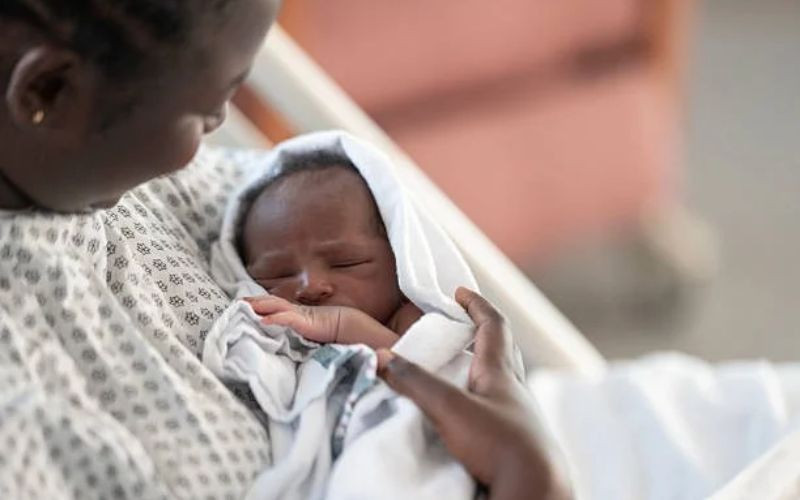
Nearly 90 per cent of Kenyan women now deliver in health facilities, yet hundreds continue to die from preventable pregnancy and childbirth complications every year. Experts say the country's maternal health crisis is no longer about access but about the quality of care mothers receive when they arrive.
When Kenya introduced free maternity services more than a decade ago, it marked a turning point in the country's efforts to reduce maternal deaths.
The policy encouraged thousands of women who previously gave birth at home to seek skilled care in hospitals and health centres. Over the years, maternal health campaigns, expanded health infrastructure, and increased awareness further strengthened the shift toward facility-based deliveries.
Today, health experts estimate that nearly nine out of every ten Kenyan women deliver in hospitals or health facilities under the supervision of trained healthcare workers.
On paper, that represents one of the country's most significant public health achievements.
Yet despite the remarkable increase in hospital deliveries, maternal deaths continue to occur; a mother dying while bringing life is something no one would love to hear or see.
Women are still dying from excessive bleeding, pregnancy-related hypertension, infections, obstructed labour and other complications that modern medicine knows how to prevent and treat.
- Senator raises concerns overshortage of family planning commodities
- Kajiado Community Health Promoters decry months of unpaid stipends
- Beyond theatre: How digital tech is reshaping surgery and saving lives
- Death at birth: Makueni's new lifeline for mothers
Keep Reading
The contradiction has left health experts asking a difficult question: If mothers are reaching hospitals, why are so many still losing their lives?
According to obstetricians, public health experts and frontline healthcare workers, Kenya's maternal health challenge has evolved. The country has largely succeeded in improving access to care. The new battle is ensuring that the care mothers receive is timely, effective and of sufficient quality to save lives.
"Through policies like Linda Mama, we succeeded in getting nearly 90 per cent of mothers into hospital wards to deliver. But we shifted the problem from access to quality of care,” said Reginald Yang, a medical officer, currently pursuing a master degree in public health.
The expert adds that women are increasingly reaching healthcare facilities, but many facilities remain ill-equipped to handle life-threatening emergencies.
“So women are reaching our hospitals, but our hospitals are not always ready to receive them.” For years, increasing facility-based deliveries was viewed as one of the most important indicators of progress in maternal health.
The logic was straightforward. Mothers who delivered under the care of trained healthcare workers were expected to face fewer complications and receive faster treatment when emergencies arose.
While that remains true, experts warn that being physically present in a hospital does not automatically guarantee survival.
“It is not enough for a mother to deliver inside a facility if that facility lacks blood for a transfusion, lacks essential drugs, or doesn't have an operating theatre ready for an emergency Caesarean section,” says the specialist.
“So access without quality does not save lives.”
Director-General for Health Patrick Amoth recently, during an interview on Citizen Television, noted that Kenya remains committed to reducing maternal mortality to below 70 deaths per 100,000 live births. While expressing optimism that the target is achievable, he acknowledged the need to strengthen the quality of care available across all levels of the healthcare system.
The challenge is particularly urgent because many maternal deaths occur suddenly and require immediate intervention.
Other major causes include hypertensive disorders such as preeclampsia and eclampsia, severe infections, obstructed labour and complications arising from existing conditions such as anaemia and malaria.
The medical solutions to these conditions are well known.
For many experts, this third delay has become one of the most significant contributors to maternal deaths in Kenya.
“So often we have a lower-level facility recognizing a complication but lacking a functional ambulance to transfer the patient,” the specialist says.
Even when referrals are made, new obstacles emerge.
A mother may travel for hours to reach a referral hospital only to discover that the facility is overcrowded, lacks operating theatre capacity or does not have the necessary specialists available.
“They refer a mother to a Level Four or Level Five hospital only for her to arrive and find the receiving facility is full or lacks theatre capacity to operate immediately.”
These delays can have devastating consequences.
“The third delay is often the most painful because by then the mother has already done everything she was supposed to do.”
Beyond infrastructure challenges, Kenya continues to face a severe shortage of healthcare workers.
Many maternity wards operate with staffing levels far below recommended standards.
"The shortage of healthcare workers is severe and chronic," says the specialist.
Across many counties, nurses and midwives are expected to care for multiple women simultaneously, including patients with high-risk pregnancies.
In such environments, healthcare workers face immense pressure.
"When a midwife is juggling three or four complicated deliveries simultaneously, it becomes incredibly easy to miss the early warning signs of a crashing patient."
Those warning signs can include subtle increases in blood pressure, changes in consciousness, or early symptoms of severe bleeding.
Detecting them early often determines whether a mother's life can be saved.
Unfortunately, excessive workloads increase the likelihood that critical warning signs will be overlooked.
Health experts argue that increasing staffing levels may be one of the fastest ways to improve maternal outcomes nationwide.
For healthcare workers, some of the most painful experiences arise when they know exactly how to save a patient but lack the resources to do so.
Blood shortages remain one of the most persistent challenges.
These gaps can transform manageable complications into fatal emergencies.
“If a mother has postpartum haemorrhage and we do not have blood or standard uterotonics, our hands are basically tied,” says the specialist.
Healthcare workers often carry memories of mothers they were unable to save.
“Almost every doctor working in the public health sector in this country has a story like that,” the expert pauses before adding:
“It is the most devastating experience to watch a young mother's life slip away simply because the blood bank was empty, or because the specific drug needed to control her seisure was out of stock.”
Maternal deaths affect more than families. They also leave lasting psychological scars on healthcare workers. Every delivery is expected to be a celebration of new life. When a mother dies, that expectation is shattered.
“Deliveries are supposed to be moments of celebration; when a maternal death occurs, it leaves a heavy cloud over the entire department.”
Yet many healthcare workers receive little emotional support after such losses. Instead, they are expected to continue working almost immediately.
“We are expected to conduct a maternal death audit, document the medical-legal files, clear the bed and immediately focus on the next mother in labour.
"Healthcare workers carry deep moral injury and burnout, but unfortunately our system has very few formal psychological support structures."
Recognising the urgency of the problem, the government recently unveiled the Every Woman Every Newborn Everywhere (EWENE) Acceleration Plan 2026-2028.
The initiative aims to significantly reduce preventable maternal and newborn deaths across the country.
Announcing the programme, Health Cabinet Secretary Aden Duale described it as a roadmap toward ending preventable maternal and newborn mortality.
Under the plan, the government intends to invest KSh13.1 billion in primary healthcare services and allocate an additional KSh4 billion for maternal services under the Social Health Authority.
The programme also includes plans to recruit 5,000 nurses and midwives and strengthen the availability of life-saving maternal health commodities.
Experts believe the initiative could help address some of the most pressing weaknesses in the health system.
However, they emphasise that implementation will be critical.
The expert also advocates for strengthening emergency obstetric care at primary healthcare facilities.
"We must ensure that at least 80 per cent of our primary health facilities are fully equipped to handle basic emergency obstetric care."
"A mother's survival shouldn't depend on the luck of which hospital door she walks through."
Until every health facility can provide timely, high-quality emergency care, experts warn that increased hospital deliveries alone will not be enough to end Kenya's maternal mortality crisis.









 join
join