President William Ruto has announced that teachers employed by the Teachers Service Commission (TSC) this year will begin reporting to class starting tomorrow, in a move he
said will strengthen learning and support the transition of learners into senior secondary school under the Competency-Based Education (CBE) system.
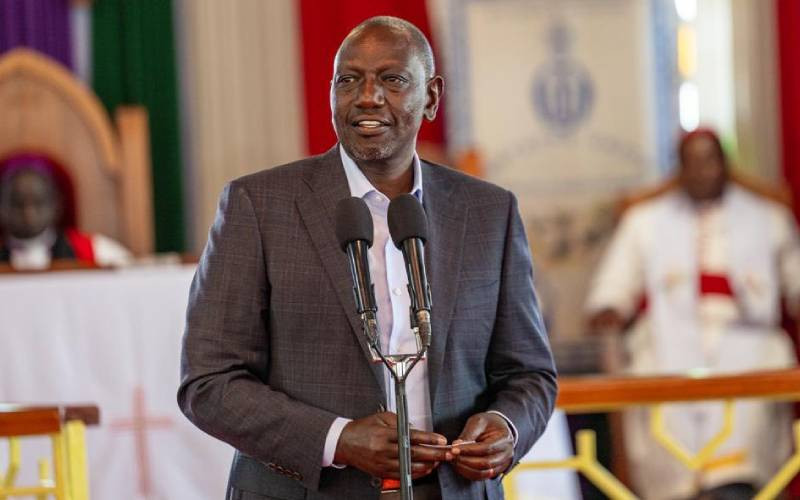
Speaking during a church service at St Paul’s Church, Kariki Chinga in Othaya, Nyeri County, the President said the government had put in place the necessary structures to
ensure a smooth transition for learners as schools reopen.
“This week, we have employed 24,000 teachers, and beginning next week they will be in class. Additionally, we ensured that we disbursed funds to schools before
students reopened so that principals do not struggle,” Ruto said.
The announcement comes against the backdrop of long-standing concerns over teacher shortages, especially in junior and senior secondary schools, following the rollout of
CBE. Education stakeholders have repeatedly warned that without adequate staffing, the new system would face implementation challenges.
Last week, the government released Sh44 billion in capitation funds for learners in public primary, junior secondary and senior secondary schools across the country. The early
disbursement was aimed at stabilising school operations and easing pressure on school heads, who in previous years struggled due to delayed funding.
“Our children are very important, and when we think about young people in this region and across Kenya, education must be at the centre of our priorities,” Ruto said. “Education
is the greatest investment that any society can make for its citizens.”
The President reiterated that his administration remains committed to sustaining and strengthening investments in education, building on the foundations laid by previous
governments. He said education reforms in Kenya have been a continuous process spanning several administrations.
“Our founding president, Jomo Kenyatta, laid the foundation of education by teaching us to fight illiteracy,” Ruto said. “The second president, Daniel arap Moi, expanded
Stay informed. Subscribe to our newsletter
education to reach many more children.”
He added that President Mwai Kibaki introduced Free Primary Education, opening school doors to millions of learners, while President Uhuru Kenyatta championed 100 per cent
transition from primary to secondary school to ensure no child was left behind.
“All chiefs were tasked with ensuring that every child, including those finishing Class Eight, transitioned to secondary school,” Ruto said.
President Ruto said his administration is determined to protect and advance these gains by ensuring schools have enough teachers, classrooms and financial support.
“I am here to ensure that all children in school have enough teachers, enough classrooms and enough funds,” he said. “For the last three years, the CBE has been streamlined and is now working.”
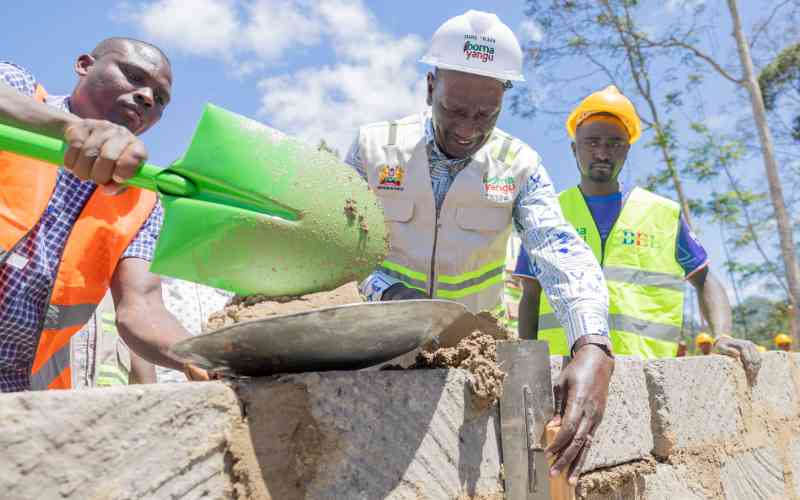
He noted that the government has constructed 23,000 new classrooms nationwide and employed 100,000 teachers to support the reforms, saying the effort is meant to ensure
that the vision of past presidents is not lost.
The President also hailed the role of the church in expanding access to education, particularly in marginalised areas, through the construction and management of schools.
“We thank the churches for recognising the importance of education and our children,” Ruto said. “Through your support, many children who would otherwise be left behind are able to access education.”
As Kenya navigates the transition to senior secondary education under CBE, the government insists that sustained investment in teachers, infrastructure and financing will remain
central to ensuring quality, inclusive and equitable education for all learners.