×

The Standard e-Paper
Home To Bold Columnists
 The Standard Group Plc is a
multi-media organization with investments in media platforms spanning newspaper
print operations, television, radio broadcasting, digital and online services. The
Standard Group is recognized as a leading multi-media house in Kenya with a key
influence in matters of national and international interest.
The Standard Group Plc is a
multi-media organization with investments in media platforms spanning newspaper
print operations, television, radio broadcasting, digital and online services. The
Standard Group is recognized as a leading multi-media house in Kenya with a key
influence in matters of national and international interest.

Audio By Vocalize
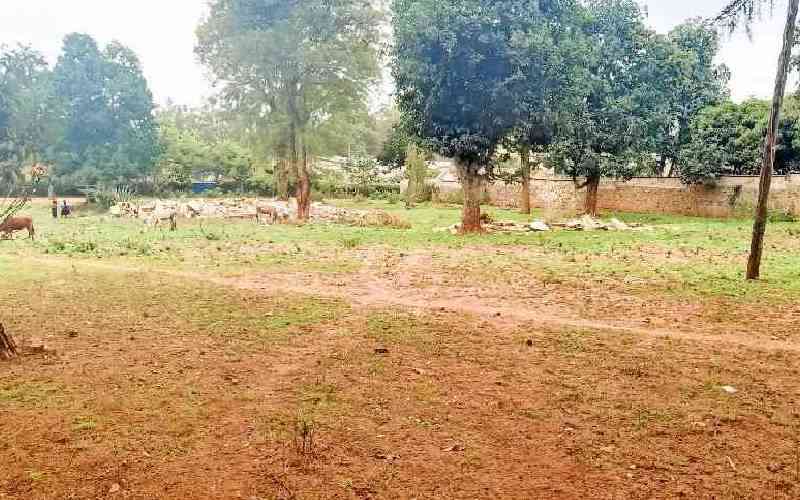
The Ethics and Anti-Corruption Commission (EACC) is seeking to recover 7.6 acres of public land in Milimani, Kisumu City, valued at approximately Sh790 million, which was grabbed from the Kenya Prisons Service and converted into private ownership through fraudulent and irregular processes.
The disputed property, whose value is estimated at Sh4.3 billion including developments, forms part of an original 16-acre parcel that had been reserved for the Kenya Prisons Service for staff housing and regional offices.
The Commission says it has filed nine asset recovery suits before the Environment and Land Court in Kisumu, targeting parcels within the disputed 7.6-acre portion, seeking cancellation of all resulting titles, declarations that the transactions were illegal, fraudulent, and null and void, and restoration of the land to the Kenya Prisons Service.
The recovery action follows a petition lodged by the Kenya Prisons Service in February 2022, requesting an investigation into the alleged unlawful occupation, subdivision, and alienation of its land in Kisumu.
According to EACC, investigations established that the land was originally reserved for prison use under colonial-era planning instruments in the 1960s and was later reaffirmed through Government development plans in the 1970s as public land designated for prison infrastructure.
The Commission established that the Kenya Prisons Service had developed staff housing on the property before the alleged encroachment and subdivision occurred.
EACC further established that in or around 1989, the then Assistant Minister for Home Affairs and Heritage allegedly, in collaboration with other public officials, irregularly acquired approximately 7.6 acres of the land through fraudulent and unlawful processes.
The Commission says the alleged acquisition was facilitated through forged and irregular documentation, including a fake allotment letter and altered development plans.
Although the land was initially associated with the establishment of an educational institution, EACC says the intended public purpose was later abandoned, and the property was instead redirected for private residential development.
The land was subsequently subdivided into 92 parcels and transferred to private individuals. The area is now fully developed and commonly known as Winam Estate in Milimani.
Speaking during a visit to the recovered land in Kisumu, EACC Chief Executive Officer Abdi Mohamud said the Commission was committed to assisting government agencies recover public assets that had been illegally and irregularly allocated to private individuals.
Mohamud said the recovery of Kenya Prisons land was part of a wider effort by EACC to reclaim public property, citing previous recoveries involving Kenya Railways land.
"Starting with Kenya Railways, where we recovered some pieces of land that were illegally acquired some time back, those parcels are now back in the hands of the public through the agencies that were intended to hold those properties on behalf of Kenyans," Mohamud said.

He urged members of the public to follow legally established procedures when acquiring public land, warning that individuals who acquire government property through irregular processes would eventually lose such assets.
Stay informed. Subscribe to our newsletter
Mohamud said there was a growing trend where individuals identify vacant public land and attempt to acquire it through questionable processes involving land offices and other government agencies.
"There is a craze in this country where any vacant place, any unoccupied place, not only in Kisumu but throughout the country, there are people who scout around and look for idle land that is available. When they see that the property was intended for public use, the next thing they do is, through the Ministry of Lands and sometimes the National Land Commission, come up with documents claiming ownership," he said.
He said despite the time taken in investigations and court processes, illegally acquired public assets would eventually be recovered and returned for their intended purposes.
"For this particular parcel, those who claim ownership of the undeveloped sections can hand back the documents they claim ownership of. There is an Alternative Dispute Resolution (ADR) policy recognised by the Constitution and the law, where people who have acquired public land illegally or irregularly can return it to the public through the Commission instead of going through expensive and time-consuming legal processes," Mohamud said.
He challenged individuals who know that the land they acquired was reserved for public use to voluntarily surrender such property. "Eventually, if the original allocation document or allotment letter has challenges, that property will revert back to the public," he said.
Mohamud said in the Kisumu case, the disputed land was allegedly acquired in 1989 by an Assistant Minister who was then in charge of Home Affairs and Heritage, before being subdivided into smaller plots and transferred to private individuals
He warned that EACC would pursue not only civil recovery of public assets but also criminal accountability for officials who facilitated illegal allocations.
"In all cases where we find there is illegality or irregular acquisition of property, other than civil litigation where we recover the property back to the public for intended use, we will also go after land officials who facilitated the illegality that arose during the allocation process," he said.
Mohamud said Kisumu County had cooperated with the Commission by providing historical records for various public assets under investigation.
He added that EACC remains available to support government institutions and county governments that have lost public assets through illegal allocations.
"We are available to any public agency that may have lost their assets to private individuals to assist them to get back their parcels of land," he said.
On the fate of residents who have developed properties on the disputed land, Mohamud said the matter was already before court, and any possible negotiations would have to be considered on a case-by-case basis.
"Negotiations are usually open, but it cannot be a blanket negotiation. It has to be considered case-by-case depending on what you are willing to offer and what the person who has been affected is willing to accept," he said.
He maintained that individuals who purchase illegally acquired property cannot claim ownership simply because they paid for it, noting that buyers have a responsibility to conduct due diligence.
"When you acquire something illegal or irregular, you cannot claim ownership of that property because you bought something that was not legally available. It is upon the purchaser to do due diligence and find out the history of that property," Mohamud said.
Mohamud added that public officers who abuse their positions to acquire public assets should expect recovery of such property regardless of how long the process takes.
"It may take some time for investigations to progress and for cases to proceed in court, but eventually you will lose that asset which you have grabbed," he said.
He cited the recovery of land belonging to Karura Forest in Nairobi, which he said had been grabbed decades ago by a powerful Cabinet minister before being returned to the Kenya Forest Service.
Court documents filed before the Environment and Land Court in Kisumu show that EACC is seeking urgent orders to prevent further transfer, charging, leasing, subdivision, development, disposal or interference with the disputed parcels pending determination of the recovery suits.
The Commission states that investigations established that Kisumu Municipality/Block 10/98 measuring 16.20 acres had been reserved for prison housing before approximately 7.58 acres were allegedly hived off and registered as Kisumu Municipality/Block 10/569.
The court documents indicate that the parcel was later subdivided into 92 plots, being Kisumu Municipality/Block 10/570 to 661, after a survey plan, F/R No. 243/88, was prepared and registered on December 16, 1993.
EACC argues that Kisumu Municipality/Block 10/569 was not available for allocation to private individuals because it was reserved for public purposes and is seeking preservation orders to prevent further dealings that could frustrate recovery efforts.
Subscribe to our newsletter and stay updated on the latest developments and special offers!


 Prefer the Standard on Google







 join
join