×

The Standard e-Paper
Fearless, Trusted News
 The Standard Group Plc is a
multi-media organization with investments in media platforms spanning newspaper
print operations, television, radio broadcasting, digital and online services. The
Standard Group is recognized as a leading multi-media house in Kenya with a key
influence in matters of national and international interest.
The Standard Group Plc is a
multi-media organization with investments in media platforms spanning newspaper
print operations, television, radio broadcasting, digital and online services. The
Standard Group is recognized as a leading multi-media house in Kenya with a key
influence in matters of national and international interest.

Audio By Vocalize
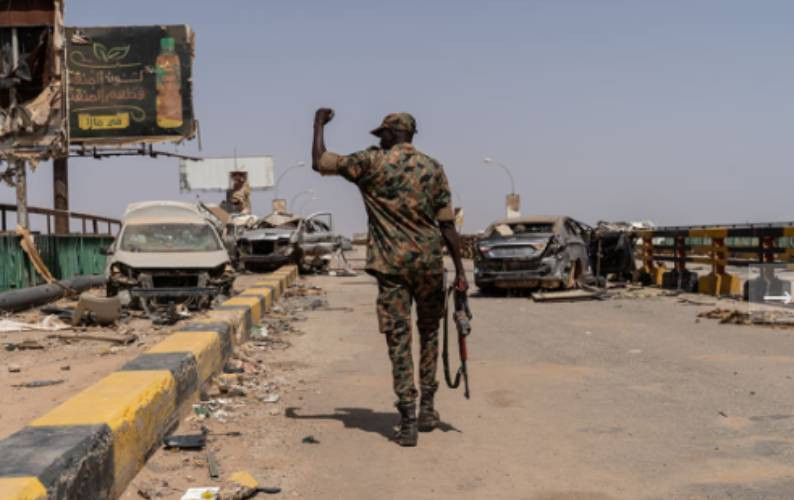
Saudi Arabia has drawn renewed attention over its role in Sudan’s war after reports said a former Rapid Support Forces (RSF) commander with battlefield influence has surfaced in Riyadh.
The development centres on Ali Rizq Allah, also known as Al-Safana, a former RSF commander with operations experience in Darfur and Kordofan.
Reports say Al-Safana is in Saudi Arabia after travelling through India, though there is no independent confirmation of the circumstances of his relocation or any official Saudi involvement.
Saudi Arabia has denied supporting any party in Sudan’s conflict and says its role focuses on mediation and regional stability.
However, regional observers and critics continue to question Riyadh’s neutrality, pointing to its ties with the Sudanese Armed Forces (SAF).
SAF commander Gen. Abdel Fattah al-Burhan visited Riyadh last month in a trip both governments described as part of efforts to strengthen bilateral relations.
Al-Safana previously commanded RSF operations in Kordofan and built influence through tribal networks and armed activity in western Sudan.
Analysts say his reported presence in Saudi Arabia has raised discussion on how regional states engage with figures linked to Sudan’s conflict.
Political analyst Dr Qadem Ahmad Qadem described the movement of former commanders as part of a wider regionalisation of the war.
“The conflict is no longer confined within Sudan’s borders but has become part of a broader regional balance-of-power environment where political and intelligence tools influence battlefield dynamics,” he noted.
He added that commanders with strong tribal and military ties can influence shifting alliances on the ground.
“Sheltering field commanders with extensive tribal and military influence provides leverage inside Sudan’s complex landscape,” he said.
Qadem warned that reintegrating figures accused of abuses into new alliances may affect accountability efforts.
“Providing such figures with political or security cover could reinforce a culture of impunity and prolong the war instead of contributing to a comprehensive settlement,” he observed.
He said rapid changes in loyalty risk are being driven by strategic interests rather than stability.
Stay informed. Subscribe to our newsletter
Saudi Arabia has maintained that it remains neutral in Sudan’s war since fighting erupted between the Sudanese Armed Forces (SAF) and RSF in April 2023.
Still, allegations of indirect alignment with the Sudanese army have appeared in regional commentary.
An April report by ADF Magazine, published by United States Africa Command (AFRICOM), noted Saudi Arabia’s long-standing relations with Sudan’s military leadership, including Gen. al-Burhan.
The publication did not provide evidence of direct operational support.
Human rights advocates and Sudanese observers say the conflict risks being shaped by competing regional interests rather than peace efforts.
They warn that individuals accused of wartime abuses may be repositioned through shifting alliances, raising concerns about accountability.
Reports of abuses in Darfur and Kordofan continue to emerge as the war deepens.
Subscribe to our newsletter and stay updated on the latest developments and special offers!

 Prefer the Standard on Google







 join
join