×

The Standard e-Paper
Smart Minds Choose Us
 The Standard Group Plc is a
multi-media organization with investments in media platforms spanning newspaper
print operations, television, radio broadcasting, digital and online services. The
Standard Group is recognized as a leading multi-media house in Kenya with a key
influence in matters of national and international interest.
The Standard Group Plc is a
multi-media organization with investments in media platforms spanning newspaper
print operations, television, radio broadcasting, digital and online services. The
Standard Group is recognized as a leading multi-media house in Kenya with a key
influence in matters of national and international interest.

Audio By Vocalize
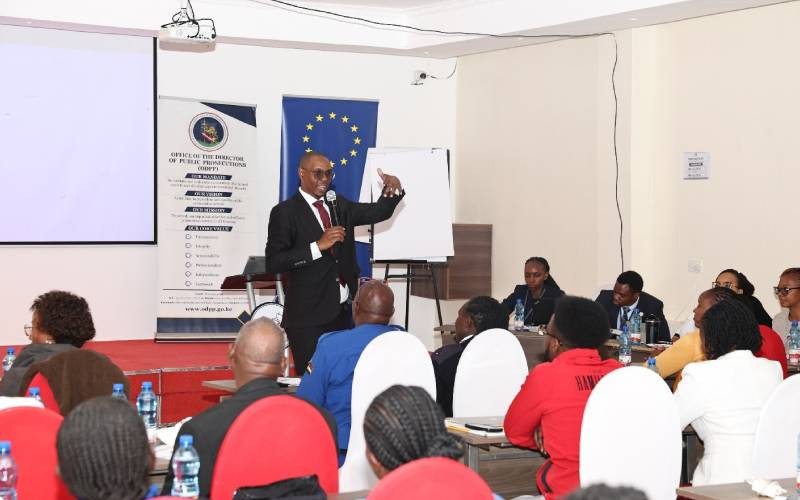
Justice-sector officials during an ODPP-UNODC training on handling crimes against children in Narok. [Courtesy]
The Office of the Director of Public Prosecutions (ODPP), in partnership with the United Nations Office on Drugs and Crime (UNODC), has increased efforts to strengthen the justice system’s response to crimes against children, including female genital mutilation (FGM) and sexual and gender-based violence (SGBV), in Narok County.
The two organisations have trained justice sector actors to prevent, investigate, and prosecute offences involving children, while ensuring that victims and witnesses are treated with dignity and protected from further harm.
The three-day training united officials from the National Police Service, the Department of Children’s Services, the Probation and Aftercare Service, the Narok County Government, and civil society organisations.
The training concentrated on handling child victims and children in conflict or contact with the law, investigating offences involving minors, and collecting, documenting, and preserving evidence needed to support prosecutions.
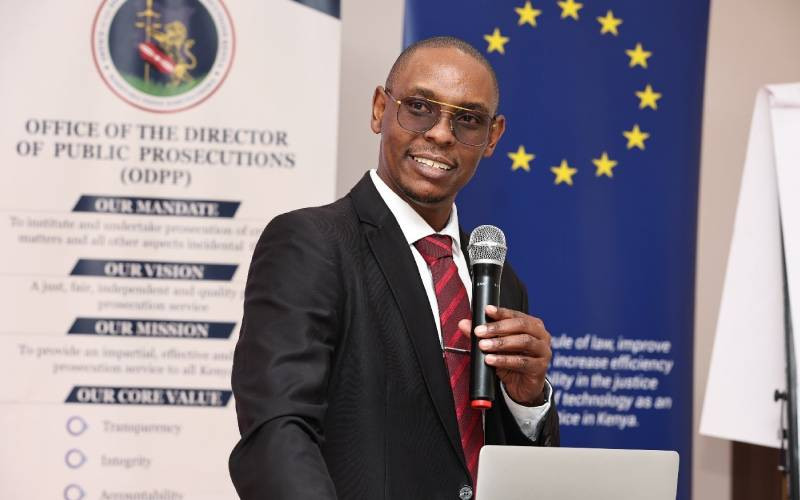
Participants were also educated on children’s rights, victim-centred approaches, and safeguards for vulnerable persons, with a focus on providing age-appropriate and sensitive treatment to children in contact with the justice system.
During the workshop at the Olive Hotel in Narok town, Linda Ndambiri, Head of the Children's Division at the ODPP, urged justice sector actors to exercise greater care when handling cases involving children, emphasising that their vulnerability requires a coordinated response at every stage of the justice process.
“Children are vulnerable and require our collective attention and a well-coordinated approach at every stage of the justice process. This is particularly important when gathering evidence because the manner in which evidence is obtained, documented and preserved can significantly affect the outcome of a case,” Ms Ndambiri stated.
She challenged participants to apply the skills gained in their institutions and to share knowledge with colleagues and communities.
“I encourage you to take the lessons learnt from this workshop and share them within your institutions and with the communities that you serve. The responsibility of protecting children cannot be left to one institution; it requires all of us to work together,” she added.
The workshop also addressed emerging threats, such as online child exploitation, grooming, child trafficking, and other forms of abuse, alongside harmful cultural and religious practices that can expose children to violence and mistreatment.
Participants were urged to adapt justice responses to offences committed through digital platforms, which have created new avenues for child exploitation.
Opening the workshop on Monday, Narok County Head of ODPP, Gitonga Murang’a, said that the involvement of various institutions demonstrated a shared commitment to protecting children.
He noted that cases involving children remained a concern in the county and called for stronger collaboration among justice agencies and other stakeholders to prevent abuse and to handle cases effectively.
“Your presence here demonstrates that you are concerned about the challenges facing our children and are committed to being part of the solution. We must continue working together to address crimes against children and strengthen the systems that protect them,” Gitonga stated.
Stay informed. Subscribe to our newsletter
The scale of gender-based violence and harmful practices in Narok highlights the need for ongoing prevention and effective justice responses. According to the 2022 Kenya Demographic and Health Survey (KDHS), 51 per cent of women aged 15–49 in Narok had undergone FGM, compared with 15 per cent nationwide, as per the Kenya National Bureau of Statistics.
The survey also revealed that 17.5 per cent of women aged 15–49 in Narok had experienced sexual violence at some point, with 8.7 per cent reporting it in the past year. National figures were 13 per cent and 6.5 per cent, respectively.
Regarding physical violence, 16 per cent of women in Narok reported experiencing it in the past 12 months, matching the national figure. Overall, 34 per cent of women aged 15–49 nationwide reported having experienced physical violence since age 15.
The data are from the 2022 KDHS and represent experiences reported by women aged 15–49; they should not be interpreted as current police or court caseloads.
The training underlined the importance of stronger multi-agency coordination across reporting, investigation, prosecution, court proceedings, rehabilitation, and reintegration.
Participants were urged to keep the best interests of the child central throughout the justice process, especially in cases involving vulnerable victims and witnesses.
UNODC representative Emmanuel Muraguri mentioned that the training was conducted under the Programme for Legal Empowerment and Aid Delivery in Kenya Phase II (PLEAD II), which supports justice sector organisations in improving access to justice.
Through PLEAD II, UNODC aims to support justice sector actors in achieving their goal of ensuring effective and efficient access to justice. Strengthening the capacity of those who interact with children within the justice system is a vital part of this effort,” Muraguri said.
He emphasised that equipping justice actors with practical skills was crucial to ensuring vulnerable individuals could access justice while their rights and dignity are upheld.
The workshop also provided a platform for participants to discuss challenges faced in handling child-related cases and identify gaps in coordination, referral mechanisms, and support for victims and witnesses.
Discussions underscored the importance of timely reporting, thorough investigations, proper documentation, and evidence preservation, as well as appropriate psychosocial and institutional support for children navigating the justice system.
Participants committed to applying the skills gained in their respective institutions and conducting community sensitisation on the prevention and reporting of offences against children.
They also recognised that addressing FGM, SGBV, trafficking, exploitation, and other forms of violence requires sustained collaboration among justice agencies, families, communities, civil society organisations, and other stakeholders.
The training is part of the ODPP’s broader efforts to strengthen a people-centred prosecution service capable of responding effectively to the needs of children and other vulnerable persons who come into contact with the criminal justice system.
Subscribe to our newsletter and stay updated on the latest developments and special offers!


 Prefer the Standard on Google